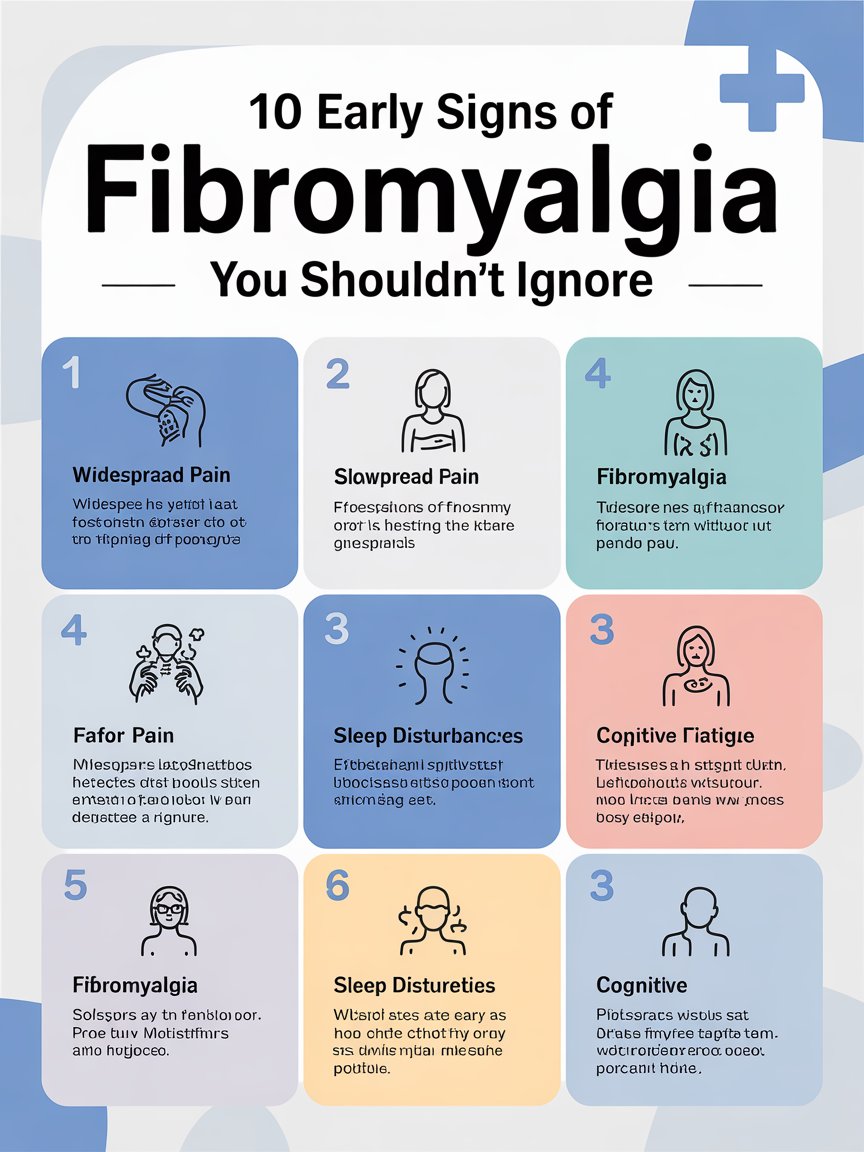
Introduction: Why Early Signs Matter
Fibromyalgia is a chronic condition that affects how the brain processes pain signals, leading to widespread discomfort and a range of other symptoms. Because there’s no single test to diagnose it, many people live with unexplained symptoms for years. Recognizing early warning signs can help you seek medical guidance sooner and potentially manage symptoms more effectively.
1. Widespread, Ongoing Pain
One of the most common early signs of fibromyalgia is persistent pain felt on both sides of the body and above and below the waist. This pain is often described as a deep, aching soreness that lasts for months. Unlike pain caused by injury, it may shift locations and feel worse on some days than others.
2. Constant Fatigue That Doesn’t Improve With Rest
Many people with early fibromyalgia experience overwhelming tiredness that doesn’t go away after sleep or relaxation. This fatigue can make everyday tasks feel exhausting and may limit your ability to stay active or focused. It often shows up alongside pain, creating a cycle that’s hard to break.
3. Poor Sleep and Restless Nights
Sleep problems are another early warning sign. You might struggle to fall asleep, wake up frequently, or feel like your sleep is shallow and unrefreshing. Even if you sleep for several hours, you may wake up feeling just as tired as when you went to bed.
4. “Fibro Fog” and Trouble Concentrating
Cognitive difficulties, often called “fibro fog,” can appear early in fibromyalgia. This may include forgetfulness, difficulty concentrating, and feeling mentally scattered. Simple tasks may take more effort, and you might find it harder to follow conversations or stay organized.
5. Morning Stiffness and Body Aches
Waking up feeling stiff or sore is a common early symptom. Your muscles and joints may feel tight for hours after getting out of bed, even if you didn’t exercise the day before. This stiffness can return after long periods of sitting or inactivity.
6. Increased Sensitivity to Touch and Temperature
People with fibromyalgia often become more sensitive to physical sensations. Light touches, tight clothing, cold temperatures, or even loud noises may feel uncomfortable or painful. This heightened sensitivity is linked to changes in how the nervous system processes sensory input.
7. Frequent Headaches or Migraines
Recurring headaches or migraines can be another early clue. These may feel like tension headaches or intense migraines that appear more often than usual. Stress, poor sleep, and muscle tension can make these headaches worse.
8. Digestive Problems and Gut Discomfort
Many individuals with fibromyalgia experience digestive issues such as bloating, constipation, diarrhea, or symptoms similar to irritable bowel syndrome (IBS). While these symptoms may seem unrelated to muscle pain, they often occur together and can worsen during flare-ups.
9. Mood Changes and Emotional Sensitivity
Anxiety, low mood, or irritability can appear early in fibromyalgia. Living with ongoing pain and fatigue can take a toll on emotional well-being. In some cases, changes in brain chemistry linked to fibromyalgia may also influence mood.
10. Numbness, Tingling, or Restless Sensations
Some people notice tingling, numbness, or crawling sensations in their hands, feet, or arms. You may also feel restless legs at night, making it hard to stay still or fall asleep. These sensations can be uncomfortable and disruptive.
When to See a Doctor
If you recognize several of these signs and they’ve lasted for more than a few weeks or months, it’s a good idea to talk to a healthcare professional. While fibromyalgia can’t be confirmed with a single test, a doctor can rule out other conditions and guide you toward appropriate care.
How Early Awareness Can Help
Catching fibromyalgia early can help you take steps to manage symptoms through lifestyle changes, stress management, gentle exercise, and medical support. Early awareness doesn’t mean jumping to conclusions, but it empowers you to listen to your body and advocate for your health.
Final Thoughts
Fibromyalgia can be frustrating and confusing, especially in the early stages when symptoms seem vague or unrelated. Paying attention to persistent patterns—rather than isolated bad days—can make a big difference. The sooner you acknowledge what your body is telling you, the sooner you can start building a plan to feel better and live more comfortably.
Leave a Reply