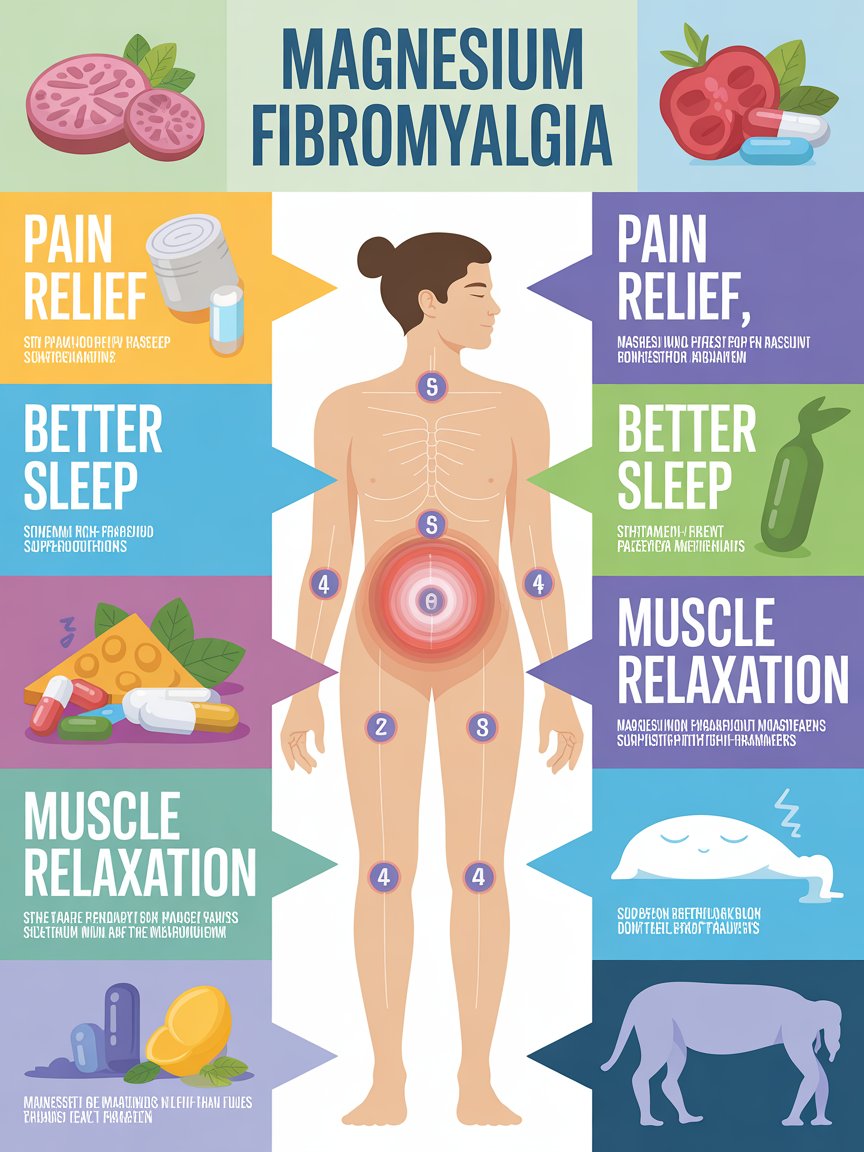
10 Magnesium Benefits for Fibromyalgia
Introduction
Fibromyalgia is often linked to muscle pain, fatigue, poor sleep, and heightened sensitivity to pain. One essential mineral that has gained attention for symptom relief is magnesium. It plays a key role in muscle function, nerve signaling, and energy production. Increasing magnesium intake—through diet or supplements—may help ease many fibromyalgia symptoms naturally.
1. Reduces Muscle Pain
Magnesium helps relax muscles and prevent cramping. People with fibromyalgia often experience tight, sore muscles, and adequate magnesium levels can help reduce this discomfort.
How It Works
It regulates muscle contractions and prevents excessive tightening, which is a common cause of pain.
2. Improves Sleep Quality
Sleep disturbances are a major issue in fibromyalgia. Magnesium helps calm the nervous system and promotes deeper, more restful sleep.
Better Rest, Less Pain
Improved sleep can lead to reduced pain sensitivity and better overall functioning.
3. Decreases Fatigue
Chronic fatigue is one of the most challenging symptoms of fibromyalgia. Magnesium is essential for energy production at the cellular level.
Energy Boost
By supporting ATP production, magnesium helps the body maintain steady energy levels throughout the day.
4. Supports Nerve Function
Magnesium plays a vital role in transmitting nerve signals and preventing overstimulation.
Calming the Nervous System
It helps regulate neurotransmitters, which may reduce nerve-related pain and sensitivity.
5. Reduces Stress and Anxiety
Stress can worsen fibromyalgia symptoms. Magnesium helps regulate stress hormones and promotes relaxation.
Emotional Balance
It may help lower anxiety levels and improve mood stability.
6. Helps Prevent Muscle Spasms
Muscle spasms and twitching are common in fibromyalgia. Magnesium helps maintain proper muscle function and reduces involuntary contractions.
Smoother Muscle Function
Regular intake can minimize sudden spasms and improve comfort.
7. Supports Bone Health
Magnesium works alongside calcium and vitamin D to maintain strong bones.
Long-Term Benefits
Healthy bones can help reduce overall discomfort and improve mobility.
8. Reduces Inflammation
Chronic inflammation can contribute to pain and stiffness. Magnesium has anti-inflammatory properties that may help ease these symptoms.
Pain Relief Support
Lower inflammation levels can lead to reduced pain intensity over time.
9. Improves Mood and Mental Clarity
Fibromyalgia often includes “brain fog” and mood disturbances. Magnesium supports brain health and cognitive function.
Sharper Thinking
It may improve focus, memory, and reduce feelings of confusion.
10. Supports Heart Health
Magnesium is essential for maintaining a healthy heart rhythm and proper blood circulation.
Overall Wellness
Better circulation can improve oxygen delivery to muscles and tissues, helping reduce fatigue and discomfort.
Leave a Reply