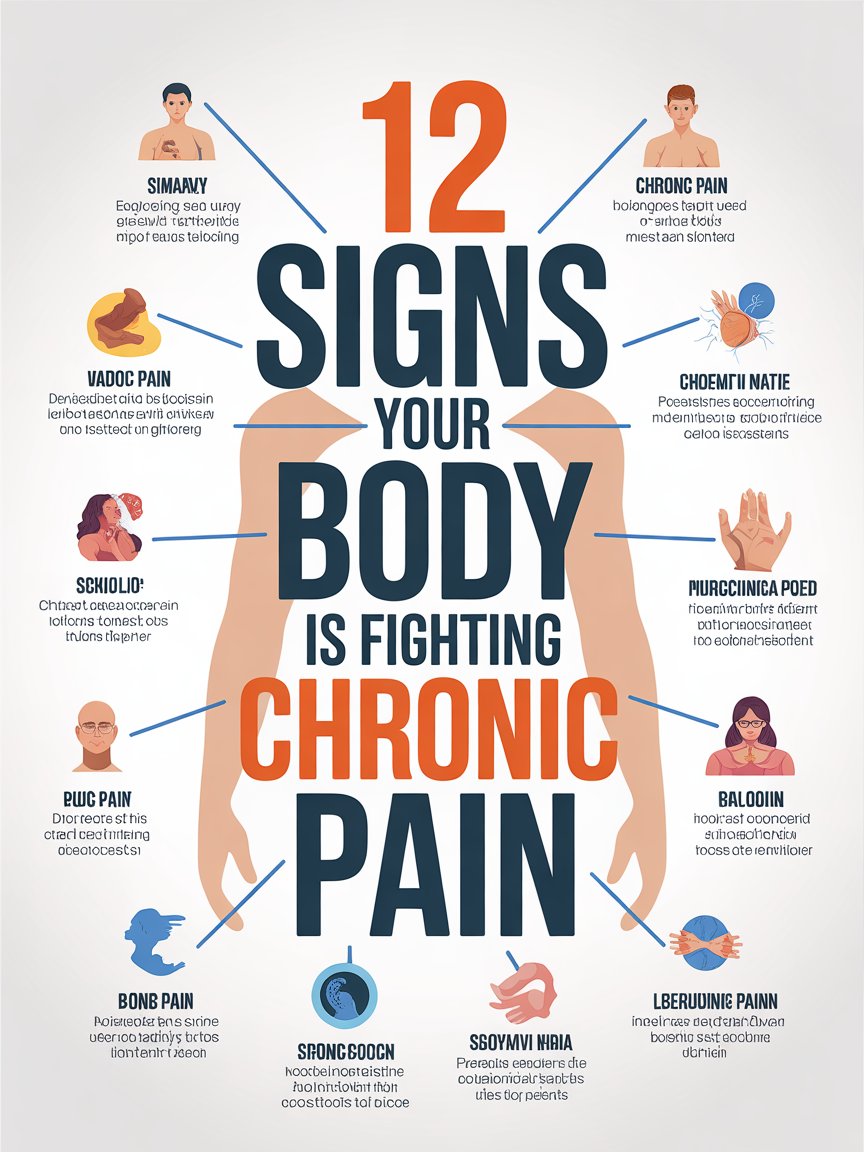
12 Signs Your Body Is Fighting Chronic Pain
1. Understanding Chronic Pain
Chronic pain is pain that lasts for months or even years. It often occurs in conditions such as Fibromyalgia, arthritis, or nerve disorders. When the body deals with long-term pain, it activates several physical and emotional responses as it tries to cope and adapt.
2. Why the Body Reacts to Chronic Pain
The body’s nervous system constantly works to manage pain signals. Over time, chronic pain can affect muscles, sleep, mood, and energy levels. Recognizing these signs can help people better understand how their body is responding.
3. Sign 1: Persistent Fatigue
Constant pain can drain the body’s energy. Many people with chronic pain feel tired even after resting because their body is continuously working to manage discomfort.
4. Sign 2: Muscle Tension
Muscles may remain tight or tense for long periods as the body reacts to pain. This tension can lead to stiffness and soreness in areas such as the neck, shoulders, and back.
5. Sign 3: Trouble Sleeping
Chronic pain often disrupts sleep patterns. Difficulty falling asleep or staying asleep is a common sign that the body is struggling to relax and recover.
6. Sign 4: Increased Pain Sensitivity
Over time, the nervous system may become more sensitive to pain. Even mild pressure or small injuries may feel more painful than usual.
7. Sign 5: Brain Fog
Mental fatigue, poor concentration, and memory problems can occur when the body is dealing with chronic pain. This is often referred to as “brain fog.”
8. Sign 6: Mood Changes
Living with ongoing pain can affect emotional health. Irritability, anxiety, or feelings of sadness may develop as the body and mind respond to constant discomfort.
9. Sign 7: Headaches
Frequent headaches or migraines may occur as a result of muscle tension and stress related to chronic pain.
10. Sign 8: Digestive Issues
Chronic pain can affect the digestive system. Some people may experience stomach discomfort, bloating, or changes in appetite.
11. Sign 9: Reduced Physical Activity
Pain may cause people to move less or avoid certain activities. This reduction in movement can lead to weaker muscles and lower endurance over time.
12. Sign 10: Difficulty Concentrating
Persistent pain can make it harder for the brain to focus on tasks. Mental energy may be directed toward coping with discomfort rather than thinking clearly.
13. Sign 11: Increased Stress Levels
Chronic pain can keep the body in a constant state of stress. Elevated stress hormones may worsen fatigue and pain sensitivity.
14. Sign 12: Feeling Overwhelmed by Daily Tasks
Simple activities may begin to feel challenging when the body is dealing with ongoing pain. This can lead to frustration and reduced motivation.
15. Supporting Your Body During Chronic Pain
Managing chronic pain requires a combination of strategies such as gentle exercise, stress management, proper sleep, and medical guidance. By understanding the signs that the body is struggling, individuals can take steps to support recovery and improve overall quality of life.
Leave a Reply