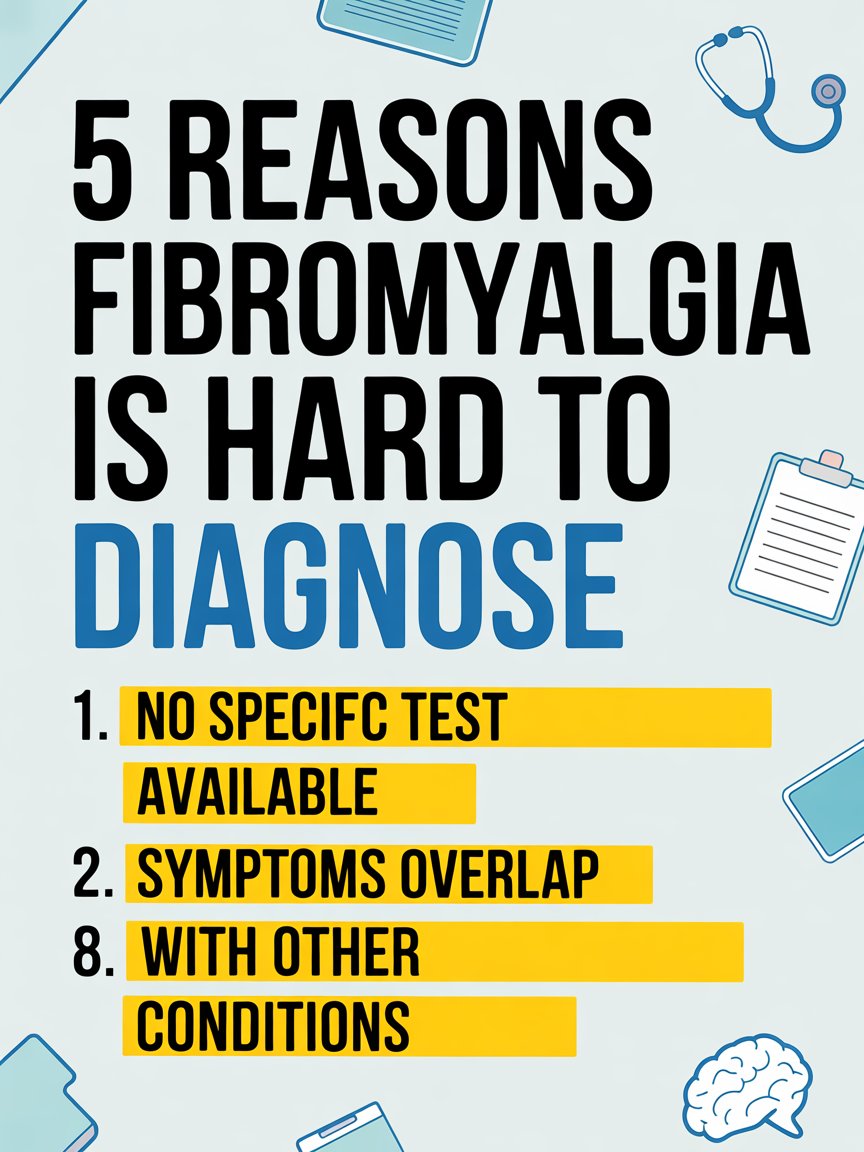
5 Reasons Fibromyalgia Is Hard to Diagnose
Fibromyalgia is a chronic condition known for causing widespread pain, fatigue, and a variety of other symptoms. Despite being a common disorder, it can be surprisingly difficult for doctors to diagnose. Many people live with symptoms for years before receiving a clear answer. This delay often happens because fibromyalgia shares symptoms with many other illnesses and lacks a simple diagnostic test. Understanding the reasons behind this challenge can help patients feel less frustrated during the diagnostic process.
1. Symptoms Overlap With Many Other Conditions
Similar to Other Chronic Illnesses
One of the biggest reasons fibromyalgia is difficult to diagnose is that its symptoms overlap with many other health conditions. Fatigue, muscle pain, sleep problems, and brain fog can also occur in disorders like chronic fatigue syndrome, arthritis, and autoimmune diseases.
Misdiagnosis Is Common
Because these symptoms are not unique to fibromyalgia, doctors often investigate other possible illnesses first. This process can take time and may lead to several different diagnoses before fibromyalgia is finally considered.
2. There Is No Single Diagnostic Test
No Specific Blood Test
Unlike many medical conditions, fibromyalgia does not have a specific blood test or imaging scan that can confirm its presence. Laboratory tests often appear completely normal even when a person experiences severe symptoms.
Diagnosis Based on Symptoms
Doctors usually diagnose fibromyalgia by evaluating symptoms, medical history, and physical examination. They may also rule out other conditions before confirming fibromyalgia.
3. Symptoms Can Change Over Time
Fluctuating Pain and Fatigue
Fibromyalgia symptoms can vary from day to day. Some days may feel manageable, while others involve intense pain and exhaustion.
Unpredictable Flare-Ups
These fluctuating symptoms can make it harder for healthcare providers to see a consistent pattern, especially during short medical visits.
4. Lack of Visible Physical Signs
Pain Without Physical Damage
Many medical conditions show clear physical signs such as swelling, inflammation, or tissue damage. Fibromyalgia, however, usually does not cause visible abnormalities in muscles or joints.
Difficult to Measure Pain
Because pain cannot be directly measured with medical tests, doctors must rely on patient descriptions, which can make diagnosis more complex.
5. Limited Awareness and Understanding
Historically Misunderstood Condition
For many years, fibromyalgia was not widely recognized as a legitimate medical condition. Although awareness has improved, misunderstandings still exist in some healthcare settings.
Delays in Diagnosis
Some patients may need to consult several specialists before finding a doctor familiar with fibromyalgia symptoms and diagnostic criteria.
Conclusion
Fibromyalgia can be difficult to diagnose because its symptoms overlap with other illnesses, there is no definitive test, and the condition does not produce visible physical damage. In addition, symptoms may fluctuate, making patterns harder to identify. Although the diagnostic process can be frustrating, increased awareness and improved understanding of fibromyalgia are helping more people receive accurate diagnoses and appropriate care.
Leave a Reply