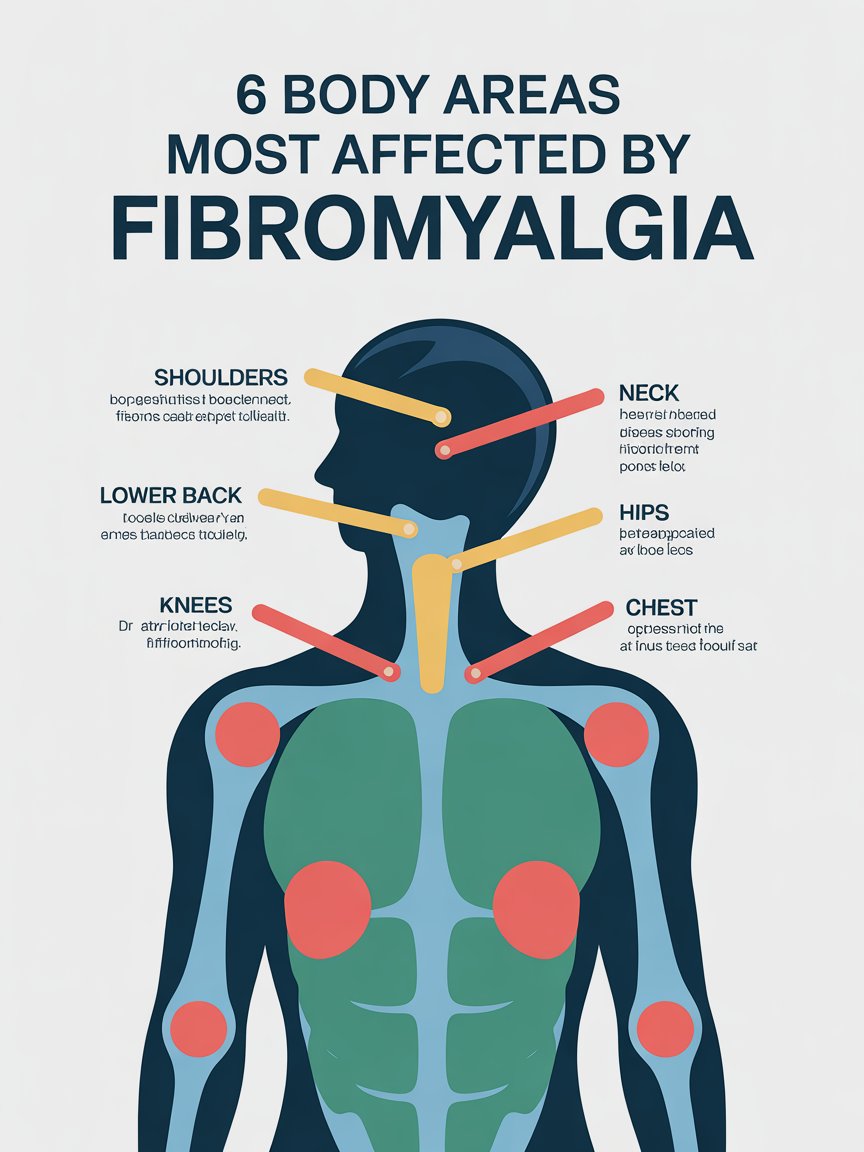
1. Understanding Fibromyalgia Pain
Fibromyalgia is known for causing widespread pain throughout the body. However, some areas tend to be more sensitive than others. These regions, sometimes called tender points, can become painful even with light pressure.
2. Why Certain Areas Hurt More
Fibromyalgia affects how the brain and nervous system process pain signals. Because of this heightened sensitivity, certain muscles and soft tissues become more prone to discomfort and stiffness.
3. Area 1: Neck and Shoulders
The neck and shoulder region is one of the most common places where fibromyalgia pain occurs. Tight muscles, stress, and poor posture can increase tension in this area, leading to persistent soreness and stiffness.
4. Area 2: Upper Back
Pain in the upper back, particularly between the shoulder blades, is frequently reported by fibromyalgia patients. This area may feel tender, aching, or stiff, especially after long periods of sitting.
5. Area 3: Lower Back
The lower back can also be affected by fibromyalgia pain. Individuals may experience a constant dull ache or sharp discomfort that worsens with fatigue or prolonged activity.
6. Area 4: Hips
The hip area, especially around the outer hips, is a common tender point in fibromyalgia. Pain here may cause discomfort when walking, sitting, or lying on one side.
7. Area 5: Knees
Many people with fibromyalgia report pain or sensitivity around the knees. This discomfort may occur even without visible swelling or joint damage.
8. Area 6: Elbows
The outer parts of the elbows can become very sensitive in people with fibromyalgia. Pressure on these areas may cause sharp or aching pain.
9. The Role of Tender Points
Tender points are specific spots on the body that are particularly sensitive to touch. These points were once used as part of the diagnostic process for fibromyalgia.
10. How Pain May Spread
Fibromyalgia pain is not limited to a single area. It can move from one part of the body to another, which is why it is often described as widespread pain.
11. Factors That Worsen Pain
Stress, lack of sleep, weather changes, and overexertion can intensify pain in these sensitive areas. Identifying triggers may help reduce discomfort.
12. Managing Pain in Affected Areas
Gentle stretching, massage, heat therapy, and relaxation techniques may help reduce muscle tension and improve comfort in painful areas.
13. Importance of Regular Movement
Light physical activity, such as walking or yoga, can improve circulation and reduce stiffness in commonly affected body areas.
14. Listening to Your Body
Every person with fibromyalgia experiences symptoms differently. Paying attention to how your body responds to activities can help you manage pain more effectively.
15. Supporting Whole-Body Health
Although certain areas are more commonly affected, fibromyalgia impacts the whole body. Combining medical guidance, healthy habits, and self-care strategies can help improve comfort and daily functioning.
Leave a Reply