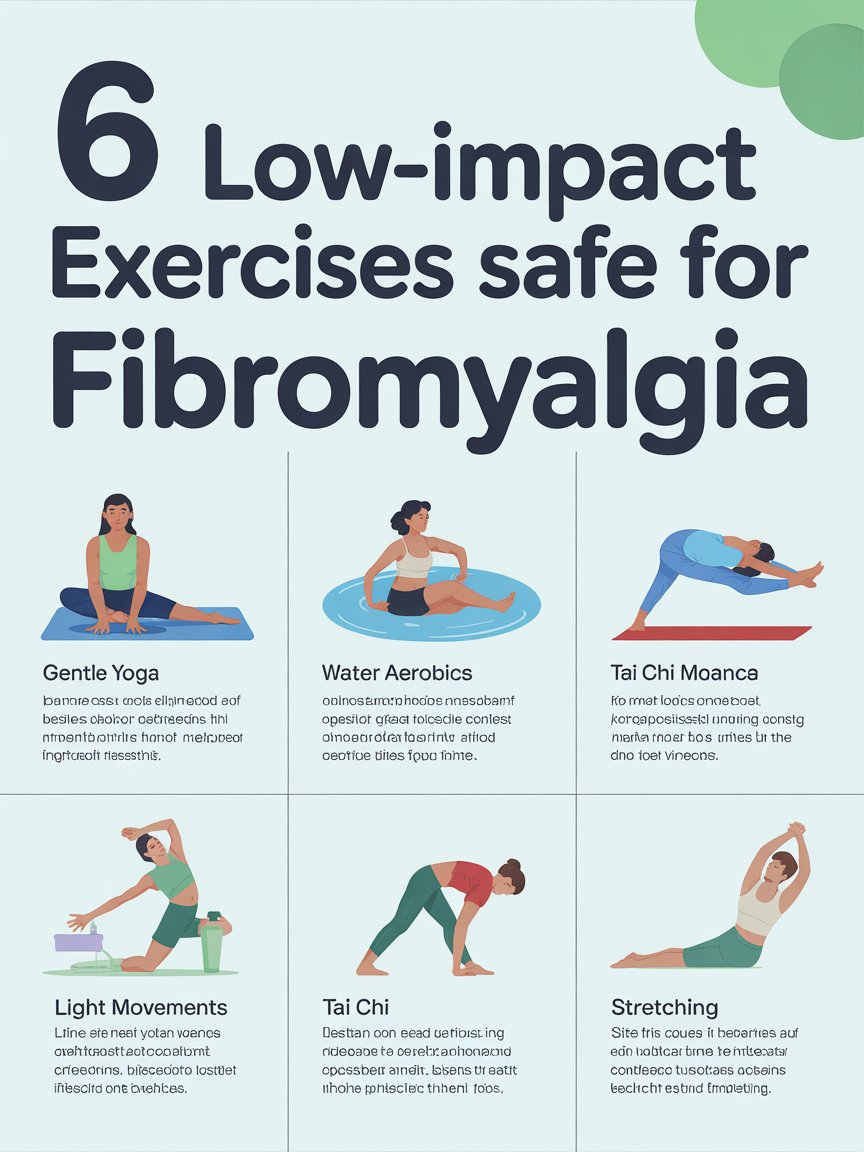
6 Low-Impact Exercises Safe for Fibromyalgia
1. Why Low-Impact Exercise Is Important
Fibromyalgia causes widespread pain, fatigue, and muscle stiffness, which can make intense exercise difficult. However, regular physical activity is still important for maintaining flexibility, improving circulation, and reducing stiffness. Low-impact exercises are ideal because they place less stress on the joints and muscles. Starting slowly and choosing gentle movements can help manage symptoms without triggering flare-ups.
2. Walking for Gentle Movement
Walking is one of the easiest and safest exercises for people with fibromyalgia. It helps improve cardiovascular health, strengthen muscles, and increase energy levels. A short daily walk can also reduce stress and improve mood. Beginners should start with a comfortable pace and gradually increase time as their body adjusts.
3. Swimming or Water Exercise
Water-based exercise is often recommended for people with chronic pain conditions. Swimming or gentle water aerobics reduces pressure on joints because the water supports body weight. Warm water can also relax tight muscles and improve flexibility. These exercises help strengthen muscles while minimizing pain.
4. Yoga for Flexibility and Relaxation
Yoga combines gentle stretching, controlled breathing, and relaxation techniques. It can help reduce muscle stiffness and improve balance. Slow or restorative yoga styles are especially helpful for people with fibromyalgia. Regular practice may also reduce stress and improve sleep quality.
5. Tai Chi for Balance and Calm Movement
Tai Chi is a slow, flowing form of exercise that focuses on balance and controlled movement. Often described as “meditation in motion,” Tai Chi helps improve coordination and flexibility. It can also reduce stress and promote relaxation. Many people with fibromyalgia find this gentle activity helpful for managing symptoms.
6. Stationary Cycling for Low-Impact Cardio
Using a stationary bicycle provides a gentle cardiovascular workout without placing too much stress on the joints. Cycling can improve stamina and circulation. Beginners should start with short sessions at a low resistance level and gradually increase intensity.
7. Gentle Stretching as Daily Exercise
Stretching is a simple but effective form of low-impact exercise. Regular stretching helps improve flexibility and reduce muscle stiffness. Simple stretches for the neck, shoulders, back, and legs can be done at home without equipment. Practicing stretching daily may help prevent muscle tightness and improve mobility.
8. Tips for Exercising Safely with Fibromyalgia
When starting any exercise routine, it is important to listen to your body and avoid pushing too hard. Begin with short sessions and gradually increase duration as your body adapts. Taking rest breaks and staying hydrated can help prevent fatigue. Consistent, gentle exercise can help reduce pain and improve overall quality of life for people with fibromyalgia.
Leave a Reply