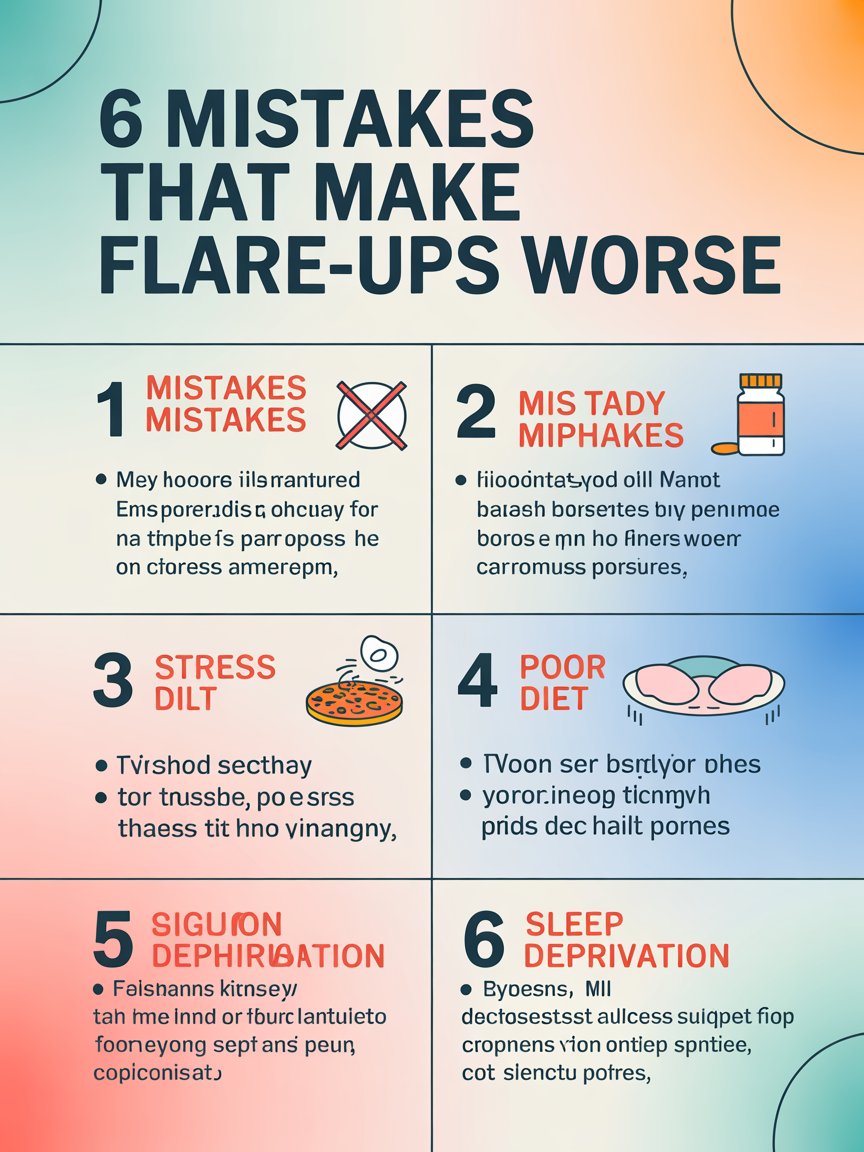
1. Understanding Fibromyalgia Flare-Ups
People living with Fibromyalgia often experience periods when symptoms suddenly become more intense. These episodes, known as flare-ups, can include increased pain, fatigue, stiffness, and brain fog. While some flares happen without warning, certain habits can unintentionally make them worse.
2. Why Avoiding Common Mistakes Matters
Small Choices Can Affect Recovery
During a flare-up, the body becomes more sensitive to stress, activity, and environmental triggers. Avoiding common mistakes can help reduce symptom severity and support a faster recovery.
3. 1. Ignoring Early Warning Signs
Pushing Through the Pain
Many people try to continue their usual activities even when early flare symptoms appear. Ignoring fatigue, muscle soreness, or mental fog can cause symptoms to intensify. Recognizing warning signs early allows you to slow down and protect your energy.
4. 2. Overexerting Yourself
Doing Too Much Too Soon
Overexertion is one of the most common triggers for worsening flare-ups. Trying to catch up on tasks or pushing your body beyond its limits may lead to increased pain and longer recovery times.
5. 3. Skipping Rest and Recovery Time
The Body Needs Extra Care
Rest is an essential part of managing fibromyalgia flares. Without adequate rest, muscles remain tense and the nervous system stays overstimulated, which can prolong discomfort.
6. 4. Neglecting Sleep Quality
Poor Sleep Intensifies Symptoms
Sleep disturbances are closely connected to fibromyalgia symptoms. Lack of restorative sleep can increase pain sensitivity, fatigue, and mental fog during a flare-up.
7. 5. Letting Stress Build Up
Stress Can Amplify Pain
Emotional stress activates the body’s stress response, which may heighten pain perception. High stress levels during a flare can make symptoms feel more intense and harder to manage.
8. 6. Ignoring Hydration and Nutrition
Fueling the Body Improperly
Dehydration and poor nutrition can worsen fatigue and muscle discomfort. Balanced meals and adequate water intake help support the body during recovery.
9. The Importance of Pacing
Finding a Balanced Activity Level
Learning to pace your activities can prevent flare-ups from worsening. Alternating between activity and rest helps conserve energy and protect the body from overexertion.
10. Creating a Calm Environment
Reducing Sensory Stress
Bright lights, loud noises, and busy environments may increase discomfort during a flare. A quiet, comfortable space allows the nervous system to relax.
11. Listening to Your Body
Recognizing Personal Limits
Each person with fibromyalgia has different triggers and tolerance levels. Paying attention to how your body responds to activity helps guide healthier choices.
12. Preparing for Future Flares
Building a Personal Management Plan
Keeping a journal of triggers, symptoms, and coping strategies can help identify patterns. This awareness can make future flares easier to handle.
13. Seeking Support When Needed
You Don’t Have to Manage Alone
Family members, friends, and healthcare professionals can provide support during difficult flare periods. Communicating your needs may reduce emotional stress.
14. Learning From Each Experience
Turning Challenges Into Knowledge
Every flare-up offers insight into what helps and what worsens symptoms. Over time, this knowledge can improve your self-care routine.
15. Managing Flares With Awareness and Care
Small Adjustments Make a Difference
Avoiding common mistakes—like ignoring early symptoms or overexerting yourself—can significantly reduce flare severity. With mindful habits and patience, it becomes easier to navigate flare-ups and protect your overall well-being.
Leave a Reply