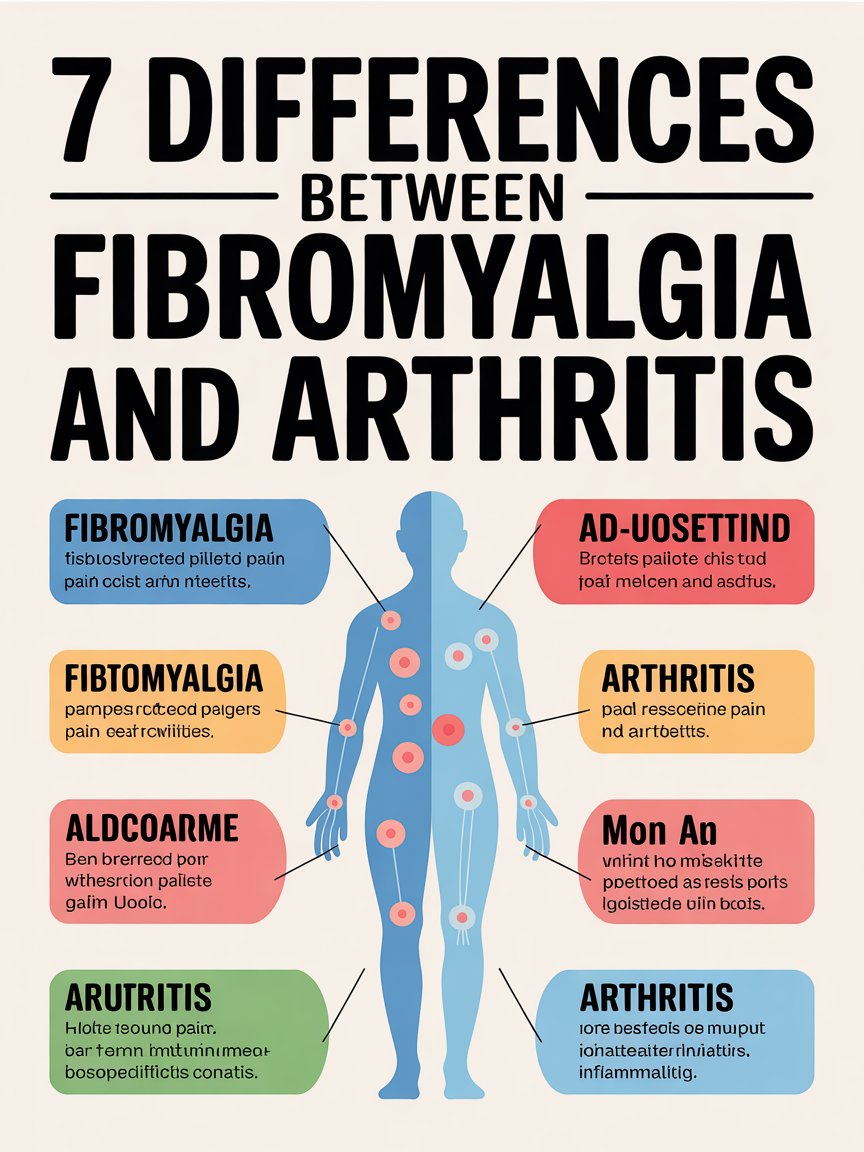
7 Differences Between Fibromyalgia and Arthritis
Many people confuse fibromyalgia and arthritis because both conditions involve pain, stiffness, and fatigue. However, they are very different disorders with unique causes, symptoms, and treatments. Understanding these differences can help individuals recognize symptoms earlier and seek the right type of medical care. Below are seven important differences between fibromyalgia and arthritis.
1. Nature of the Condition
Fibromyalgia Is a Pain Processing Disorder
Fibromyalgia is considered a disorder of the nervous system that affects how the brain processes pain signals. People with fibromyalgia experience widespread pain even when there is no visible inflammation or joint damage. The condition is linked to abnormal pain perception and heightened sensitivity throughout the body.
Arthritis Is a Joint Disease
Arthritis, on the other hand, refers to a group of conditions that cause inflammation and damage within the joints. Common forms include osteoarthritis and rheumatoid arthritis. In arthritis, the pain typically results from physical changes in the joints such as cartilage breakdown or immune-related inflammation.
2. Location of Pain
Fibromyalgia Causes Widespread Body Pain
One of the hallmark signs of fibromyalgia is widespread pain affecting multiple areas of the body. Individuals often feel aching in muscles, ligaments, and soft tissues on both sides of the body.
Arthritis Pain Is Usually Localized
Arthritis pain is generally concentrated in specific joints, such as the knees, hips, hands, or spine. The pain usually occurs directly where joint damage or inflammation is present.
3. Presence of Inflammation
Fibromyalgia Typically Has No Inflammation
In fibromyalgia, blood tests and imaging usually do not show inflammation or tissue damage. The pain is real but does not come from swelling or joint deterioration.
Arthritis Often Involves Joint Inflammation
Most types of arthritis involve visible inflammation in the joints. Swelling, redness, warmth, and stiffness are common symptoms, especially in inflammatory forms like rheumatoid arthritis.
4. Physical Damage to the Body
Fibromyalgia Does Not Damage Joints
Fibromyalgia does not cause structural damage to joints, bones, or muscles. Despite chronic pain, medical imaging typically shows normal tissues.
Arthritis Can Cause Joint Damage
Over time, arthritis can lead to joint deterioration, cartilage loss, and even bone deformities. In severe cases, joint replacement surgery may be required to restore mobility and reduce pain.
5. Fatigue and Sleep Problems
Fibromyalgia Frequently Causes Extreme Fatigue
People with fibromyalgia often struggle with chronic fatigue, unrefreshing sleep, and difficulty staying asleep. Sleep disturbances are a major part of the condition and can worsen pain levels.
Arthritis Fatigue Is Usually Secondary
While fatigue can occur with arthritis, especially autoimmune forms, it is often related to inflammation or ongoing pain rather than a primary symptom.
6. Tender Points vs. Joint Pain
Fibromyalgia Has Specific Tender Points
Fibromyalgia is known for sensitive areas called tender points. These points, often located in the neck, shoulders, back, hips, and knees, become extremely painful when pressure is applied.
Arthritis Causes Pain in the Joints Themselves
Arthritis pain typically occurs directly inside the joints rather than in surrounding soft tissue. The discomfort is usually linked to movement, joint stiffness, and inflammation.
7. Treatment Approaches
Fibromyalgia Treatment Focuses on Nervous System Balance
Treatment for fibromyalgia often includes medications that affect the nervous system, along with lifestyle changes such as exercise, stress reduction, and improved sleep habits.
Arthritis Treatment Targets Inflammation and Joint Health
Arthritis treatments usually aim to reduce inflammation, protect joints, and slow disease progression. These may include anti-inflammatory medications, physical therapy, and sometimes surgery.
Leave a Reply