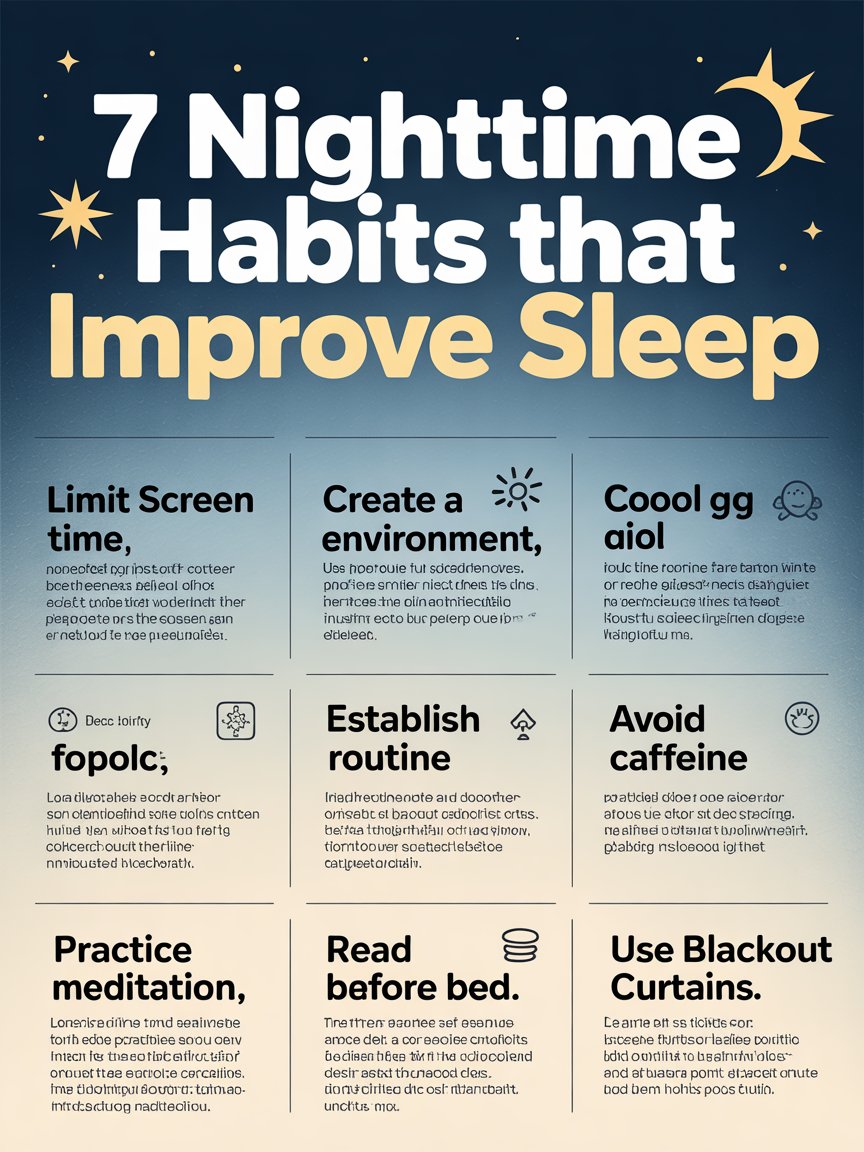
7 Nighttime Habits That Improve Sleep
Introduction
Getting a good night’s sleep is essential for maintaining overall health and well-being. Quality sleep helps the body repair itself, supports brain function, and improves mood and energy levels. Unfortunately, many people struggle with falling asleep or staying asleep due to stress, lifestyle habits, or poor nighttime routines. Developing healthy evening habits can make a big difference in sleep quality.
Small changes in your nighttime routine can help signal your body that it is time to rest. When your mind and body are prepared for sleep, it becomes easier to fall asleep faster and wake up feeling refreshed. The following seven nighttime habits can help improve sleep and create a more restful night.
1. Stick to a Consistent Sleep Schedule
Going to bed and waking up at the same time every day helps regulate your body’s internal clock. When your sleep schedule is consistent, your body naturally begins to feel sleepy at the same time each night.
Even on weekends or days off, try to maintain the same bedtime and wake-up time. This habit trains your brain to recognize when it is time for sleep, making it easier to fall asleep and wake up feeling more refreshed.
2. Create a Relaxing Bedtime Routine
A calming bedtime routine helps your body transition from daytime activity to nighttime rest. Activities such as reading a book, listening to soft music, or taking a warm shower can signal your brain that it is time to wind down.
Relaxing routines reduce stress and calm the mind, making it easier to fall asleep. Avoid stimulating activities before bed so your body can naturally prepare for rest.
3. Limit Screen Time Before Bed
Electronic devices like smartphones, tablets, and televisions emit blue light that can interfere with the body’s production of melatonin, the hormone that controls sleep.
Try turning off screens at least 30 to 60 minutes before bedtime. Instead of scrolling through your phone, choose relaxing activities that allow your mind to slow down and prepare for sleep.
4. Make Your Bedroom Comfortable
Your sleep environment plays an important role in sleep quality. A quiet, dark, and cool bedroom can help create the ideal conditions for restful sleep.
Comfortable bedding, supportive pillows, and a good mattress can also make a big difference. When your bedroom feels relaxing and comfortable, it becomes easier for your body to settle into sleep.
5. Avoid Heavy Meals Late at Night
Eating large or heavy meals right before bedtime can make it difficult for the body to relax. Digestion requires energy, which may keep your body active when it should be preparing for sleep.
If you feel hungry before bed, choose a light snack instead of a heavy meal. Foods that are easy to digest are less likely to disrupt sleep.
6. Reduce Stress Before Bedtime
Stress and racing thoughts are common reasons people struggle with sleep. Taking time to relax and clear your mind can help improve sleep quality.
Simple relaxation techniques such as deep breathing, meditation, or gentle stretching can calm the nervous system. These practices help your body release tension and prepare for restful sleep.
7. Keep the Bedroom for Sleep Only
Using the bedroom for activities like working, studying, or watching television can confuse the brain. Your mind may begin to associate the bedroom with activity instead of rest.
Try to reserve your bed for sleep and relaxation only. This habit helps your brain connect the bedroom with sleep, making it easier to fall asleep when you lie down.
Leave a Reply