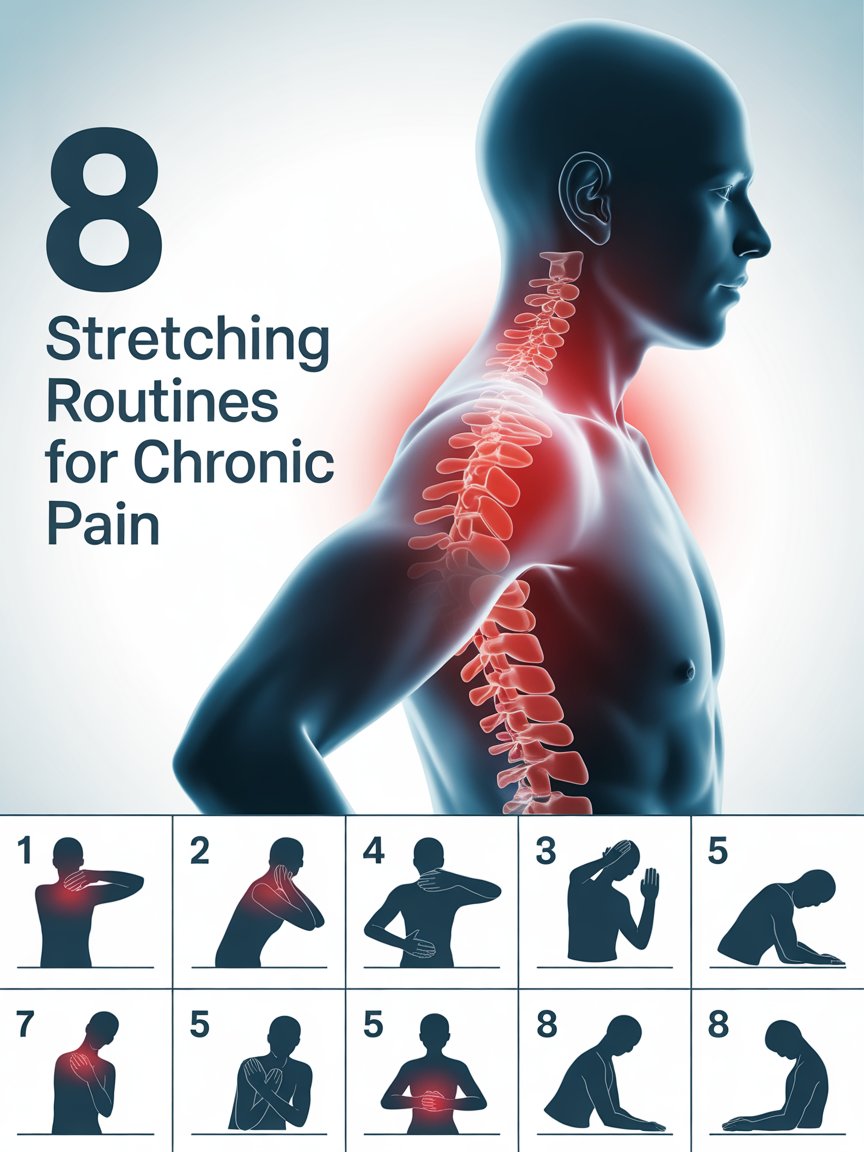
8 Stretching Routines for Chronic Pain
Introduction
Chronic pain can make even the simplest daily movements feel overwhelming. While medication and rest play important roles, gentle stretching routines can significantly improve flexibility, reduce stiffness, and promote overall comfort. Incorporating consistent, low-impact stretches into your daily routine can help ease tension and improve mobility over time.
Why Stretching Helps with Chronic Pain
Stretching works by lengthening tight muscles, improving circulation, and reducing inflammation. For people living with chronic pain conditions, regular stretching can also enhance body awareness and reduce the likelihood of injury. The key is to move slowly and mindfully, avoiding any sudden or forceful motions.
1. Neck and Shoulder Release Stretch
This stretch targets tension commonly stored in the neck and shoulders.
Gently tilt your head toward one shoulder and hold for 15–20 seconds, then switch sides. You can also roll your shoulders backward and forward in slow circles. This routine helps relieve stiffness caused by stress, poor posture, or prolonged sitting.
2. Cat-Cow Spine Stretch
A great stretch for spinal flexibility and back pain relief.
Start on your hands and knees, then alternate between arching your back upward (cat) and dipping it downward while lifting your head (cow). Move slowly with your breath to gently mobilize the spine and reduce lower back discomfort.
3. Seated Forward Bend
This stretch helps release tension in the lower back and hamstrings.
Sit with your legs extended and slowly reach toward your toes. You don’t need to touch them—just go as far as comfortable. Hold the stretch while keeping your breathing steady to avoid strain.
4. Chest Opening Stretch
Ideal for those who spend long hours sitting or using devices.
Stand or sit upright and clasp your hands behind your back, gently lifting your arms to open your chest. This stretch improves posture and reduces tightness in the upper body.
5. Gentle Hip Flexor Stretch
Tight hips can contribute to lower back pain and discomfort.
Step one foot forward into a lunge position while keeping your back leg extended. Slowly shift your weight forward to feel a stretch in the hip area. Keep your movements controlled and avoid pushing too far.
6. Child’s Pose Relaxation Stretch
A calming stretch that relieves tension in the back and shoulders.
Kneel on the floor, sit back on your heels, and extend your arms forward while lowering your torso. This gentle pose promotes relaxation and can be especially helpful during pain flare-ups.
7. Standing Side Stretch
This stretch targets the sides of the body and improves flexibility.
Stand tall, raise one arm overhead, and lean gently to the opposite side. Hold for a few seconds before switching sides. It helps release tension in the torso and supports better posture.
8. Ankle and Calf Stretch
Often overlooked, this stretch supports mobility and balance.
Stand facing a wall, place one foot behind you, and press your heel into the ground. Lean forward slightly to stretch the calf muscles. This is especially useful for those who experience stiffness in the lower legs.
Tips for Safe Stretching
Always warm up your body slightly before stretching, even if it’s just a short walk. Never push into pain—stretching should feel gentle, not intense. Consistency is more important than intensity, so aim to stretch daily for the best results.
Creating a Routine That Works
You don’t need to do all stretches at once. Choose 3–5 stretches that target your problem areas and build a routine around them. Even 10–15 minutes a day can make a noticeable difference over time.
Listening to Your Body
Every person experiences chronic pain differently, so it’s important to adjust stretches based on your comfort level. If a stretch causes discomfort beyond mild tension, stop immediately and modify your approach.
When to Seek Guidance
If you’re unsure about proper form or dealing with severe pain, consider consulting a physical therapist or healthcare provider. They can recommend personalized stretches tailored to your condition.
Long-Term Benefits of Stretching
With regular practice, stretching can improve flexibility, reduce pain intensity, and enhance overall quality of life. It also promotes relaxation, which can help reduce stress-related pain triggers.
Staying Motivated
Building a habit takes time, but small, consistent efforts lead to lasting results. Pair your stretching routine with a relaxing activity like listening to music or practicing deep breathing to make it more enjoyable.
Leave a Reply