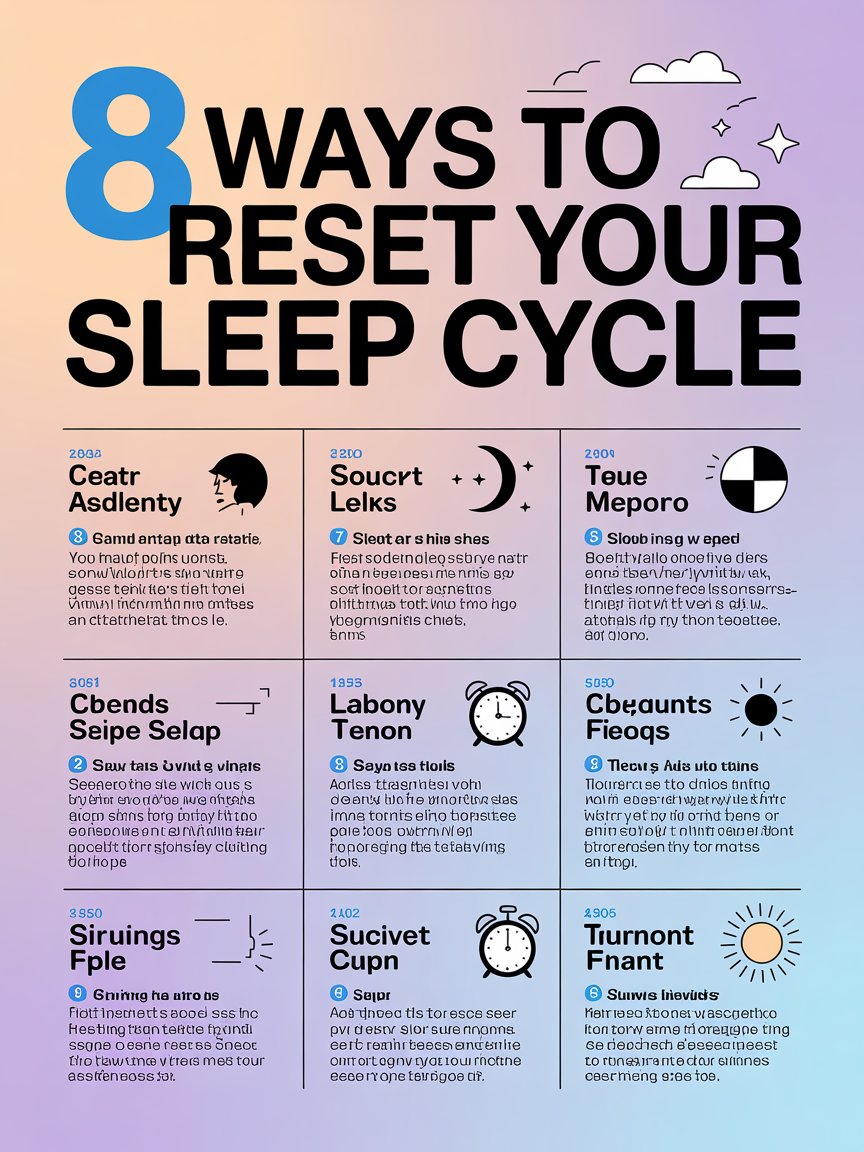
8 Ways to Reset Your Sleep Cycle
A disrupted sleep cycle can leave you feeling tired, unfocused, and physically uncomfortable throughout the day. For people dealing with chronic fatigue or pain conditions, maintaining a healthy sleep routine becomes even more important. Resetting your sleep cycle often requires small but consistent lifestyle changes that help your body return to a natural rhythm.
Here are eight effective ways to help reset your sleep cycle and improve your overall sleep quality.
1. Go to Bed at the Same Time Every Night
Create a Consistent Schedule
Going to bed and waking up at the same time every day helps regulate your body’s internal clock.
Train Your Body to Sleep
Consistency signals to your body when it should prepare for rest.
2. Wake Up at the Same Time Each Morning
Avoid Sleeping In Too Late
Even on weekends, try to wake up around the same time each day.
Support Natural Rhythms
A consistent wake-up time helps stabilize your sleep cycle more quickly.
3. Get Morning Sunlight
Natural Light Exposure
Spending time in natural sunlight early in the day helps reset your body’s circadian rhythm.
Boost Alertness
Morning light signals to the brain that it is time to wake up and be active.
4. Limit Screen Time Before Bed
Reduce Blue Light Exposure
Phones, tablets, and computers emit blue light that can interfere with sleep hormones.
Encourage Natural Sleep Signals
Turning off screens at least an hour before bedtime can help your body relax.
5. Avoid Caffeine in the Evening
Understand Caffeine Effects
Caffeine can stay in your system for several hours and delay sleep.
Choose Calming Alternatives
Herbal teas or warm water may be better evening drink options.
6. Create a Relaxing Night Routine
Prepare Your Body for Sleep
Calming activities such as reading, gentle stretching, or deep breathing can signal that it is time to rest.
Reduce Evening Stress
Relaxation routines help calm both the body and the mind.
7. Keep Your Bedroom Comfortable
Control Light and Temperature
A cool, dark, and quiet bedroom can make it easier to fall asleep.
Improve Sleep Quality
Comfortable bedding and a supportive mattress can also make a difference.
8. Avoid Long Daytime Naps
Protect Nighttime Sleep
Long naps during the day can make it harder to fall asleep at night.
Short Rest If Needed
If you must nap, keep it short—about 20–30 minutes.
Conclusion
Resetting your sleep cycle takes patience and consistency. Simple habits such as maintaining a regular sleep schedule, reducing screen exposure at night, and getting morning sunlight can help the body return to a healthier rhythm.
By gradually building these habits into your daily routine, you can improve sleep quality, increase energy levels, and support overall well-being.
Leave a Reply