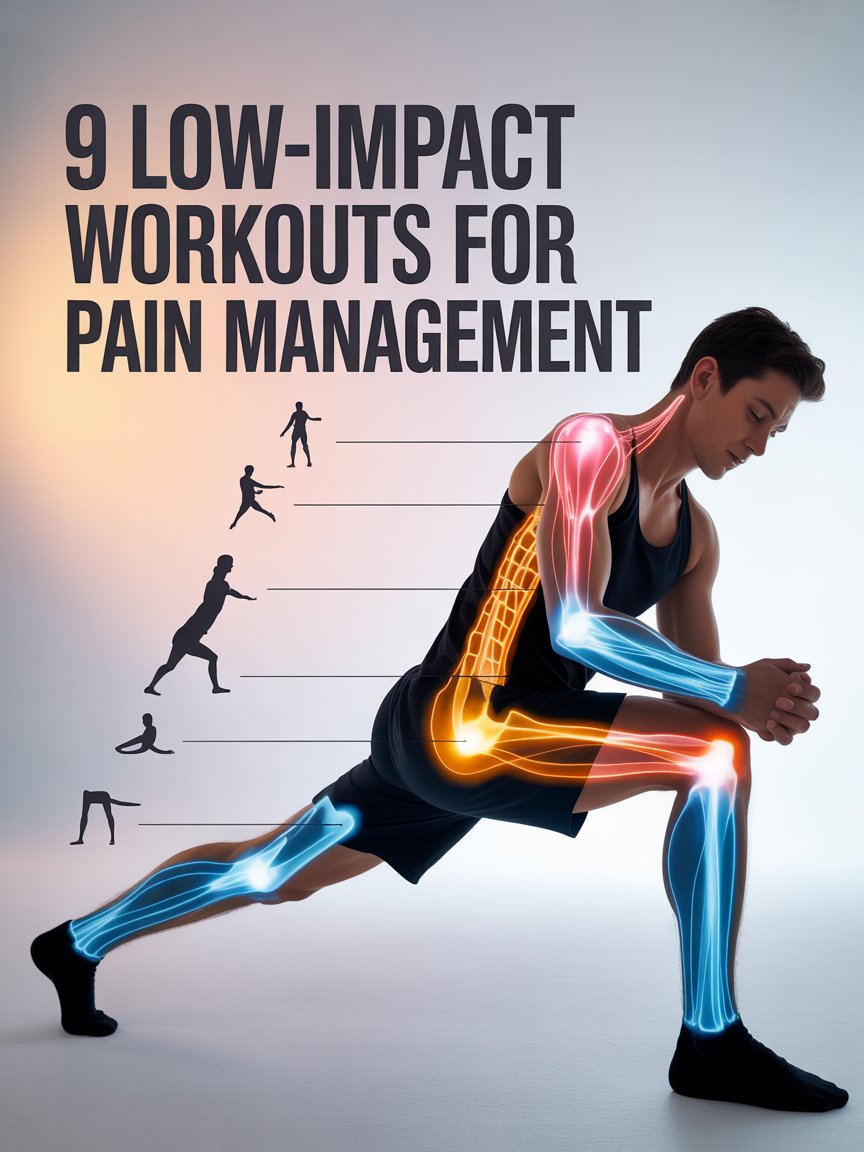
9 Low-Impact Workouts for Pain Management
Introduction
Managing chronic pain doesn’t mean avoiding movement altogether. In fact, the right kind of exercise can reduce stiffness, improve circulation, and boost overall well-being. Low-impact workouts are especially beneficial because they are gentle on the joints while still helping to build strength and flexibility.
Why Low-Impact Exercise Works
For individuals living with conditions like Chronic Pain or Fibromyalgia, high-intensity workouts can sometimes worsen symptoms. Low-impact exercises, on the other hand, minimize stress on the body while encouraging consistent movement, which is essential for pain management.
1. Walking
One of the simplest and most effective forms of exercise.
A short daily walk can improve circulation, reduce stiffness, and boost mood. Start with 10–15 minutes and gradually increase your time as your body adapts.
2. Swimming
Water-based exercise is ideal for pain relief.
Swimming reduces pressure on joints while allowing full-body movement. The buoyancy of water supports your body, making it easier to exercise without discomfort.
3. Water Aerobics
A gentle yet effective workout in a pool.
This involves slow, controlled movements in water that improve strength and flexibility. It’s especially helpful for those who find land-based exercises too painful.
4. Yoga
A combination of stretching, breathing, and relaxation.
Yoga helps improve flexibility and reduce muscle tension. Gentle styles are particularly beneficial for calming the nervous system and easing chronic pain symptoms.
5. Tai Chi
A slow, flowing form of movement.
Tai Chi focuses on controlled motions and deep breathing. It enhances balance, reduces stress, and improves overall body awareness.
6. Pilates
A core-strengthening workout with controlled movements.
Pilates helps improve posture, flexibility, and muscle tone without putting strain on joints. It’s great for supporting the spine and reducing back pain.
7. Stationary Cycling
A low-impact cardio option.
Using a stationary bike allows you to strengthen your legs and improve heart health without the joint impact of running. Keep resistance low to avoid overexertion.
8. Stretching Routines
Gentle stretching keeps muscles flexible and reduces stiffness.
Incorporating daily stretches can improve mobility and help prevent pain flare-ups. Focus on slow, controlled movements rather than deep or intense stretches.
9. Resistance Band Exercises
A simple way to build strength safely.
Resistance bands provide light tension that helps strengthen muscles without heavy weights. They are easy to use at home and can be adapted to your comfort level.
Tips for Safe Exercise
Always start slowly and listen to your body. Warm up before exercising and cool down afterward to prevent injury. Avoid pushing through pain—discomfort is a sign to rest or modify the movement.
Creating a Consistent Routine
Choose 2–3 activities you enjoy and rotate them throughout the week. Consistency is key, even if sessions are short. Regular movement helps maintain flexibility and reduces long-term pain.
Mental Benefits of Movement
Exercise doesn’t just help physically—it also improves mood and reduces stress. Gentle workouts can release endorphins, which naturally help manage pain and promote relaxation.
When to Take a Break
It’s important to rest during flare-ups or when pain intensifies. Adjust your routine based on how your body feels, and don’t hesitate to take recovery days when needed.
Long-Term Benefits
Over time, low-impact workouts can improve strength, flexibility, and endurance. They also help reduce the frequency and intensity of pain episodes, making daily activities easier.
Leave a Reply