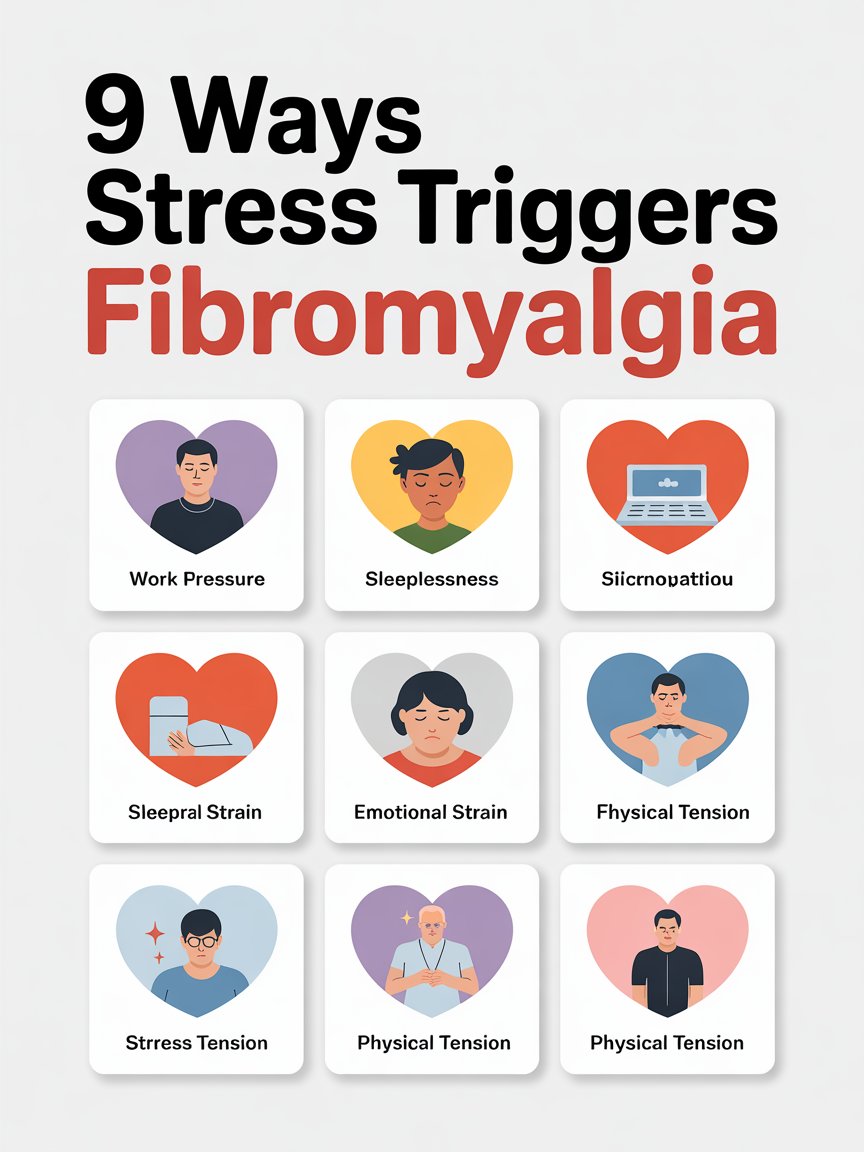
9 Ways Stress Triggers Fibromyalgia
Stress plays a major role in triggering and worsening fibromyalgia symptoms. Emotional, mental, and physical stress can affect the nervous system, increase pain sensitivity, and lead to flare-ups. For many people with fibromyalgia, managing stress is just as important as managing physical symptoms.
Understanding how stress impacts the body can help you recognize triggers and take steps to reduce their effects. Below are nine ways stress can trigger fibromyalgia symptoms.
1. Increases Pain Sensitivity
Heightened Nervous System Response
Stress can make the nervous system more sensitive, causing the body to feel pain more intensely.
Amplified Discomfort
Even mild sensations may feel stronger during stressful periods.
2. Causes Muscle Tension
Tight Muscles
Stress often leads to unconscious muscle tightening, especially in the neck, shoulders, and back.
Increased Stiffness
Prolonged tension can worsen muscle pain and stiffness.
3. Disrupts Sleep Patterns
Difficulty Falling Asleep
Stress can make it harder to relax and fall asleep at night.
Poor Sleep Quality
Lack of restful sleep can increase fatigue and pain the next day.
4. Triggers Fatigue
Energy Drain
Stress consumes both mental and physical energy.
Worsening Exhaustion
For people with fibromyalgia, this can lead to deeper and longer-lasting fatigue.
5. Increases Inflammation
Body’s Stress Response
Chronic stress may contribute to increased inflammation in the body.
Pain Flare-Ups
This can worsen overall discomfort and trigger flare-ups.
6. Affects Mood and Mental Health
Emotional Strain
Stress can lead to anxiety, irritability, or low mood.
Impact on Pain Perception
Emotional distress may make pain feel more intense and harder to manage.
7. Reduces Physical Activity
Avoidance of Movement
Stress and fatigue can reduce motivation to stay active.
Increased Stiffness
Less movement can lead to muscle tightness and reduced flexibility.
8. Disrupts Hormonal Balance
Stress Hormones
High levels of stress hormones like cortisol can affect many body systems.
Imbalance Effects
Hormonal changes may worsen sleep, pain sensitivity, and energy levels.
9. Weakens Coping Ability
Overwhelmed Mind
Chronic stress can make it harder to cope with daily challenges.
Reduced Resilience
This may lead to increased sensitivity to pain and other symptoms.
Conclusion
Stress is a powerful trigger for fibromyalgia symptoms, affecting both the body and the mind. From increasing pain sensitivity to disrupting sleep and energy levels, stress can make symptoms more difficult to manage.
By recognizing how stress impacts your body and adopting stress-management techniques—such as relaxation exercises, gentle movement, and supportive routines—you can reduce its effects and improve your overall quality of life.
Leave a Reply