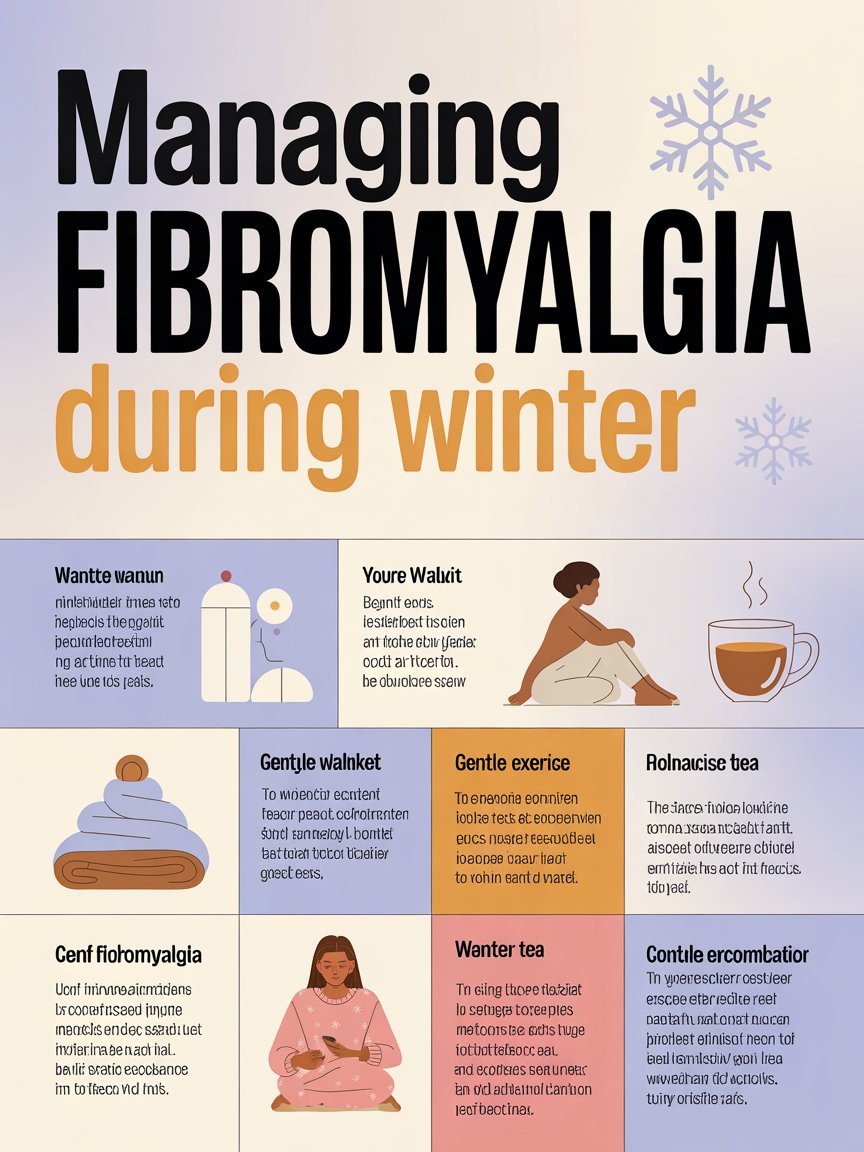
Managing Fibromyalgia During Winter
1. Understanding Winter Challenges
Fibromyalgia can feel more intense during the winter months. Cold temperatures, shorter daylight hours, and reduced activity levels may increase pain and fatigue. Understanding seasonal triggers is the first step toward better management.
2. Why Cold Weather Worsens Symptoms
Many people with fibromyalgia report increased stiffness and aching when temperatures drop. Cold air can cause muscles to tighten, which may heighten discomfort. Barometric pressure changes may also contribute to flare-ups.
3. Keeping the Body Warm
Staying warm is essential during winter. Dressing in layers, wearing thermal clothing, and using heated blankets can help maintain muscle comfort. Warm baths and showers may also relax tense muscles.
4. Prioritizing Gentle Movement
It can be tempting to stay inactive during colder months, but gentle movement is important. Light stretching, indoor walking, or yoga can reduce stiffness. Consistency helps prevent muscles from becoming overly tight.
5. Managing Winter Fatigue
Shorter days and limited sunlight may worsen fatigue. Maintaining a regular sleep schedule and allowing adequate rest is crucial. Exposure to natural daylight whenever possible can support energy levels.
6. Supporting Mental Health
Winter can affect mood, especially for those already managing chronic pain. Feelings of isolation may increase when outdoor activities are limited. Staying connected with supportive friends or family members helps maintain emotional balance.
7. Optimizing Indoor Comfort
Creating a warm, cozy home environment can reduce stress on the body. Use soft lighting, comfortable seating, and warm bedding. Minimizing drafts and maintaining consistent indoor temperatures can prevent discomfort.
8. Hydration Still Matters
People often drink less water during winter, but hydration remains important. Proper hydration supports muscle function and overall health. Warm herbal teas can be a comforting way to stay hydrated.
9. Eating for Seasonal Support
Nutritious meals rich in vegetables, lean proteins, and healthy fats support immune health and energy. Warm soups and balanced meals provide both comfort and nourishment. Avoiding excessive processed foods may help prevent inflammation.
10. Using Heat Therapy
Heat therapy can be especially beneficial during winter flare-ups. Heating pads, warm compresses, or electric blankets may ease muscle pain. Always use heat safely and avoid prolonged direct skin contact.
11. Protecting Sleep Quality
Cold bedrooms and reduced daylight can disrupt sleep patterns. Keep your sleeping space warm and dark at night. Limiting screen exposure before bed can improve rest and recovery.
12. Planning Activities Wisely
Winter weather may limit mobility or increase travel challenges. Plan outings carefully and allow extra time to avoid rushing. Balancing activity with rest prevents overexertion.
13. Practicing Stress Management
Stress can intensify fibromyalgia symptoms, especially during holiday seasons. Relaxation techniques such as deep breathing, meditation, or journaling can calm the nervous system. Reducing stress supports overall symptom control.
14. Communicating Seasonal Needs
Let friends, family, or coworkers know that winter may increase your symptoms. Clear communication encourages understanding and flexibility. Asking for support when needed reduces physical and emotional strain.
15. Embracing a Winter Self-Care Routine
Managing fibromyalgia during winter requires intentional self-care. Staying warm, maintaining gentle movement, prioritizing rest, and protecting mental health all make a difference. With thoughtful adjustments and proactive habits, winter can become more manageable and less overwhelming.
Leave a Reply