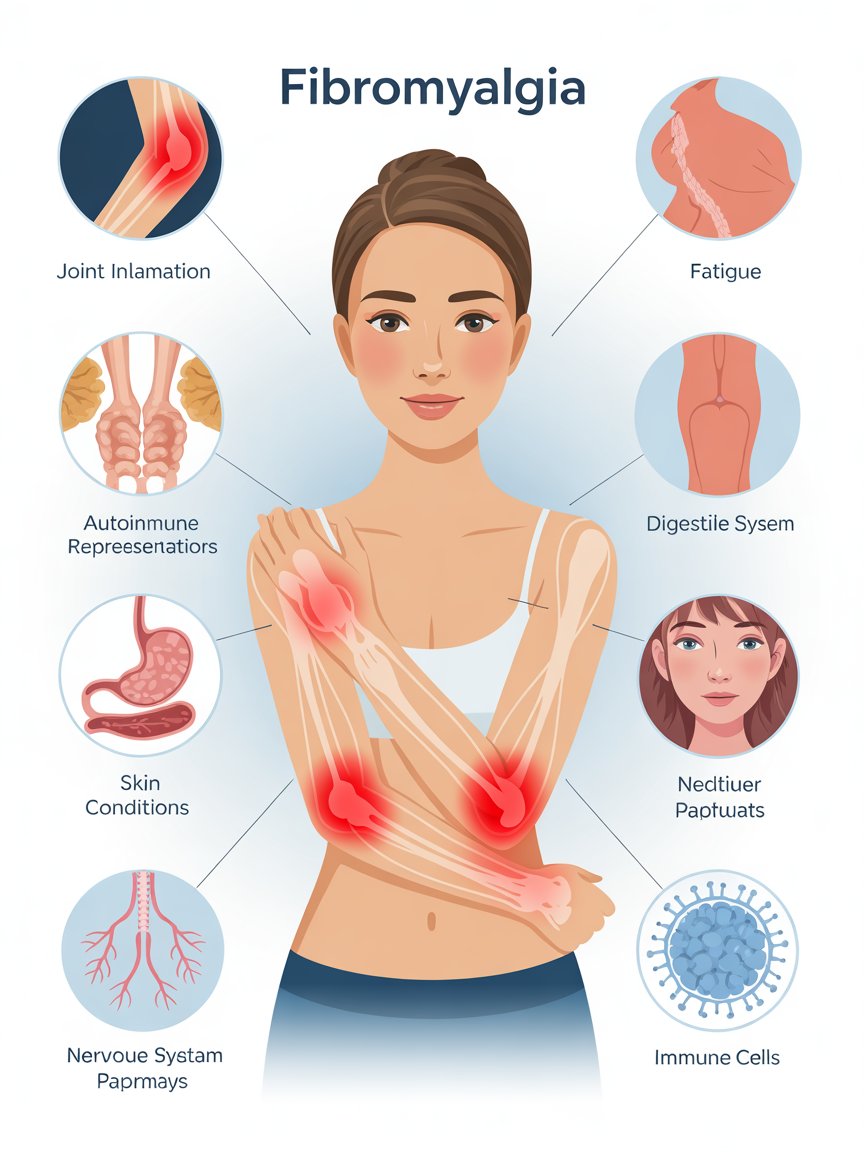
Fibromyalgia and Autoimmune Disorders
1. Understanding the Basics
Fibromyalgia is a condition characterized by widespread pain, fatigue, sleep disturbances, and cognitive difficulties. Many people diagnosed with fibromyalgia also have other health conditions. One area of growing interest is its relationship with autoimmune disorders.
2. What Are Autoimmune Disorders?
Autoimmune disorders occur when the immune system mistakenly attacks the body’s own healthy tissues. Instead of protecting the body from infection, the immune system creates inflammation and damage. These conditions can affect joints, organs, and connective tissues.
3. Is Fibromyalgia an Autoimmune Disease?
Fibromyalgia is not classified as an autoimmune disorder. Blood tests for autoimmune activity are usually normal in people with fibromyalgia. However, it often appears alongside autoimmune diseases, which can make symptoms more complex.
4. Common Autoimmune Conditions Linked to Fibromyalgia
Some autoimmune conditions frequently occur in people with fibromyalgia. Examples include Rheumatoid Arthritis, Systemic Lupus Erythematosus, and Hashimoto’s Thyroiditis. The overlap may increase pain, fatigue, and other symptoms.
5. Why These Conditions Often Coexist
Researchers believe shared biological factors may explain the connection. Chronic immune system activation, nervous system sensitivity, and genetic influences could play a role. These overlapping mechanisms may contribute to the development of both conditions.
6. Central Sensitization and Pain
Fibromyalgia is strongly linked to central sensitization. This means the brain and spinal cord amplify pain signals. When autoimmune diseases cause inflammation, this heightened sensitivity can make pain feel even more intense.
7. Fatigue as a Shared Symptom
Both fibromyalgia and autoimmune disorders commonly cause severe fatigue. This fatigue is not simply tiredness but a deep exhaustion that does not improve with rest. Managing energy levels becomes an important part of treatment.
8. The Role of Inflammation
Autoimmune diseases often involve significant inflammation. While fibromyalgia itself is not typically inflammatory, inflammation from another condition may worsen fibromyalgia symptoms. This can lead to more frequent or severe flare-ups.
9. Challenges in Diagnosis
Because symptoms overlap, diagnosing fibromyalgia alongside autoimmune disorders can be challenging. Joint pain, fatigue, and sleep problems may appear similar in both conditions. Doctors often use a combination of medical history, physical exams, and lab tests to distinguish them.
10. Impact on Daily Life
When both conditions occur together, daily life may become more demanding. Pain, stiffness, and fatigue can limit physical activity and concentration. Individuals may need to adapt routines to protect their health.
11. Treatment Approaches
Treatment usually focuses on managing each condition individually. Autoimmune diseases may require medications that control immune system activity. Fibromyalgia treatments often target nerve sensitivity and pain processing.
12. Lifestyle Strategies for Symptom Relief
Healthy lifestyle habits can support both conditions. Balanced nutrition, gentle exercise, and adequate sleep may help reduce symptom severity. Stress management also plays an important role in maintaining stability.
13. The Importance of Medical Support
Working closely with healthcare providers ensures proper diagnosis and treatment. Specialists such as rheumatologists often manage autoimmune diseases. A coordinated care plan helps address overlapping symptoms effectively.
14. Tracking Symptoms Carefully
Keeping a symptom journal can help distinguish which condition is causing certain symptoms. Tracking flare-ups, fatigue, and triggers may reveal patterns. This information supports better treatment decisions.
15. Living Well With Multiple Conditions
Managing fibromyalgia alongside autoimmune disorders can be challenging, but many people learn effective coping strategies. With medical guidance, supportive habits, and self-awareness, it is possible to maintain a meaningful and active life despite these health challenges.
Leave a Reply