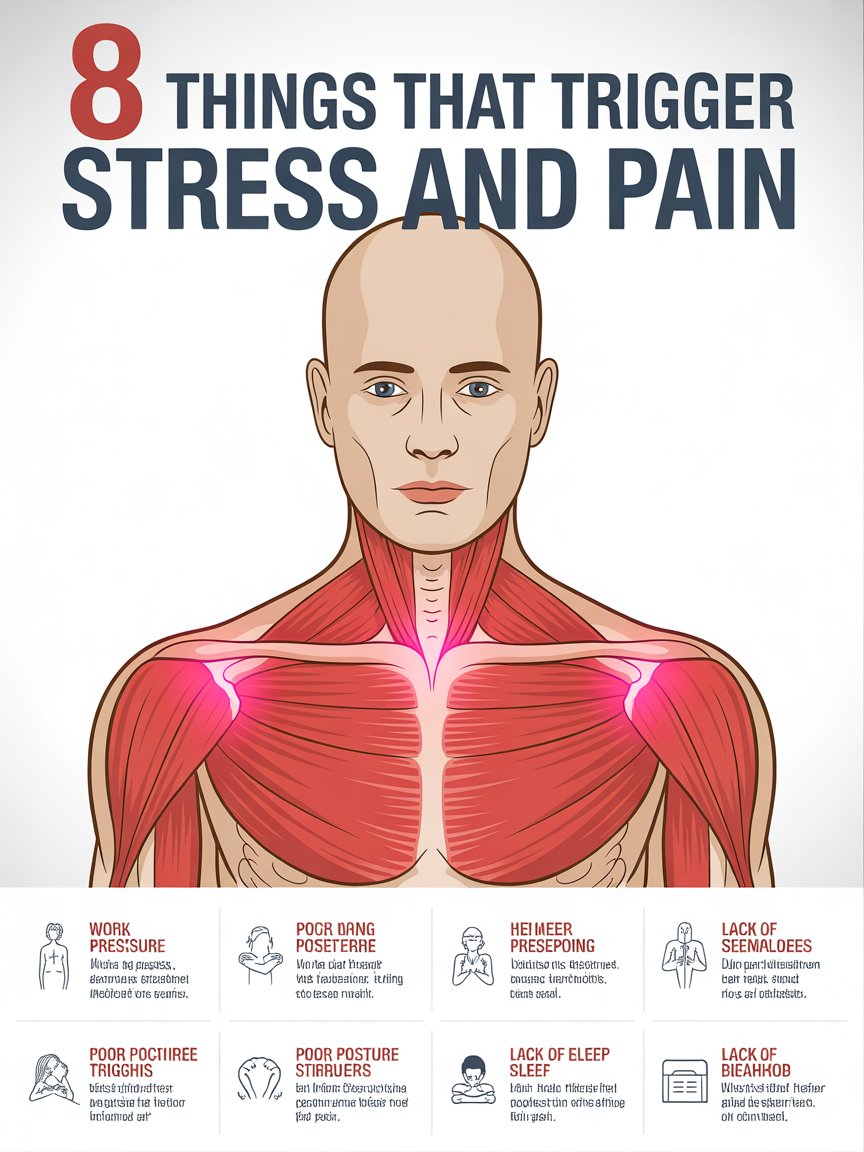
8 Things That Trigger Stress and Pain
Introduction
Stress and pain are closely connected, especially for those living with Fibromyalgia or Chronic Pain. When stress increases, the body becomes more sensitive, often making pain feel worse. Understanding common triggers can help you manage both stress and discomfort more effectively.
1. Lack of Sleep
Poor sleep can quickly increase stress levels and pain sensitivity.
When your body doesn’t get enough rest, it struggles to recover and regulate emotions.
What to Do
Maintain a consistent sleep schedule and create a calming bedtime routine.
2. Emotional Stress
Ongoing worry, anxiety, or tension can trigger both mental and physical discomfort.
Stress often leads to muscle tightness and increased pain signals.
What to Do
Practice relaxation techniques like deep breathing, meditation, or mindfulness.
3. Overexertion
Doing too much physically or mentally can overwhelm your body.
This often leads to fatigue, stress, and increased pain levels.
What to Do
Balance activity with rest and pace yourself.
4. Inactivity
Too little movement can also contribute to stress and stiffness.
Lack of activity may reduce circulation and increase discomfort.
What to Do
Include gentle movement such as walking or stretching.
5. Poor Diet
Unhealthy eating habits can affect both mood and physical health.
Certain foods may increase inflammation and energy crashes.
What to Do
Focus on balanced, nutrient-rich meals.
6. Dehydration
Not drinking enough water can impact your body’s balance.
Dehydration may lead to fatigue, headaches, and irritability.
What to Do
Stay hydrated throughout the day.
7. Negative Thinking
Your thoughts influence how your body responds to stress.
Constant negativity can increase emotional tension and pain perception.
What to Do
Practice positive thinking and mindfulness techniques.
8. Lack of Routine
An unpredictable daily schedule can increase stress.
Irregular habits can disrupt sleep, energy levels, and overall balance.
What to Do
Create a structured routine to support stability.
Understanding the Stress-Pain Connection
Stress and pain often feed into each other. When one increases, the other tends to follow, creating a cycle that can be difficult to break.
Breaking the Cycle
Managing stress through relaxation, movement, and healthy habits can help reduce pain levels over time.
Building Daily Balance
Small, consistent habits—like proper sleep, hydration, and gentle activity—can make a big difference in how your body responds to stress.
Long-Term Benefits
Reducing these triggers can lead to improved mood, less pain, and a better quality of life.
Leave a Reply