How to Prepare for a Fibromyalgia Flare
1. Understanding Fibromyalgia Flares
Fibromyalgia often involves periods when symptoms suddenly worsen, known as flare-ups. During a flare, pain, fatigue, and sensitivity may increase significantly. Preparing ahead of time can make these episodes easier to manage.
2. Recognizing Early Warning Signs
Many people notice certain signals before a flare begins. Increased fatigue, stiffness, poor sleep, or heightened stress may appear first. Paying attention to these early signs helps you take action sooner.
3. Identifying Personal Triggers
Fibromyalgia flares can be triggered by different factors such as stress, weather changes, overexertion, or poor sleep. Keeping track of what leads to flare-ups can help you avoid or reduce triggers. Awareness allows better planning.
4. Creating a Flare Management Plan
Having a simple plan in place can reduce stress when symptoms worsen. This may include adjusting activities, increasing rest time, and using pain management strategies. A prepared routine helps you respond calmly.
5. Preparing a Comfort Kit
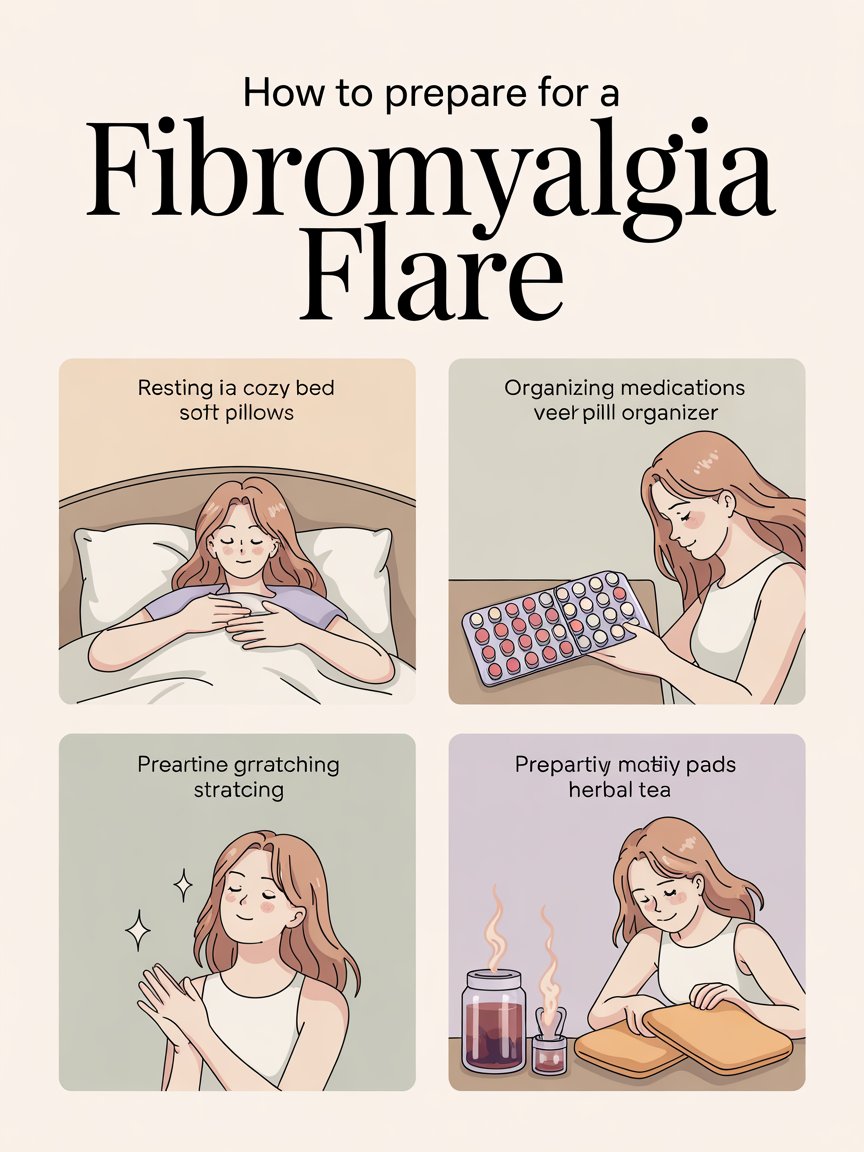
Some people benefit from a flare-up comfort kit. This might include heating pads, comfortable blankets, pain relief creams, or relaxation tools. Keeping these items nearby makes it easier to manage discomfort quickly.
6. Adjusting Your Schedule
During a flare, energy levels may drop significantly. Planning flexible schedules allows you to reduce tasks when needed. Prioritizing essential activities helps prevent further exhaustion.
7. Practicing Activity Pacing
Pacing means balancing activity and rest throughout the day. Instead of pushing through pain, break tasks into smaller steps. This approach can prevent symptoms from worsening.
8. Using Heat and Relaxation
Heat therapy often helps relax muscles and reduce pain during flares. Warm baths, heating pads, or hot showers may provide relief. Combining heat with relaxation techniques can enhance comfort.
9. Supporting Better Sleep
Sleep problems often intensify fibromyalgia flares. Creating a calming bedtime routine can help improve sleep quality. Reducing noise, dimming lights, and limiting screen time may support restful sleep.
10. Managing Stress Levels
Stress is one of the most common flare triggers. Relaxation practices such as meditation, deep breathing, or gentle stretching can calm the nervous system. Lower stress levels may shorten flare duration.
11. Maintaining Gentle Movement
While rest is important, complete inactivity can increase stiffness. Gentle stretching or light walking may help maintain circulation. Small movements can prevent muscles from tightening further.
12. Staying Hydrated and Nourished
Proper hydration and balanced nutrition support the body during flare-ups. Drinking enough water and eating nutrient-rich foods helps maintain energy. Avoid skipping meals during difficult days.
13. Communicating With Others
Let family members, coworkers, or friends know when you are experiencing a flare. Clear communication encourages understanding and support. This may also allow flexibility with responsibilities.
14. Consulting Healthcare Providers
If flares become severe or frequent, discussing them with a healthcare provider is important. Medical professionals may suggest treatment adjustments or new coping strategies. Professional guidance ensures safe symptom management.
15. Building Long-Term Resilience
Preparing for fibromyalgia flares is about creating habits that support your health. By recognizing triggers, planning ahead, and practicing self-care, you can reduce the impact of flare-ups. With preparation and patience, managing fibromyalgia becomes more manageable over time.
Leave a Reply