Fibromyalgia and Chronic Pain Management
1. Understanding Fibromyalgia and Chronic Pain
Fibromyalgia is a long-term condition that causes widespread pain throughout the body. Unlike many other pain disorders, fibromyalgia pain is linked to how the brain and nervous system process pain signals. Effective pain management strategies are important for improving comfort and maintaining daily function.
2. Why Chronic Pain Occurs in Fibromyalgia
Chronic pain in fibromyalgia is believed to result from changes in the central nervous system. The brain may amplify pain signals, making even mild sensations feel intense. This heightened pain sensitivity can lead to persistent discomfort.
3. Recognizing Common Pain Patterns
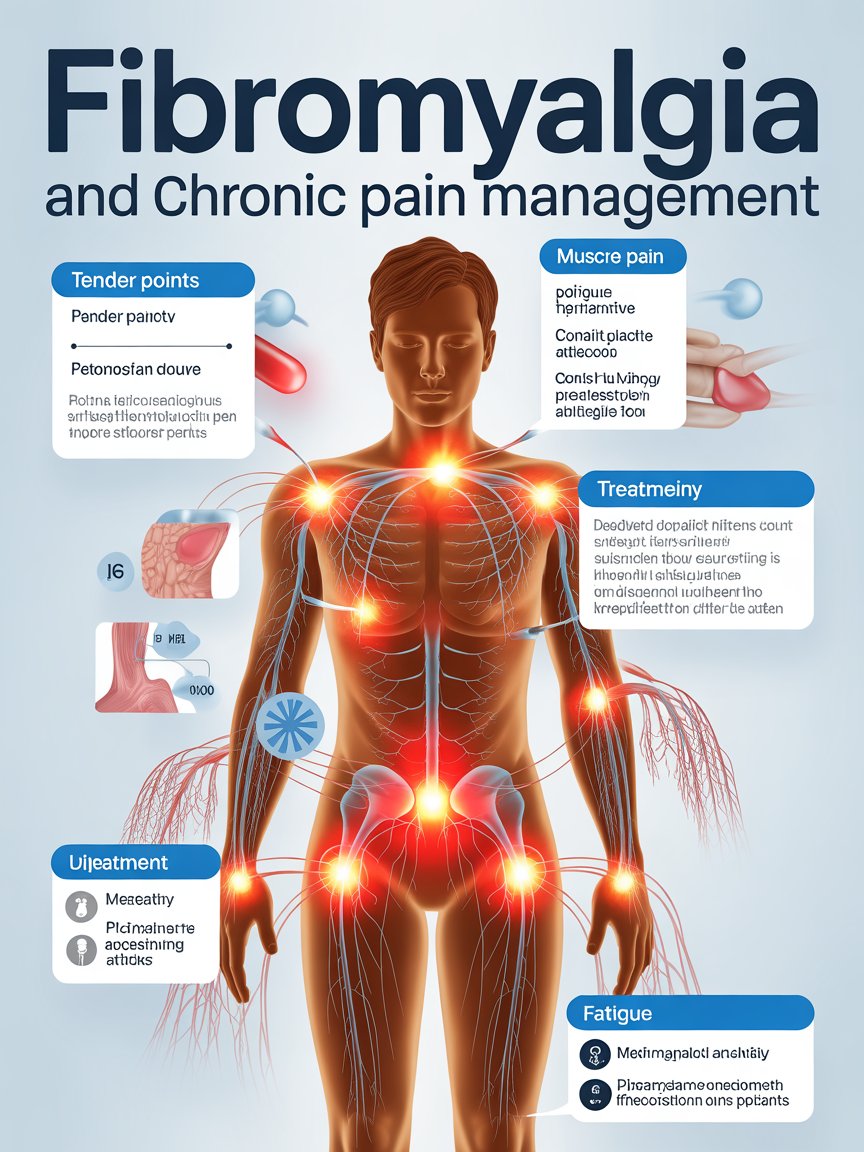
Fibromyalgia pain often appears in multiple areas of the body, including the neck, shoulders, back, hips, and legs. The pain may feel dull, aching, or burning. It may also shift from one area to another over time.
4. The Role of Stress in Pain Levels
Stress can significantly worsen fibromyalgia pain. When the body experiences stress, muscles tighten and the nervous system becomes more sensitive. Managing stress is an important part of chronic pain management.
5. Importance of Gentle Physical Activity
Although pain may make movement difficult, gentle exercise can help manage fibromyalgia symptoms. Activities such as walking, stretching, or swimming can improve circulation and reduce muscle stiffness. Regular movement can also increase flexibility.
6. Using Heat Therapy for Pain Relief
Heat therapy is commonly used to relieve fibromyalgia pain. Warm baths, heating pads, or warm compresses can relax muscles and improve blood flow. Many people find that warmth helps reduce stiffness and discomfort.
7. Practicing Relaxation Techniques
Relaxation techniques such as deep breathing, meditation, or mindfulness can calm the nervous system. These practices help reduce tension in the body and may lower pain levels. Regular relaxation can support better pain control.
8. Improving Sleep Quality
Poor sleep can worsen chronic pain in fibromyalgia patients. Establishing healthy sleep habits can help the body recover and manage pain more effectively. A consistent bedtime routine and comfortable sleep environment may improve rest.
9. Maintaining a Balanced Diet
Proper nutrition supports overall health and may help manage chronic pain. Eating a balanced diet with fruits, vegetables, whole grains, and lean proteins can provide essential nutrients. Healthy eating also helps maintain stable energy levels.
10. Pacing Daily Activities
Overexertion can trigger fibromyalgia flare-ups and increase pain. Learning to pace activities and take breaks throughout the day can prevent excessive strain. Balanced activity helps maintain energy and reduce pain intensity.
11. Identifying Personal Pain Triggers
Each person with fibromyalgia may have different triggers that worsen pain. These may include stress, lack of sleep, weather changes, or physical overexertion. Identifying these triggers can help individuals avoid or manage them.
12. Emotional Support and Pain Management
Living with chronic pain can affect emotional health. Support from friends, family, or support groups can provide encouragement and understanding. Emotional support can make coping with chronic pain easier.
13. Working With Healthcare Professionals
Healthcare providers play an important role in fibromyalgia pain management. They can offer guidance, treatment plans, and strategies to reduce symptoms. Professional advice ensures that patients receive appropriate care.
14. Developing Long-Term Pain Management Strategies
Managing fibromyalgia pain often requires a combination of approaches. Lifestyle adjustments, relaxation techniques, and healthy habits all contribute to better pain control. Consistency is key to long-term symptom management.
15. Living Well With Fibromyalgia
Although chronic pain can be challenging, many people learn effective ways to manage their symptoms. With the right strategies, individuals with fibromyalgia can improve their daily comfort and quality of life. Long-term management focuses on balance, self-care, and ongoing support.
Leave a Reply