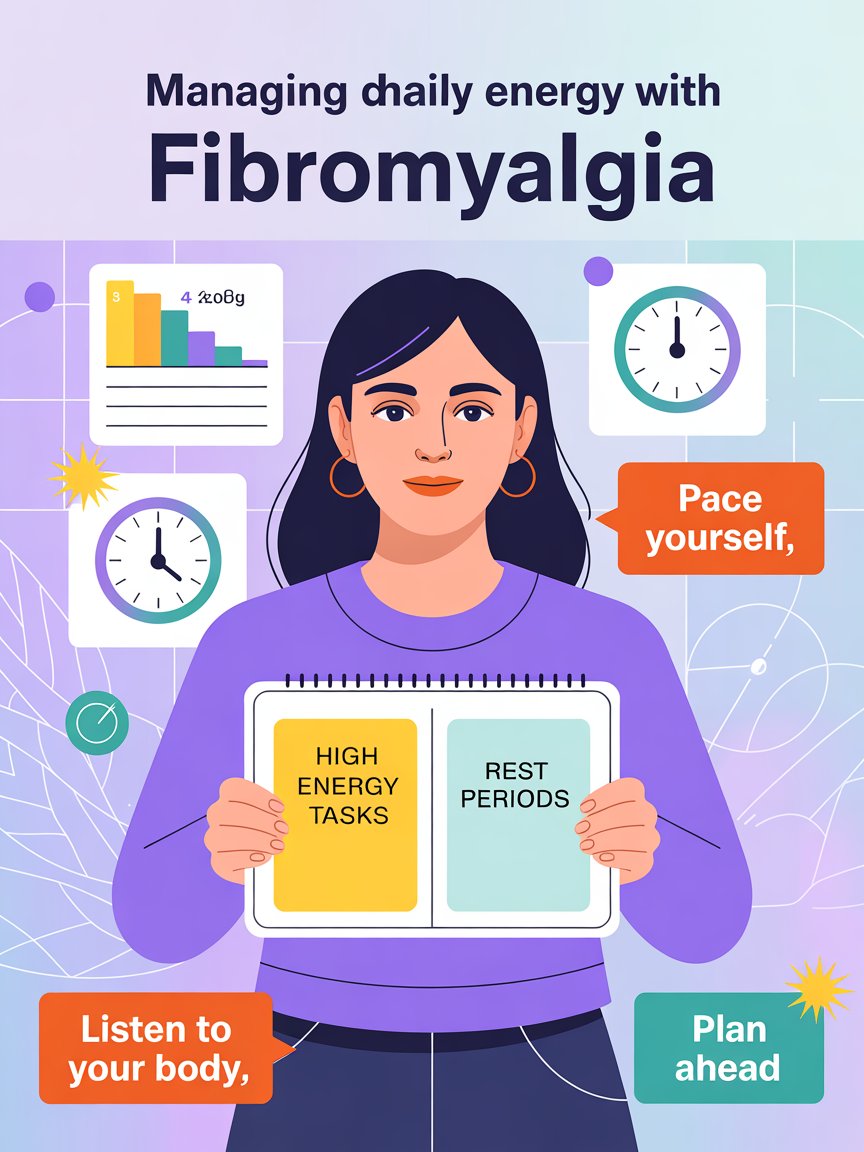
Fibromyalgia and Daily Energy Planning
1. Understanding Energy Limits in Fibromyalgia
Fibromyalgia is a chronic condition that often causes widespread pain, fatigue, and mental fog. One of the biggest challenges people with Fibromyalgia face is managing limited energy throughout the day. Many individuals experience sudden drops in energy, making even simple tasks feel overwhelming.
Daily energy planning helps people better organize activities so they do not exhaust themselves. By understanding personal energy limits, individuals can avoid severe fatigue and reduce the risk of symptom flare-ups.
2. Why Energy Management Matters
Managing energy is essential for maintaining a balanced lifestyle with fibromyalgia. When people push themselves too hard, their bodies may respond with increased pain, exhaustion, and difficulty concentrating.
Planning energy use helps prevent these setbacks. It allows individuals to distribute activities throughout the day in a way that protects their physical and mental well-being.
3. Recognizing Energy Patterns
Every person with fibromyalgia has different energy patterns. Some people feel more energetic in the morning, while others may function better later in the day.
Keeping a daily journal can help identify when energy levels are highest and lowest. Once these patterns are understood, activities can be scheduled during periods of higher energy.
4. The Importance of Pacing
Pacing is a key strategy for managing fibromyalgia symptoms. It involves balancing activity with rest to avoid overexertion.
Instead of completing many tasks at once, pacing encourages breaking tasks into smaller steps. This approach allows the body to recover and maintain a steady energy level.
5. Setting Realistic Goals
People with fibromyalgia often feel pressure to keep up with normal routines. However, setting realistic goals is important for protecting energy.
Simple adjustments, such as completing fewer tasks per day or spreading activities across several days, can prevent fatigue and stress.
6. Prioritizing Daily Activities
Not every task needs to be done immediately. Energy planning involves deciding which activities are most important and which can wait.
Prioritizing essential responsibilities helps conserve energy for tasks that truly matter while reducing unnecessary strain.
7. Taking Regular Rest Breaks
Rest breaks are a crucial part of daily energy management. Short breaks throughout the day allow the body to recover before fatigue becomes overwhelming.
Even a few minutes of relaxation or quiet time can help restore energy and improve focus.
8. Creating a Balanced Routine
A structured routine can make energy management easier. Planning specific times for work, rest, meals, and relaxation helps maintain consistency.
A balanced routine reduces stress on the body and prevents sudden energy crashes that are common with fibromyalgia.
9. Using the “Energy Budget” Concept
Some people describe their daily energy as an “energy budget.” Each task requires a certain amount of energy, and once that energy is spent, fatigue increases.
By thinking of energy like a limited resource, individuals can choose activities carefully and avoid overextending themselves.
10. Managing Stress to Protect Energy
Stress can quickly drain energy and worsen symptoms of fibromyalgia. Emotional strain may increase muscle tension and fatigue.
Practicing relaxation techniques such as deep breathing, meditation, or gentle stretching can help preserve energy and reduce stress.
11. The Role of Sleep in Energy Planning
Quality sleep plays a vital role in maintaining energy levels. Unfortunately, many people with fibromyalgia struggle with sleep disturbances.
Improving sleep habits, such as maintaining a regular bedtime and creating a comfortable sleep environment, can help restore energy and reduce daytime fatigue.
12. Gentle Physical Activity and Energy
Although fatigue is common, gentle physical activity can actually improve energy over time. Light exercises such as walking, stretching, or yoga can support circulation and muscle health.
The key is to keep activity levels moderate and consistent without pushing the body beyond its limits.
13. Listening to Your Body
One of the most important aspects of energy planning is learning to listen to your body. Early signs of fatigue, such as muscle soreness or mental fog, should not be ignored.
Responding to these signals by resting or slowing down can prevent symptoms from becoming more severe.
14. Building Support for Daily Tasks
Having support from family, friends, or caregivers can make energy planning easier. Sharing responsibilities helps reduce the physical and emotional burden.
Support systems allow individuals with fibromyalgia to focus their limited energy on activities that improve their quality of life.
15. Living Better Through Energy Awareness
Daily energy planning is a practical way to manage fibromyalgia symptoms and maintain balance in everyday life. By pacing activities, prioritizing tasks, and allowing time for rest, individuals can protect their energy.
With patience and self-awareness, people living with fibromyalgia can create routines that support both health and productivity, helping them live more comfortably despite the challenges of this condition.
Leave a Reply