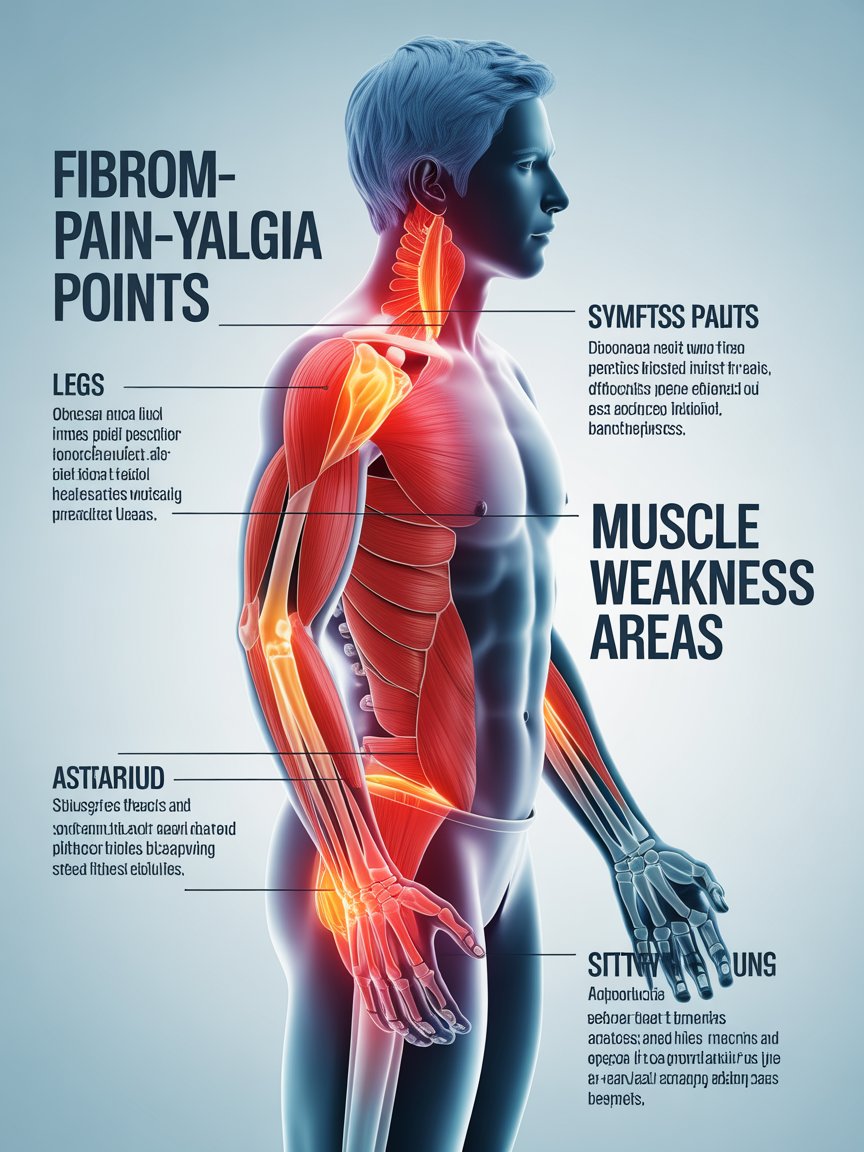
Fibromyalgia and Muscle Weakness
1. Understanding Fibromyalgia and Muscle Weakness
Fibromyalgia is widely known for causing widespread pain and fatigue, but many people with the condition also experience muscle weakness. This weakness can make everyday activities such as climbing stairs, carrying objects, or standing for long periods more difficult.
Muscle weakness in fibromyalgia is often related to fatigue, pain sensitivity, and reduced physical endurance rather than actual muscle damage.
2. What Muscle Weakness Feels Like
People with fibromyalgia may feel that their muscles tire quickly or lack strength. Tasks that once felt easy may suddenly require more effort.
This sensation can occur in different parts of the body, including the arms, legs, back, and shoulders.
3. The Role of Chronic Fatigue
Fatigue is one of the most common symptoms of fibromyalgia and can contribute greatly to muscle weakness. When the body lacks energy, muscles may feel heavy and less capable of performing physical tasks.
Persistent fatigue can also reduce motivation for movement, which may further weaken muscles over time.
4. Pain and Muscle Function
Chronic pain can interfere with how muscles function. When muscles are constantly tense due to pain, they may not work efficiently.
This tension can reduce flexibility and make muscles feel weaker or less responsive.
5. Reduced Physical Activity
Because fibromyalgia causes pain and exhaustion, many people become less physically active. Reduced activity can lead to muscle deconditioning, meaning muscles gradually lose strength.
Over time, this lack of movement may contribute to increased weakness and stiffness.
6. Nervous System Sensitivity
Fibromyalgia is closely linked to how the nervous system processes pain signals. The nervous system may become more sensitive, causing normal muscle activity to feel painful or exhausting.
This heightened sensitivity can make muscles feel weaker even when they are not physically damaged.
7. Sleep Disturbances and Weakness
Poor sleep is another major factor in fibromyalgia. When sleep is interrupted or not restorative, the body may not fully recover from daily physical activity.
Lack of quality sleep can worsen fatigue and increase the sensation of muscle weakness.
8. Muscle Stiffness and Reduced Strength
Many people with fibromyalgia also experience muscle stiffness, especially in the morning. Stiff muscles may limit movement and reduce strength during daily tasks.
Gentle stretching can help loosen tight muscles and improve mobility.
9. The Importance of Gentle Exercise
Although exercise may feel challenging, gentle physical activity can help improve muscle strength and endurance. Activities like walking, swimming, and stretching can support muscle health.
Starting slowly and gradually increasing activity levels can prevent symptom flare-ups.
10. Strength-Building Activities
Light strength exercises using resistance bands or small weights can help improve muscle tone over time. These exercises should be performed carefully to avoid overexertion.
Consistent, low-intensity strength training can gradually increase muscle capacity.
11. Balanced Nutrition for Muscle Health
Proper nutrition supports muscle strength and recovery. A balanced diet that includes protein, vitamins, and minerals helps maintain muscle function.
Adequate hydration is also important for muscle performance and overall health.
12. Managing Energy Levels
Energy management is essential for people with fibromyalgia. Spreading activities throughout the day and taking breaks can prevent exhaustion.
This strategy, often called pacing, helps conserve energy and reduce muscle fatigue.
13. Physical Therapy Support
Physical therapy can be helpful for managing muscle weakness. A trained therapist can design exercises tailored to an individual’s comfort level and physical ability.
These personalized programs can improve strength while minimizing pain.
14. Listening to Your Body
Understanding personal limits is important when managing fibromyalgia symptoms. Pushing too hard can trigger flare-ups and increase muscle pain.
Balancing activity with rest allows muscles to recover and function better over time.
15. Improving Strength Over Time
While muscle weakness can be a challenging symptom of fibromyalgia, gradual lifestyle changes can help improve strength and endurance. Gentle exercise, proper rest, and healthy nutrition all play important roles.
With consistent care and patience, many individuals with fibromyalgia can build stronger muscles and improve their ability to perform daily activities.
Leave a Reply