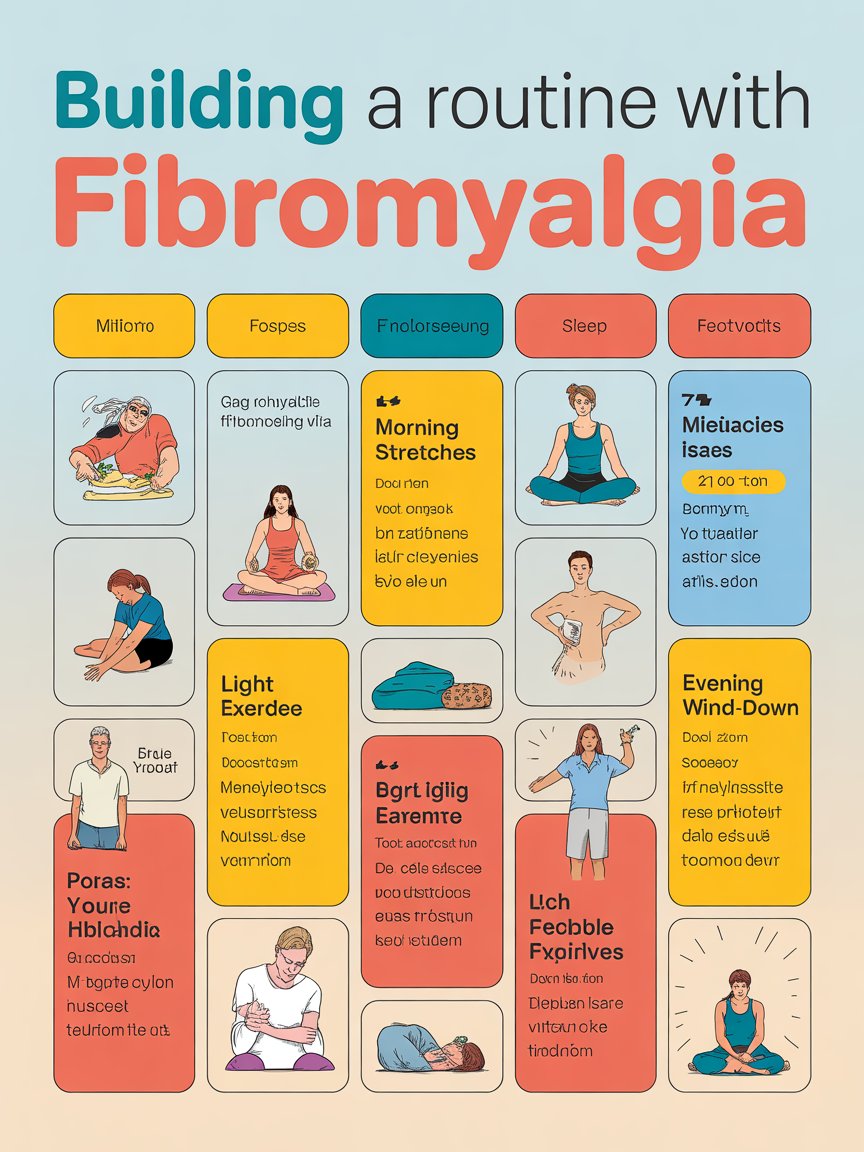
Building a Routine With Fibromyalgia
1. Understanding the Importance of Routine
Living with Fibromyalgia can make daily life unpredictable due to symptoms such as pain, fatigue, and sleep problems. Because symptoms may vary from day to day, having a structured routine can help bring stability and balance.
A consistent routine allows individuals to manage energy levels better and reduce the chances of symptom flare-ups.
2. Starting the Day Gently
Mornings can be particularly difficult for people with fibromyalgia because of stiffness and fatigue. Starting the day slowly can help the body adjust.
Gentle stretching, deep breathing, or a warm shower can help relax muscles and prepare the body for daily activities.
3. Planning Activities Carefully
Creating a daily plan helps organize tasks and avoid unnecessary stress. Prioritizing important activities and spreading them throughout the day prevents physical and mental overload.
A written schedule or planner can help keep tasks manageable.
4. Practicing Energy Pacing
Energy pacing means balancing activity with rest. Doing too much at once can lead to exhaustion and flare-ups.
Taking regular breaks and dividing tasks into smaller steps helps conserve energy and maintain productivity.
5. Including Gentle Movement
Regular physical activity is beneficial for managing fibromyalgia symptoms. Activities such as walking, stretching, or yoga can improve flexibility and reduce stiffness.
Even short periods of movement can help maintain strength and circulation.
6. Maintaining Consistent Meal Times
Eating meals at regular times helps support energy levels throughout the day. Balanced meals that include protein, whole grains, and vegetables can provide steady nutrition.
Proper nutrition also supports overall health and recovery.
7. Creating Time for Relaxation
Relaxation is an essential part of a healthy routine for people with fibromyalgia. Stress can worsen symptoms, so it is important to include calming activities during the day.
Meditation, reading, or quiet rest can help reduce tension and improve emotional well-being.
8. Managing Work and Responsibilities
Work and daily responsibilities may need to be adjusted when living with fibromyalgia. Breaking tasks into smaller steps and allowing flexible schedules can reduce strain.
Setting realistic goals helps maintain productivity without overwhelming the body.
9. Staying Hydrated
Proper hydration supports overall health and energy levels. Drinking enough water throughout the day helps maintain body functions and may reduce fatigue.
Keeping a water bottle nearby can serve as a helpful reminder.
10. Reducing Sensory Overload
People with fibromyalgia may be sensitive to noise, bright lights, or busy environments. A routine that includes quiet and comfortable spaces can help reduce sensory stress.
Creating a calm environment allows the body to relax and recover.
11. Taking Short Rest Breaks
Rest breaks are essential for maintaining energy. Short periods of rest between activities allow the body to recover and prevent overexertion.
Even a few minutes of relaxation can help restore focus and strength.
12. Maintaining a Consistent Sleep Schedule
Sleep problems are common with fibromyalgia, making a regular sleep routine important. Going to bed and waking up at the same time each day can improve sleep patterns.
A relaxing bedtime routine can help prepare the body for restful sleep.
13. Tracking Symptoms and Energy Levels
Keeping a journal of symptoms, activities, and energy levels can help identify patterns. This information allows individuals to adjust their routines to better suit their needs.
Tracking progress can also help recognize improvements over time.
14. Allowing Flexibility in the Routine
While routines provide structure, it is also important to remain flexible. Some days may require more rest or fewer activities.
Listening to the body’s signals and adjusting plans when needed helps prevent flare-ups.
15. Creating a Balanced Lifestyle
Building a routine with fibromyalgia is about balancing activity, rest, nutrition, and relaxation. A well-planned routine can reduce stress and improve daily functioning.
With patience and consistency, individuals can develop habits that support better health and a more comfortable lifestyle.
Leave a Reply