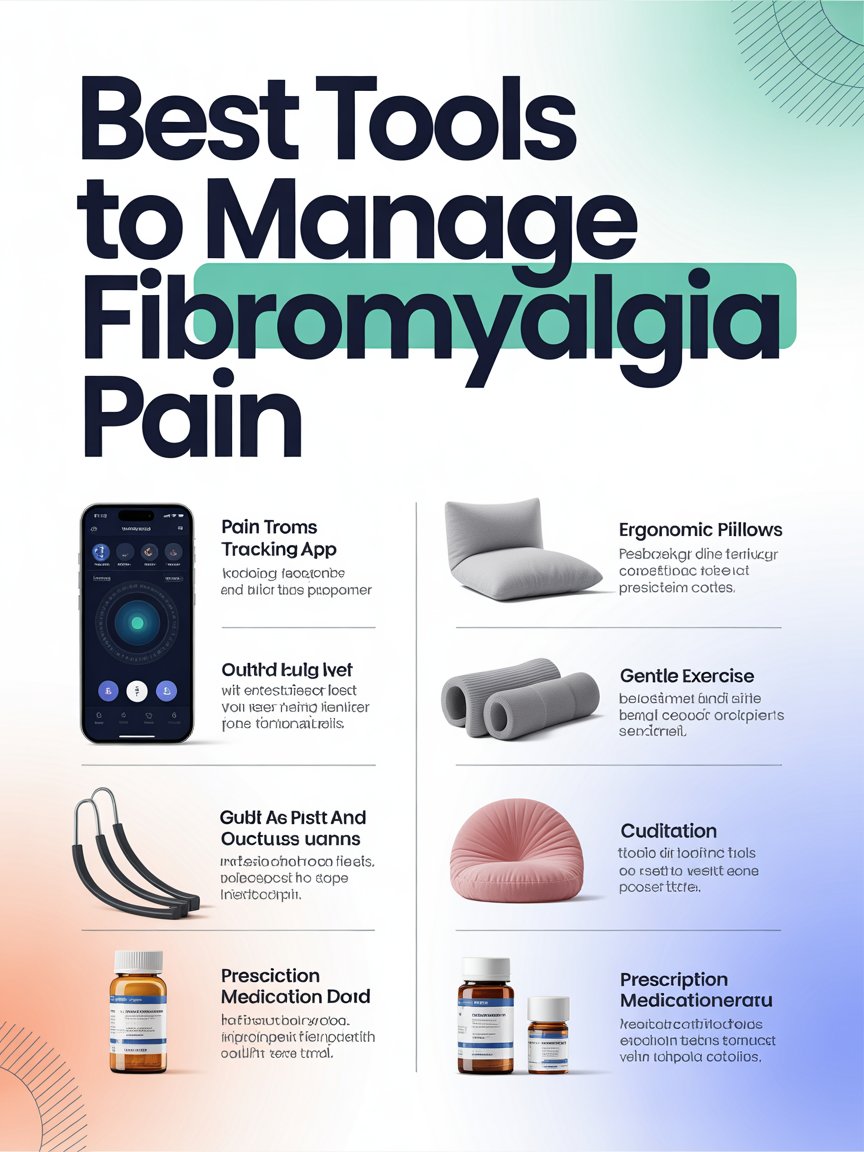
Best Tools to Manage Fibromyalgia Pain
1. Understanding Pain Management Tools
Fibromyalgia causes widespread pain, fatigue, and muscle stiffness. Because symptoms can vary in intensity, many people use different tools and devices to help manage discomfort in daily life.
These tools can support pain relief, improve relaxation, and help individuals stay active while coping with fibromyalgia.
2. Heating Pads and Heat Wraps
Heat therapy is one of the simplest and most effective tools for fibromyalgia pain. Heating pads, warm compresses, and heat wraps help relax tight muscles and improve blood circulation.
Applying heat to sore areas can reduce stiffness and provide quick relief during flare-ups.
3. TENS Units (Electrical Nerve Stimulation Devices)
A Transcutaneous Electrical Nerve Stimulation (TENS) unit is a small device that sends mild electrical pulses through the skin using electrode pads.
These pulses can interfere with pain signals and stimulate the release of natural pain-relieving chemicals in the body. TENS units are widely used for chronic pain conditions including fibromyalgia.
4. Massage Tools and Massage Guns
Massage tools such as handheld massagers or massage guns help loosen tight muscles and reduce tension.
Percussive massage devices use vibrations to improve circulation and relieve muscle knots, which can decrease pain and stiffness in fibromyalgia.
5. Weighted Blankets for Relaxation
Weighted blankets provide gentle pressure across the body, which may help calm the nervous system and promote relaxation.
Many people with fibromyalgia use them to improve sleep and reduce anxiety during painful flare-ups.
6. Foam Rollers and Stretching Tools
Foam rollers and stretching tools help release muscle tension and improve flexibility. Rolling tight muscles can reduce stiffness and increase mobility.
These tools are especially useful after gentle exercise or stretching routines.
7. Smartwatches and Fitness Trackers
Wearable devices like fitness trackers can help monitor sleep patterns, physical activity, and heart rate.
Because sleep problems and fatigue are common in fibromyalgia, tracking sleep quality can help identify habits that improve rest and recovery.
8. Noise-Canceling Headphones
People with fibromyalgia often experience sensory sensitivity. Noise-canceling headphones can reduce loud environmental sounds and create a calmer atmosphere.
This tool is especially helpful for individuals who experience sensory overload or stress-related flare-ups.
9. Blue Light Blocking Glasses
Bright lights and screen exposure can trigger headaches or worsen fatigue for some people with fibromyalgia.
Blue light blocking glasses filter harsh light from screens and may help reduce eye strain and migraine triggers.
10. Topical Pain Relief Creams
Topical gels or creams containing menthol or cooling ingredients can provide localized relief.
When gently massaged into painful areas, these products can reduce nerve sensitivity and soothe sore muscles.
11. Ergonomic Pillows and Support Cushions
Supportive pillows and cushions help maintain proper body alignment during rest and sleep.
These tools can reduce pressure on sensitive muscles and joints, helping decrease nighttime pain.
12. Acupressure Mats
Acupressure mats contain small pressure points that stimulate the skin and muscles.
Some people find that lying on these mats helps improve circulation, relax muscles, and reduce pain sensitivity.
13. Pain Tracking Apps or Journals
Tracking pain levels and triggers can help people understand patterns in their symptoms.
Pain tracking apps or journals allow individuals to record flare-ups, activities, and sleep habits to better manage their condition.
14. Gentle Exercise Equipment
Simple equipment such as yoga mats, resistance bands, or stretching straps can support gentle physical activity.
Regular low-impact movement can improve flexibility and reduce stiffness associated with fibromyalgia.
15. Combining Tools for Better Results
No single tool works for everyone with fibromyalgia. Most people find the best results by combining several approaches, such as heat therapy, relaxation tools, gentle exercise, and pain tracking.
Using the right tools consistently can help reduce pain, improve comfort, and make daily life more manageable for people living with fibromyalgia.
Leave a Reply