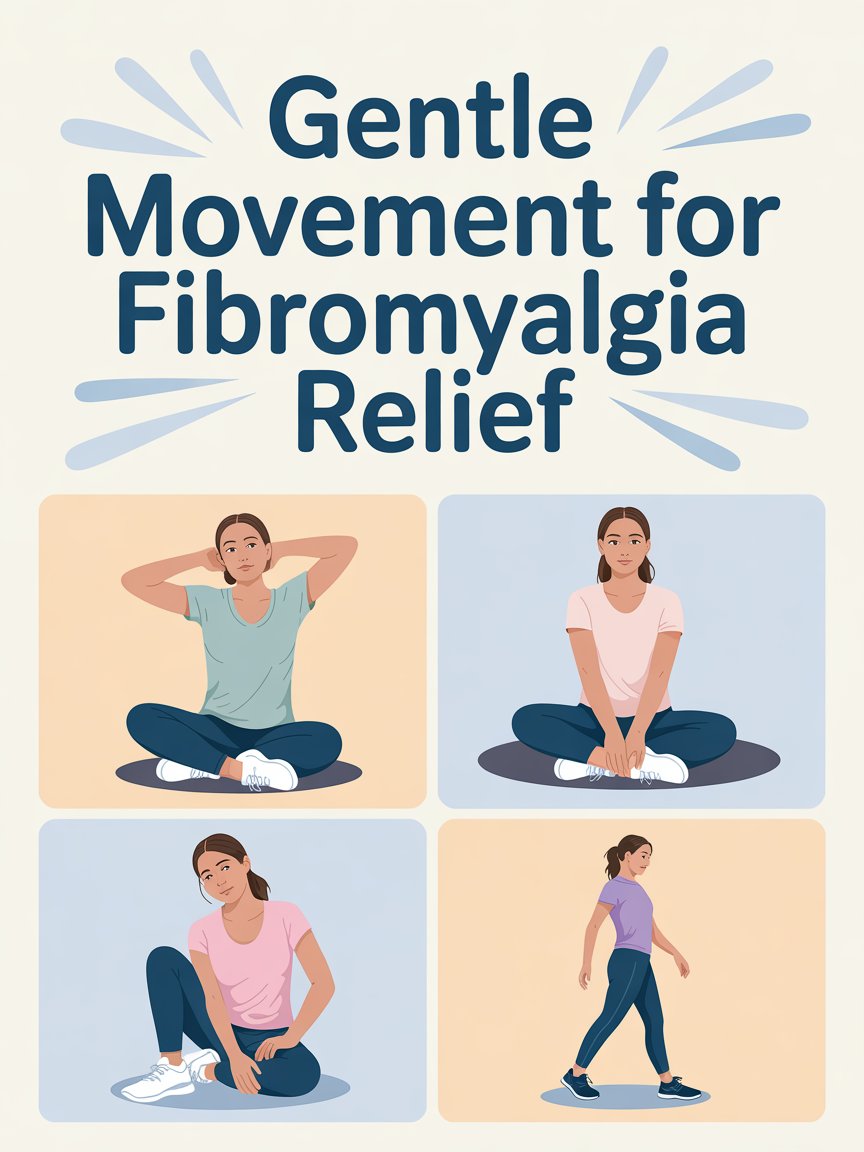
Gentle Movement for Fibromyalgia Relief
1. Understanding the Role of Movement
Fibromyalgia often causes widespread pain, fatigue, and stiffness. Because of these symptoms, many people may feel hesitant to exercise. However, gentle movement can actually help reduce discomfort and improve overall well-being.
The key is choosing low-impact activities that support the body without causing strain.
2. Why Gentle Movement Helps
Gentle physical activity improves blood circulation, which helps deliver oxygen and nutrients to muscles. This can reduce stiffness and promote healing.
Movement also encourages the release of natural chemicals in the body that help reduce pain and improve mood.
3. Starting Slowly and Safely
Beginning with small amounts of activity is important. Even five to ten minutes of gentle movement can be beneficial.
Gradually increasing duration and intensity over time helps prevent flare-ups and allows the body to adjust.
4. Walking for Flexibility and Strength
Walking is one of the simplest forms of exercise. It is low-impact and can be adjusted to match individual energy levels.
Short walks, either indoors or outdoors, can help maintain muscle strength and improve circulation.
5. Gentle Stretching
Stretching helps loosen tight muscles and reduce stiffness. Slow, controlled stretches can improve flexibility and ease tension.
Stretching is especially helpful in the morning when muscles may feel stiff.
6. Yoga for Relaxation and Balance
Gentle yoga combines stretching with breathing exercises. This type of movement helps calm the nervous system while improving flexibility.
Simple poses performed at a comfortable pace can support both physical and emotional well-being.
7. Water-Based Exercises
Swimming or water aerobics are excellent options for people with fibromyalgia. Water supports the body and reduces pressure on joints.
Warm water can also soothe sore muscles and promote relaxation.
8. Tai Chi and Slow Movement Practices
Tai chi involves slow, flowing movements that improve balance and coordination. It also encourages mindfulness and relaxation.
These slow exercises can help reduce stress and improve body awareness.
9. Breathing Exercises and Light Mobility
Deep breathing combined with gentle arm or shoulder movements can relax tight muscles. Controlled breathing reduces tension and supports oxygen flow.
Even small movements throughout the day can prevent stiffness.
10. Creating a Comfortable Environment
A calm and quiet space can make movement more enjoyable. Soft lighting and comfortable clothing help reduce sensory discomfort.
A supportive environment encourages consistency with gentle exercise.
11. Listening to Your Body
Paying attention to pain and fatigue levels is essential. Mild discomfort may occur when starting new activities, but sharp or intense pain should not be ignored.
Adjusting movements or resting when needed helps prevent worsening symptoms.
12. Maintaining Consistency
Regular movement, even in small amounts, is more effective than occasional intense workouts. Consistency supports long-term symptom relief.
Establishing a simple routine makes it easier to stay active.
13. Combining Movement With Rest
Balancing activity with rest is important. After gentle exercise, allowing time for relaxation helps muscles recover.
This balance prevents overexertion and supports steady progress.
14. Emotional Benefits of Gentle Exercise
Physical movement can improve mood and reduce stress. Many people with fibromyalgia notice improved mental clarity and emotional stability after gentle exercise.
Reducing stress also helps lower pain sensitivity.
15. Building Strength Over Time
Gentle movement is a safe and effective way to manage fibromyalgia symptoms. With patience and gradual progress, individuals can improve flexibility, reduce stiffness, and enhance overall comfort.
By choosing low-impact activities and listening to the body’s signals, people with fibromyalgia can experience relief and maintain a more active lifestyle.
Leave a Reply