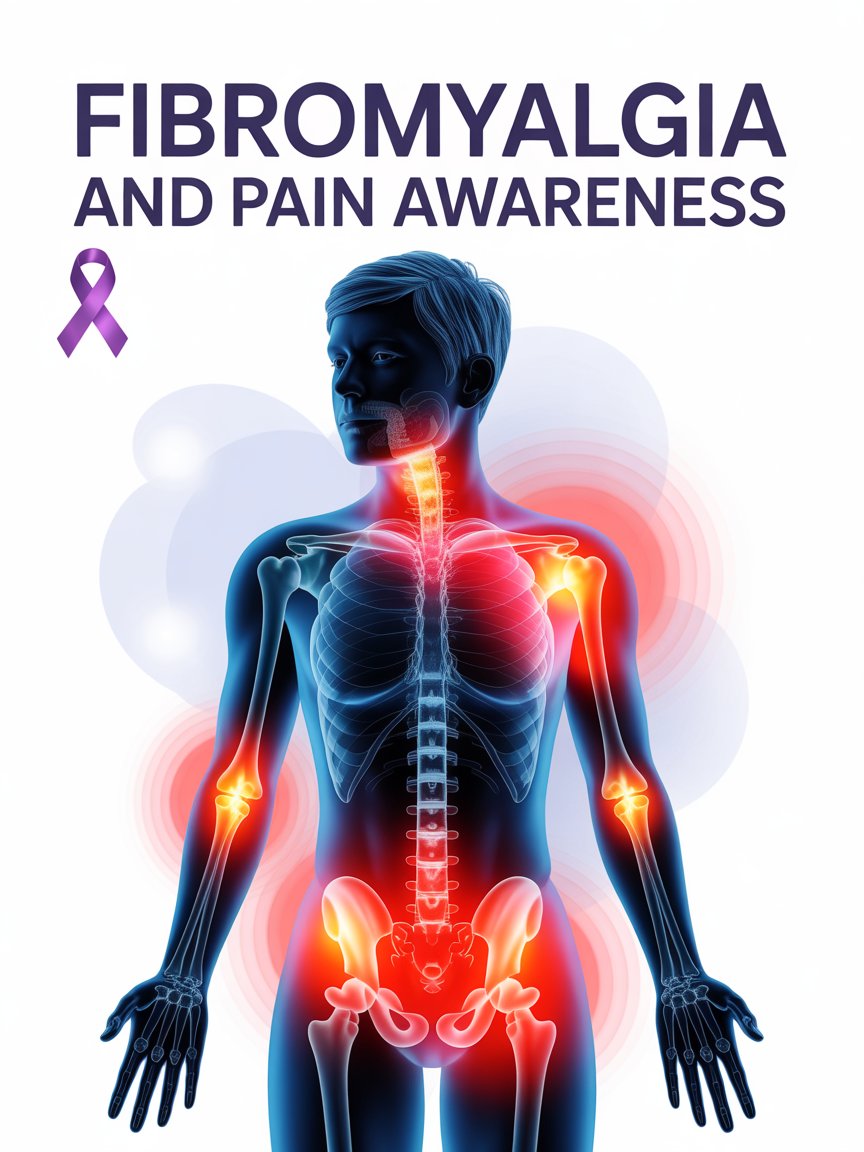
Fibromyalgia and Pain Awareness
1. Understanding Pain in Fibromyalgia
Fibromyalgia is primarily known for causing widespread and persistent pain throughout the body. This pain can affect muscles, joints, and soft tissues, making everyday activities more challenging.
Pain awareness helps individuals recognize how their body responds to different situations and triggers.
2. What Pain Awareness Means
Pain awareness involves understanding when pain begins, how intense it becomes, and what may cause it. Being aware of these patterns can help people respond more effectively to symptoms.
This awareness allows individuals to make adjustments before pain becomes overwhelming.
3. How Fibromyalgia Pain Feels
Fibromyalgia pain is often described as aching, burning, or throbbing. It may move from one area of the body to another and can vary in intensity from day to day.
Recognizing these sensations can help individuals better communicate their experiences to healthcare providers and loved ones.
4. The Role of the Nervous System
Fibromyalgia is believed to affect how the brain and nervous system process pain signals. The body may become more sensitive to sensations that would not normally cause discomfort.
This heightened sensitivity explains why pain awareness is especially important for people with fibromyalgia.
5. Identifying Pain Triggers
Certain factors may trigger or worsen pain symptoms. These can include stress, poor sleep, weather changes, or physical overexertion.
Identifying these triggers can help individuals reduce their impact on daily life.
6. Monitoring Daily Symptoms
Keeping track of pain levels throughout the day can provide valuable insights. Some people use journals or mobile apps to record symptoms and activities.
This information can reveal patterns that help with better symptom management.
7. Recognizing Early Warning Signs
Pain often increases gradually before becoming severe. Early warning signs might include muscle tightness, fatigue, or increased sensitivity.
Responding early by resting or adjusting activities can help prevent a full flare-up.
8. The Importance of Body Awareness
Developing body awareness means paying attention to physical sensations without ignoring them. Learning to recognize discomfort early allows individuals to take action before pain intensifies.
This practice encourages healthier responses to symptoms.
9. Communicating About Pain
Pain awareness also helps individuals describe their symptoms more clearly. Explaining the type, location, and intensity of pain can help healthcare providers understand the condition better.
Clear communication can support more effective care.
10. Using Relaxation Techniques
Relaxation techniques such as deep breathing, meditation, or gentle stretching can help calm the nervous system.
Reducing physical and emotional tension may help decrease pain intensity.
11. Balancing Activity and Rest
Too much activity can worsen fibromyalgia pain, while too little movement may cause stiffness.
Balancing activity with regular rest periods supports better pain control.
12. Creating a Comfortable Environment
A supportive environment can help reduce pain triggers. Comfortable furniture, proper posture, and relaxing surroundings may ease muscle tension.
Small adjustments in daily surroundings can improve overall comfort.
13. Emotional Awareness and Pain
Emotions can influence how pain is experienced. Stress, anxiety, or frustration may increase pain sensitivity.
Being aware of emotional triggers can help individuals manage both mental and physical symptoms.
14. Long-Term Pain Management
Pain awareness is a long-term skill that develops over time. The more individuals understand their symptoms, the better they can respond to them.
Consistent self-monitoring can lead to improved symptom control.
15. Empowerment Through Awareness
Understanding pain patterns allows individuals with fibromyalgia to take a more active role in managing their condition. By recognizing triggers, adjusting activities, and practicing self-care, they can reduce the impact of pain on daily life.
Pain awareness empowers people to make informed decisions that support better health and well-being.
Leave a Reply