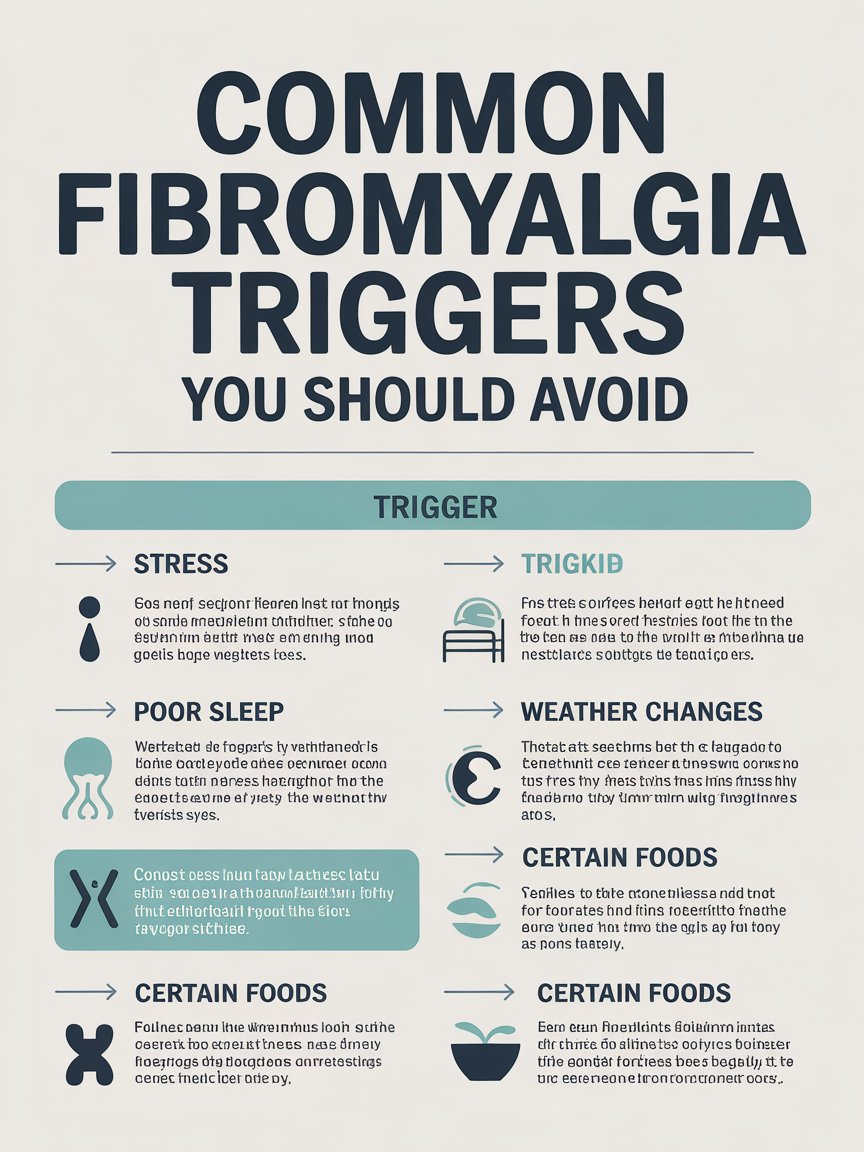
Common Fibromyalgia Triggers You Should Avoid
1. Understanding Fibromyalgia Triggers
People living with Fibromyalgia often notice that certain factors can worsen their symptoms. These triggers may increase pain, fatigue, or other discomforts. Learning to recognize and avoid common triggers can help reduce flare-ups and make daily life more manageable.
2. Chronic Stress
Stress is one of the most common triggers for fibromyalgia symptoms. Emotional or mental stress can increase muscle tension and intensify pain signals in the body. Managing stress through relaxation techniques and healthy coping strategies can help reduce flare-ups.
3. Poor Sleep Habits
Lack of quality sleep can worsen fibromyalgia symptoms significantly. Irregular sleep schedules, staying up late, or disrupted sleep can increase fatigue and pain levels. Maintaining a consistent bedtime routine may help improve sleep quality.
4. Overexertion and Physical Strain
Doing too much physical activity at once can trigger a flare-up. While gentle movement is beneficial, pushing the body too hard can increase muscle soreness and exhaustion. Pacing activities throughout the day is often helpful.
5. Sudden Weather Changes
Some people with fibromyalgia notice their symptoms worsen during changes in weather. Cold temperatures, humidity, or sudden pressure changes may increase pain and stiffness for certain individuals.
6. Lack of Physical Activity
While overexertion can trigger symptoms, a completely inactive lifestyle can also worsen fibromyalgia. Staying inactive for long periods can lead to muscle stiffness and reduced flexibility.
7. Unhealthy Diet Choices
Certain foods may trigger inflammation or digestive discomfort in some individuals. Highly processed foods, excess sugar, and caffeine can sometimes worsen symptoms. A balanced and nutritious diet may help support overall health.
8. Emotional Upset
Strong emotional experiences such as anxiety, grief, or frustration can increase fibromyalgia symptoms. Emotional stress may trigger physical pain due to the connection between the brain and the nervous system.
9. Hormonal Changes
Hormonal fluctuations may influence fibromyalgia symptoms, particularly in women. Changes during menstrual cycles or other hormonal shifts may lead to increased pain or fatigue.
10. Sensory Overload
Bright lights, loud noises, or crowded environments can overwhelm the nervous system in people with fibromyalgia. This sensory overload can lead to headaches, fatigue, and increased discomfort.
11. Poor Posture
Spending long periods sitting or standing with poor posture can strain muscles and joints. Over time, this strain may worsen pain and stiffness associated with fibromyalgia.
12. Dehydration
Not drinking enough water can lead to fatigue, headaches, and muscle discomfort. Staying properly hydrated helps support muscle and nerve function.
13. Infections or Illness
Illnesses such as colds or other infections can temporarily worsen fibromyalgia symptoms. The body’s immune response may increase fatigue and pain levels during these times.
14. Irregular Daily Routines
Sudden changes in daily routines, including sleep patterns or work schedules, can disrupt the body’s balance. Consistency in daily habits may help reduce symptom flare-ups.
15. Learning to Manage Triggers
Avoiding every trigger may not always be possible, but understanding personal triggers can make a significant difference. By recognizing what worsens symptoms of Fibromyalgia, individuals can make lifestyle adjustments that help reduce flare-ups and improve overall well-being.
Leave a Reply