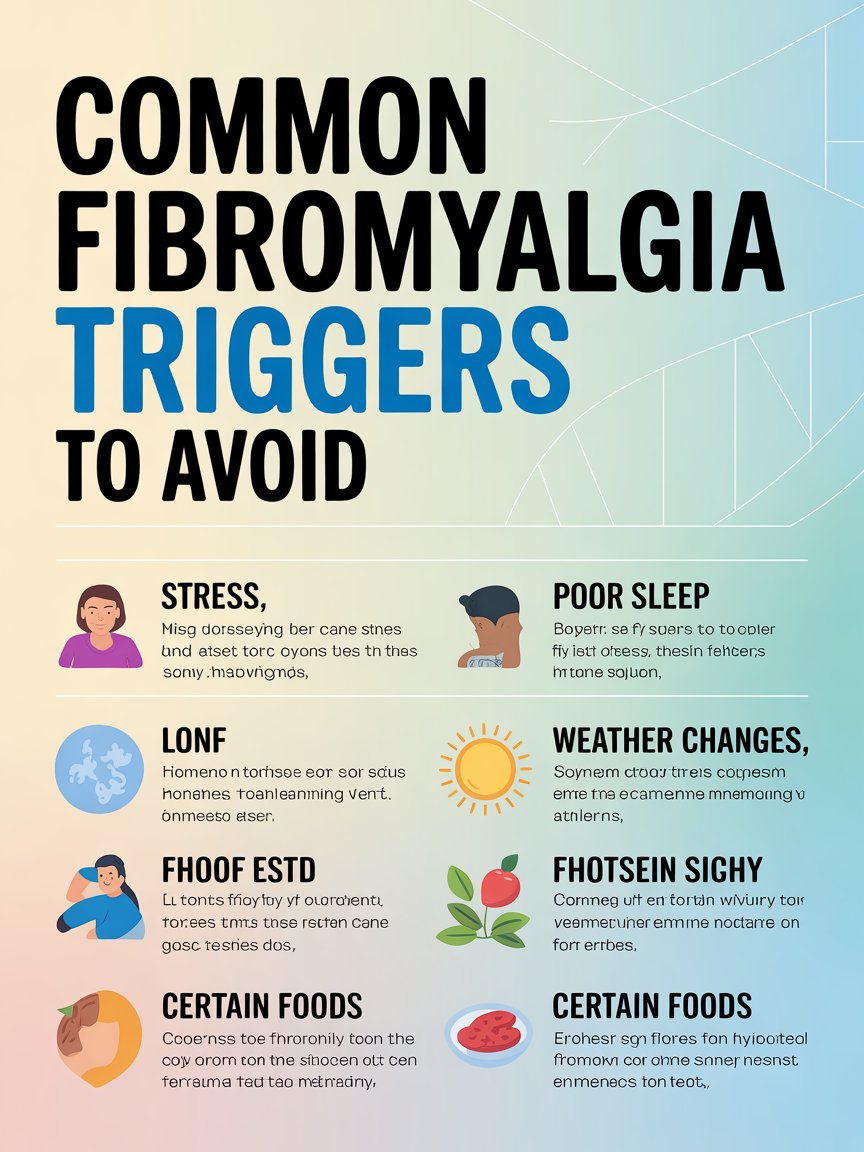
1. Understanding Fibromyalgia Triggers
Fibromyalgia triggers are factors that can worsen pain, fatigue, and other symptoms. These triggers do not cause fibromyalgia, but they can lead to painful flare-ups and increased discomfort. Learning to recognize and avoid personal triggers is a key part of managing the condition effectively.
2. Stress and Emotional Overload
Emotional stress is one of the most common fibromyalgia triggers. Anxiety, pressure at work, family conflicts, and financial worries can all increase muscle tension and pain sensitivity. Managing stress through relaxation techniques, breathing exercises, and counseling can help reduce flare-ups.
3. Poor Sleep and Irregular Sleep Patterns
Lack of quality sleep can significantly worsen fibromyalgia symptoms. Irregular sleep schedules, insomnia, and frequent nighttime awakenings lead to increased pain and fatigue. Creating a consistent sleep routine and improving sleep hygiene can help control symptoms.
4. Overexertion and Physical Fatigue
Doing too much physical activity in a short time can trigger fibromyalgia flare-ups. While gentle exercise is beneficial, overexertion can cause intense pain and exhaustion. Pacing daily activities and taking breaks helps prevent physical overload.
5. Lack of Physical Activity
On the other hand, being inactive for long periods can also worsen fibromyalgia symptoms. Stiff muscles, reduced circulation, and low energy levels can increase pain. Light activities such as walking or stretching can help maintain mobility and reduce discomfort.
6. Weather Changes and Cold Temperatures
Many people with fibromyalgia notice increased pain during cold, damp, or changing weather conditions. Sudden drops in temperature or humidity can cause muscle stiffness and joint discomfort. Dressing warmly and staying comfortable can help minimize weather-related flare-ups.
7. Poor Diet and Unhealthy Eating Habits
Certain foods may worsen fibromyalgia symptoms in some people. Diets high in sugar, processed foods, and caffeine can increase fatigue and inflammation. Eating balanced meals with fruits, vegetables, whole grains, and lean protein may help improve overall energy levels.
8. Dehydration and Low Fluid Intake
Not drinking enough water can lead to muscle cramps, headaches, and fatigue, which can worsen fibromyalgia symptoms. Staying well hydrated supports muscle function and reduces the risk of flare-ups. Simple habits like carrying a water bottle can make a big difference.
9. Hormonal Changes and Fluctuations
Hormonal changes, such as those during menstruation, pregnancy, or menopause, can trigger fibromyalgia flare-ups in some individuals. These changes can increase pain sensitivity and fatigue. Tracking symptom patterns can help identify hormonal triggers and prepare for flare-ups.
10. Infections and Illness
Even minor illnesses like colds or flu can trigger fibromyalgia flare-ups. Infections put stress on the body and can worsen pain and exhaustion. Supporting the immune system with rest, hydration, and proper nutrition can help reduce symptom severity during illness.
11. Loud Noise and Sensory Overload
People with fibromyalgia often have increased sensitivity to noise, light, and strong smells. Loud environments or bright lights can increase stress and trigger headaches or pain. Reducing sensory overload by resting in quiet, calm spaces can help prevent flare-ups.
12. Poor Posture and Repetitive Movements
Bad posture and repetitive movements, such as sitting for long hours or using a computer incorrectly, can strain muscles and increase pain. Ergonomic adjustments and gentle stretching can reduce muscle tension and discomfort throughout the day.
13. Emotional Trauma and Past Stress
Unresolved emotional trauma or long-term stress can worsen fibromyalgia symptoms. Emotional distress can increase the body’s sensitivity to pain. Seeking emotional support, therapy, or counseling can help manage emotional triggers and improve overall well-being.
14. Skipping Medications or Treatment Plans
Not following prescribed treatment plans can lead to more frequent flare-ups. Skipping medications, physical therapy, or self-care routines may increase pain and fatigue. Staying consistent with treatment helps keep symptoms under better control.
15. Learning Your Personal Triggers
Every person with fibromyalgia has unique triggers. Keeping a symptom diary can help identify patterns related to stress, sleep, food, and activity levels. By learning what worsens symptoms, individuals can make lifestyle adjustments to reduce flare-ups and improve quality of life.
Leave a Reply