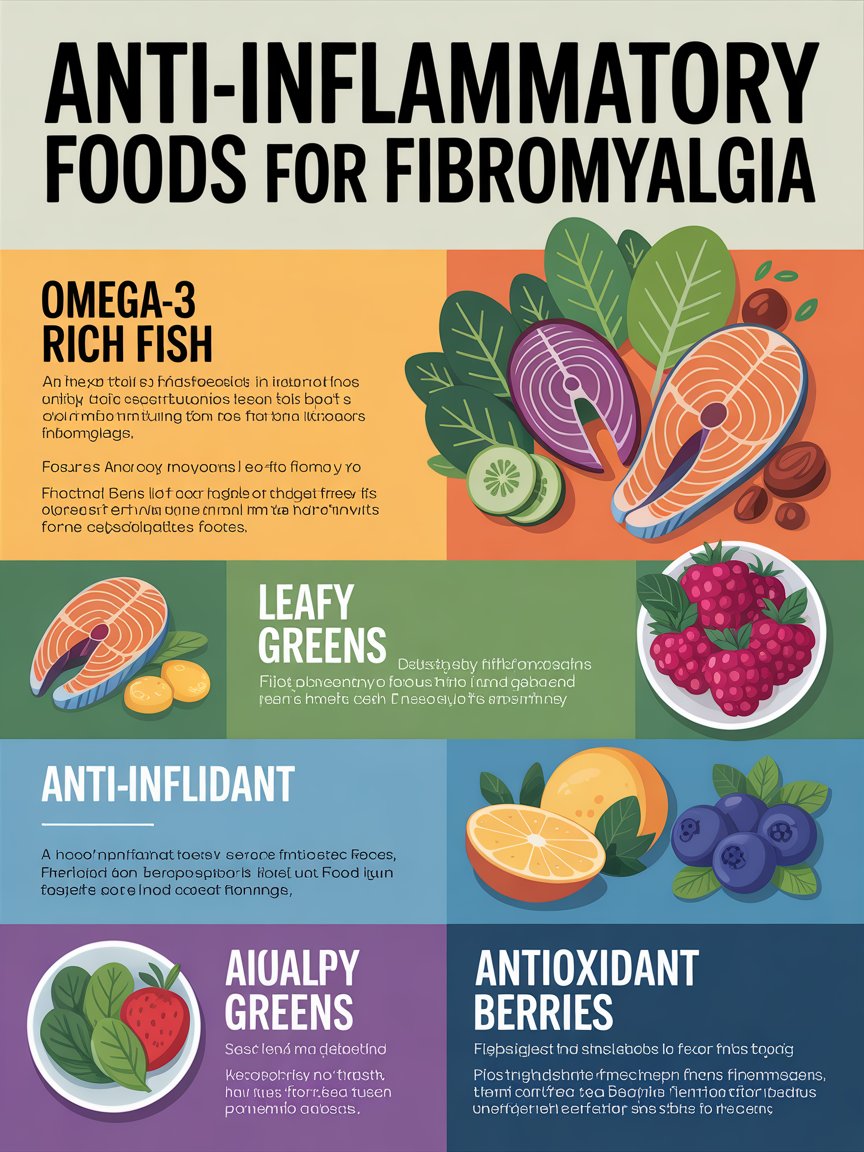
Anti-Inflammatory Foods for Fibromyalgia
1. Why Anti-Inflammatory Foods Matter
Fibromyalgia is a chronic condition that causes widespread pain, fatigue, and sensitivity throughout the body. Although the exact cause is not fully understood, inflammation and heightened pain signals may play a role in symptom severity. Eating anti-inflammatory foods can help support the body, improve energy levels, and reduce discomfort. A balanced diet rich in natural, whole foods may help people with fibromyalgia manage symptoms more effectively.
2. Fatty Fish Rich in Omega-3
Fatty fish such as salmon, sardines, and mackerel are well known for their high omega-3 fatty acid content. Omega-3 fats help reduce inflammation in the body and support joint and muscle health. Including these fish in meals a few times each week may help reduce stiffness and pain. They also provide high-quality protein that supports muscle repair.
3. Colorful Berries
Berries like blueberries, strawberries, and raspberries are packed with antioxidants. Antioxidants help protect the body from oxidative stress and inflammation. These fruits also contain fiber and vitamins that support overall health. Adding berries to breakfast or snacks is an easy way to include anti-inflammatory nutrients in your diet.
4. Leafy Green Vegetables
Leafy greens such as spinach, kale, and Swiss chard contain vitamins, minerals, and plant compounds that help fight inflammation. They are also rich in magnesium, which supports muscle and nerve function. Regular consumption of leafy greens can contribute to improved energy and reduced muscle discomfort.
5. Nuts and Seeds
Nuts and seeds like almonds, walnuts, chia seeds, and flaxseeds are excellent sources of healthy fats, fiber, and antioxidants. They provide omega-3 fatty acids that may help reduce inflammation and improve heart health. These foods also offer sustained energy throughout the day. Eating a small handful as a snack can support overall wellness.
6. Olive Oil as a Healthy Fat
Extra virgin olive oil is widely known for its anti-inflammatory properties. It contains powerful antioxidants and healthy monounsaturated fats. Replacing butter or processed oils with olive oil may help reduce inflammation in the body. It can be used for cooking, salad dressings, or drizzling over vegetables.
7. Turmeric and Other Healing Spices
Certain spices have strong anti-inflammatory properties. Turmeric, ginger, cinnamon, and garlic are commonly used for their natural healing effects. Turmeric contains a compound called curcumin, which may help reduce inflammation and pain. Adding these spices to meals can enhance flavor while supporting health.
8. Whole Grains for Steady Energy
Whole grains such as oats, brown rice, and quinoa provide fiber and nutrients that help regulate blood sugar levels. Stable blood sugar helps prevent energy crashes that may worsen fatigue. Whole grains also support digestion and long-lasting energy.
9. Avocados for Healthy Nutrients
Avocados are rich in healthy fats, fiber, and potassium. These nutrients support heart health and reduce inflammation in the body. Avocados can also help maintain steady energy levels throughout the day. Adding slices to salads or sandwiches provides both nutrition and flavor.
10. Green Tea and Herbal Teas
Green tea contains antioxidants known as polyphenols that help reduce inflammation. Herbal teas such as chamomile or ginger tea can also support relaxation and digestion. Drinking tea regularly may provide mild anti-inflammatory benefits and improve overall wellness.
11. Legumes for Plant-Based Protein
Beans, lentils, and chickpeas are excellent sources of plant-based protein and fiber. These foods support muscle health and digestion while helping control blood sugar levels. Legumes also contain antioxidants that may help reduce inflammation.
12. Tomatoes and Other Bright Vegetables
Tomatoes are rich in lycopene, an antioxidant that helps reduce inflammation. Other colorful vegetables like carrots, bell peppers, and sweet potatoes provide similar benefits. These vegetables offer vitamins that support immune health and reduce oxidative stress.
13. Dark Chocolate in Moderation
Dark chocolate with high cocoa content contains antioxidants called flavonoids. These compounds may help reduce inflammation and support heart health. Consuming small amounts of dark chocolate can provide benefits without excessive sugar intake.
14. Combining Anti-Inflammatory Foods Daily
The most effective approach is to combine several anti-inflammatory foods throughout the day. Meals that include vegetables, whole grains, healthy fats, and lean protein support overall health. Consistency is more important than occasional healthy meals.
15. Creating a Balanced Fibromyalgia-Friendly Diet
A diet focused on anti-inflammatory foods can support pain management and energy levels. Everyone’s body responds differently, so it is important to observe how specific foods affect your symptoms. Gradually building a balanced, nutrient-rich diet may improve overall well-being for people living with fibromyalgia.
Leave a Reply