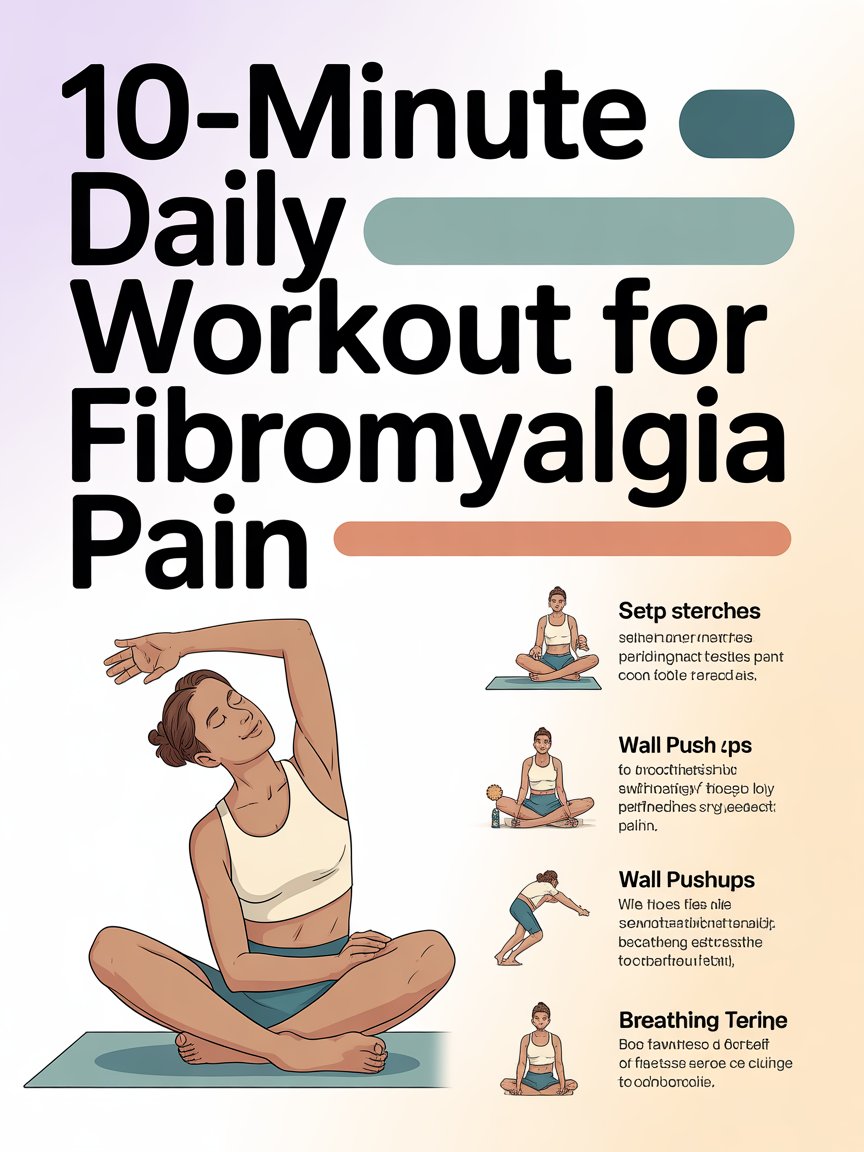
10-Minute Daily Workout for Fibromyalgia Pain
1. Why Short Workouts Help Fibromyalgia
Fibromyalgia often causes chronic pain, fatigue, and stiffness, which can make long workouts difficult. Short, gentle workouts can still provide important benefits without overwhelming the body. Even a 10-minute routine can improve blood circulation, reduce muscle stiffness, and boost mood. Consistency with small daily movements is often more helpful than intense exercise.
2. Start with Gentle Deep Breathing (1 Minute)
Begin the routine with slow, deep breathing to relax the body and mind. Sit or stand comfortably and inhale slowly through your nose, then exhale through your mouth. Deep breathing helps calm the nervous system and reduce muscle tension. This simple step prepares your body for movement.
3. Neck and Shoulder Rolls (1 Minute)
Gently roll your shoulders forward and backward to loosen tight muscles. Slowly tilt your head side to side and forward to stretch the neck. Many people with fibromyalgia experience tension in the neck and shoulders, so this movement can provide quick relief.
4. Arm Stretches (1 Minute)
Raise one arm across your chest and hold it with the opposite hand for a gentle stretch. Switch arms after a few seconds. This movement stretches the shoulders and upper back muscles. Keep the stretch gentle and avoid forcing the movement.
5. Seated or Standing Marching (2 Minutes)
March in place slowly while standing or sitting. Lift your knees slightly and move your arms naturally. This light cardio exercise helps improve circulation and warms up the body without putting stress on the joints.
6. Gentle Side Stretch (1 Minute)
Stand with your feet shoulder-width apart and slowly raise one arm overhead. Lean slightly to the opposite side to stretch the side of your body. Hold for a few seconds and switch sides. This movement helps stretch the back and torso muscles.
7. Wall Push-Ups (1 Minute)
Stand facing a wall with your hands placed on it at shoulder height. Slowly bend your elbows to bring your body toward the wall, then push back to the starting position. Wall push-ups strengthen the arms and shoulders while remaining low-impact.
8. Seated Leg Lifts (1 Minute)
Sit in a chair with your back straight. Slowly lift one leg and hold it for a few seconds, then lower it and switch legs. This exercise strengthens the thighs and improves circulation in the lower body.
9. Gentle Back Stretch (1 Minute)
Stand or sit and slowly bend forward to stretch your lower back and hamstrings. If standing feels uncomfortable, you can perform this stretch while seated. Hold the stretch briefly and return slowly to an upright position.
10. End with Relaxation (1 Minute)
Finish the routine with another minute of deep breathing or light stretching. Relax your muscles and allow your body to cool down. This helps prevent soreness and leaves you feeling calm and refreshed.
11. Tips for Staying Consistent
The goal of this 10-minute routine is to support gentle daily movement. Listen to your body and modify exercises if needed. Doing this routine regularly can help reduce stiffness, improve flexibility, and support overall pain management for people living with fibromyalgia.
Leave a Reply