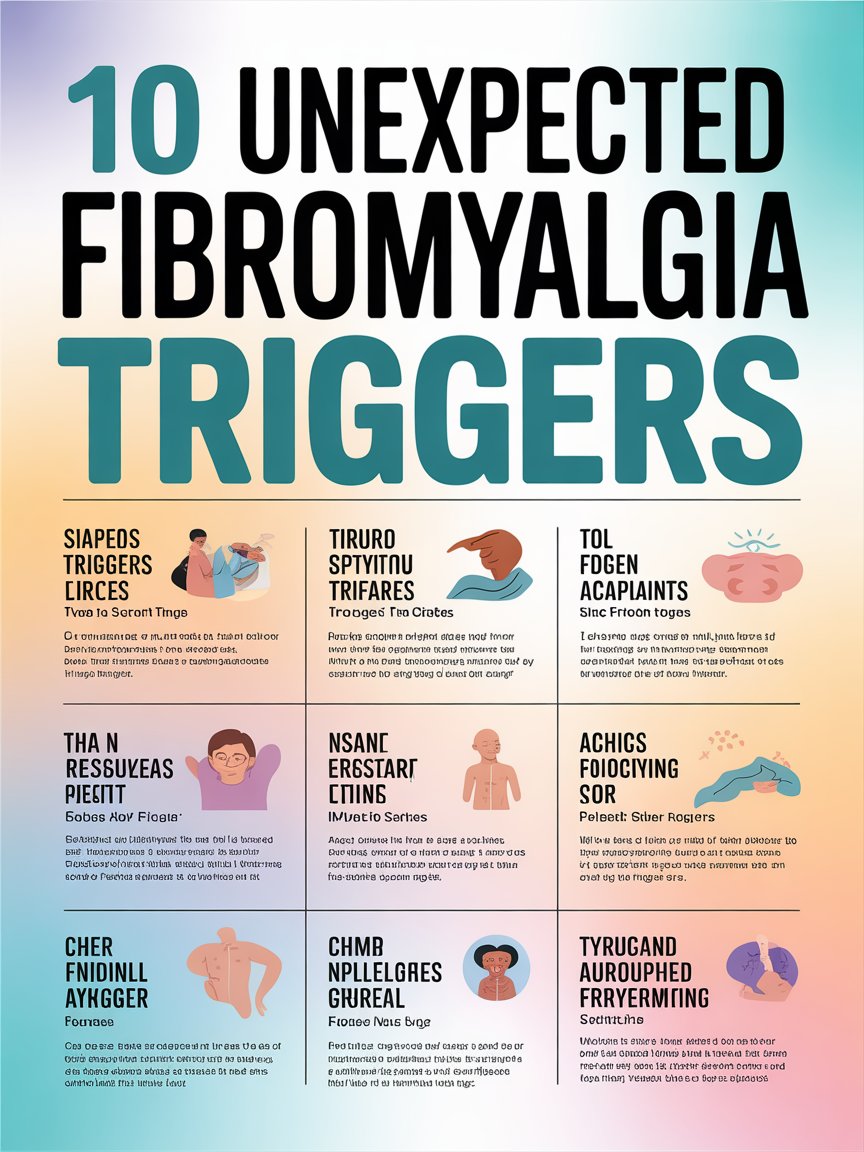
1. Understanding Fibromyalgia Triggers
People living with Fibromyalgia often experience periods when symptoms suddenly worsen. These episodes, commonly known as flare-ups, can be caused by different triggers. Some triggers are obvious, while others may be unexpected and harder to identify.
2. Why Identifying Triggers Is Important
Recognizing what worsens symptoms can help individuals manage fibromyalgia more effectively. Avoiding or minimizing triggers can reduce the frequency and severity of flare-ups.
3. Trigger 1: Weather Changes
Sudden changes in temperature, humidity, or air pressure can increase pain and stiffness. Many people with fibromyalgia notice that their symptoms worsen during cold or damp weather.
4. Trigger 2: Poor Sleep
Lack of restful sleep can significantly worsen pain, fatigue, and brain fog. Even one night of poor sleep may lead to increased symptoms the next day.
5. Trigger 3: Emotional Stress
Stress is one of the most common triggers of fibromyalgia flare-ups. Emotional pressure from work, relationships, or life changes can intensify pain and fatigue.
6. Trigger 4: Overexertion
Doing too much physical activity at once can overwhelm the body. Overexertion may lead to increased pain, muscle soreness, and exhaustion.
7. Trigger 5: Long Periods of Inactivity
While too much activity can trigger symptoms, long periods of inactivity can also worsen stiffness and pain. Balance between movement and rest is important.
8. Trigger 6: Hormonal Changes
Hormonal fluctuations during menstruation, pregnancy, or menopause may influence pain levels and fatigue in people with fibromyalgia.
9. Trigger 7: Sensory Overload
Bright lights, loud noises, or crowded environments can overwhelm the nervous system. This sensory overload may increase fatigue, headaches, or pain.
10. Trigger 8: Changes in Routine
Sudden changes in daily routines, such as travel, irregular sleep schedules, or altered meal times, can disrupt the body’s balance and trigger symptoms.
11. Trigger 9: Certain Foods
Some individuals notice that specific foods may worsen symptoms. Highly processed foods, excessive sugar, or caffeine may contribute to fatigue and discomfort for some people.
12. Trigger 10: Illness or Infection
When the body is fighting an illness, fibromyalgia symptoms may temporarily worsen. Infections can increase inflammation and fatigue.
13. Tracking Personal Triggers
Keeping a symptom journal can help identify patterns between activities, stress levels, and flare-ups. This information can help individuals recognize their unique triggers.
14. Preventing Fibromyalgia Flare-Ups
Maintaining a balanced routine that includes proper sleep, gentle exercise, stress management, and healthy nutrition can help reduce the risk of flare-ups.
15. Managing Fibromyalgia More Effectively
Although triggers vary from person to person, understanding them allows individuals to make informed lifestyle choices. By learning what affects their symptoms, people with fibromyalgia can better control flare-ups and improve their overall quality of life.
Leave a Reply