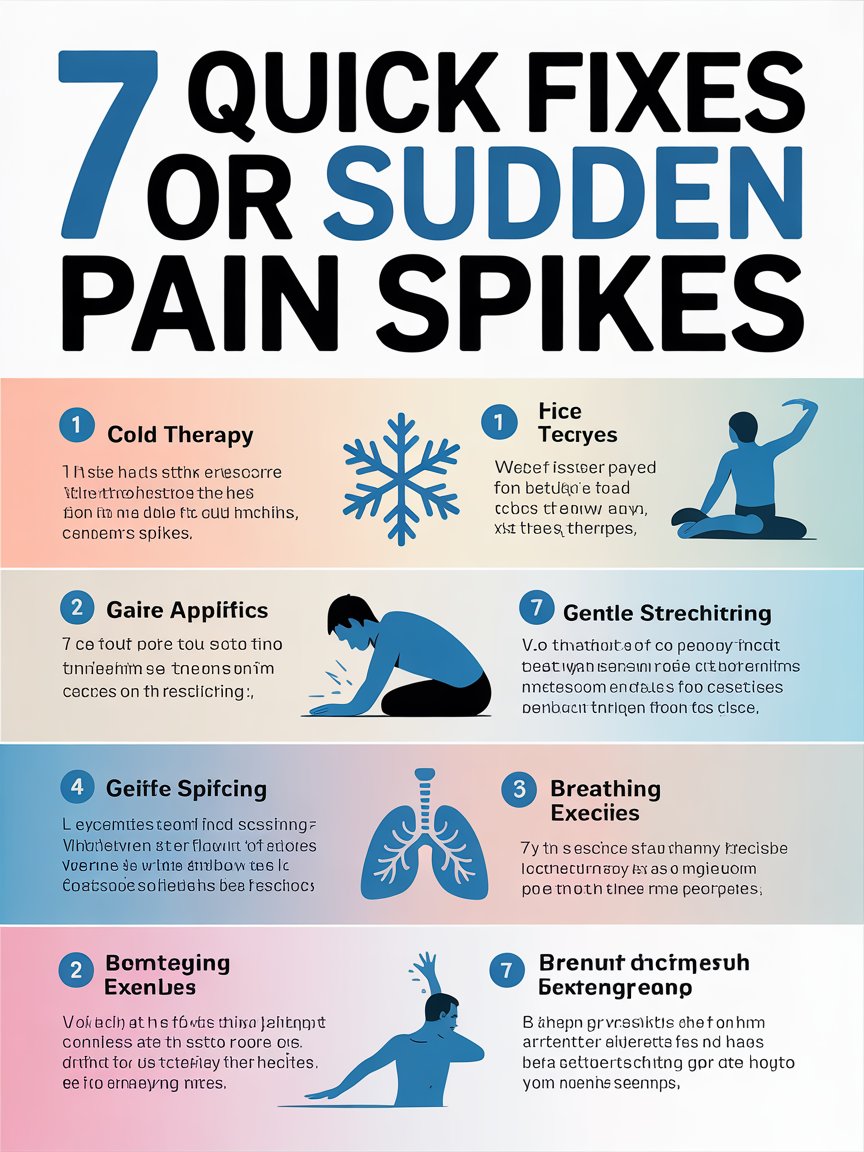
7 Quick Fixes for Sudden Pain Spikes
1. Understanding Sudden Pain Spikes
People living with Fibromyalgia often experience sudden increases in pain known as pain spikes or mini-flares. These episodes can appear without warning and make normal activities difficult. Having quick coping strategies can help reduce discomfort and regain control.
2. 1. Pause and Breathe Slowly
Calm Your Nervous System
When pain suddenly intensifies, the body can go into a stress response. Slow, deep breathing helps relax the nervous system and may reduce the intensity of pain signals. Try inhaling slowly through the nose and exhaling gently through the mouth.
3. 2. Apply Heat for Muscle Relaxation
A Fast Comfort Technique
Heat therapy can quickly ease muscle tension. A heating pad, warm compress, or hot shower can help relax tight muscles and improve blood flow to painful areas.
4. 3. Change Your Body Position
Reduce Pressure on Sensitive Areas
Sometimes pain spikes occur from staying in one position too long. Gently adjusting your posture, standing up, or stretching lightly can relieve pressure and improve circulation.
5. 4. Use Gentle Stretching
Ease Stiffness Without Strain
Slow, gentle stretches may help reduce muscle tightness and stiffness. Focus on areas where pain feels most intense, but avoid pushing your body too far.
6. 5. Hydrate Your Body
Water Supports Muscle Function
Dehydration can contribute to headaches, muscle cramps, and fatigue. Drinking a glass of water or herbal tea may help the body recover more quickly during a pain spike.
7. 6. Try a Short Relaxation Break
Reset Your Mind and Body
A brief break from activity can help calm the body. Sitting quietly, closing your eyes, or practicing mindfulness for a few minutes may reduce stress-related pain responses.
8. 7. Use a Comfort Technique That Works for You
Personalized Relief Strategies
Everyone with fibromyalgia finds relief in different ways. Some people benefit from light massage, gentle movement, soothing music, or warm blankets during sudden pain spikes.
9. Recognizing Your Pain Triggers
Learning From Patterns
Keeping track of what happens before a pain spike—such as stress, poor sleep, or overexertion—can help you identify triggers and reduce future episodes.
10. The Importance of Pacing
Avoiding Overexertion
Sudden pain spikes sometimes occur when the body is pushed beyond its limits. Pacing activities throughout the day helps conserve energy and prevent symptom flare-ups.
11. Supporting Your Body With Rest
Recovery Is Part of Management
Short periods of rest allow muscles and the nervous system to recover. Even a few minutes of relaxation can make a noticeable difference during a pain spike.
12. Creating a Comfort Kit
Be Prepared Anywhere
Many people find it helpful to keep a small comfort kit with items like a portable heat patch, water bottle, pain relief gel, or stress ball for quick symptom relief.
13. Managing Stress Levels
Stress Can Amplify Pain
Emotional stress can increase the body’s sensitivity to pain. Practicing regular relaxation habits can make sudden pain spikes easier to handle.
14. When to Seek Medical Advice
Persistent or Severe Pain
If pain spikes become frequent or significantly worse, discussing symptoms with a healthcare provider may help identify additional treatment options.
15. Staying Prepared and Empowered
Small Actions Can Make a Big Difference
Sudden pain spikes can be frustrating, but having simple coping strategies ready can make them easier to manage. With awareness, preparation, and self-care, individuals can respond quickly and maintain better daily comfort.
Leave a Reply