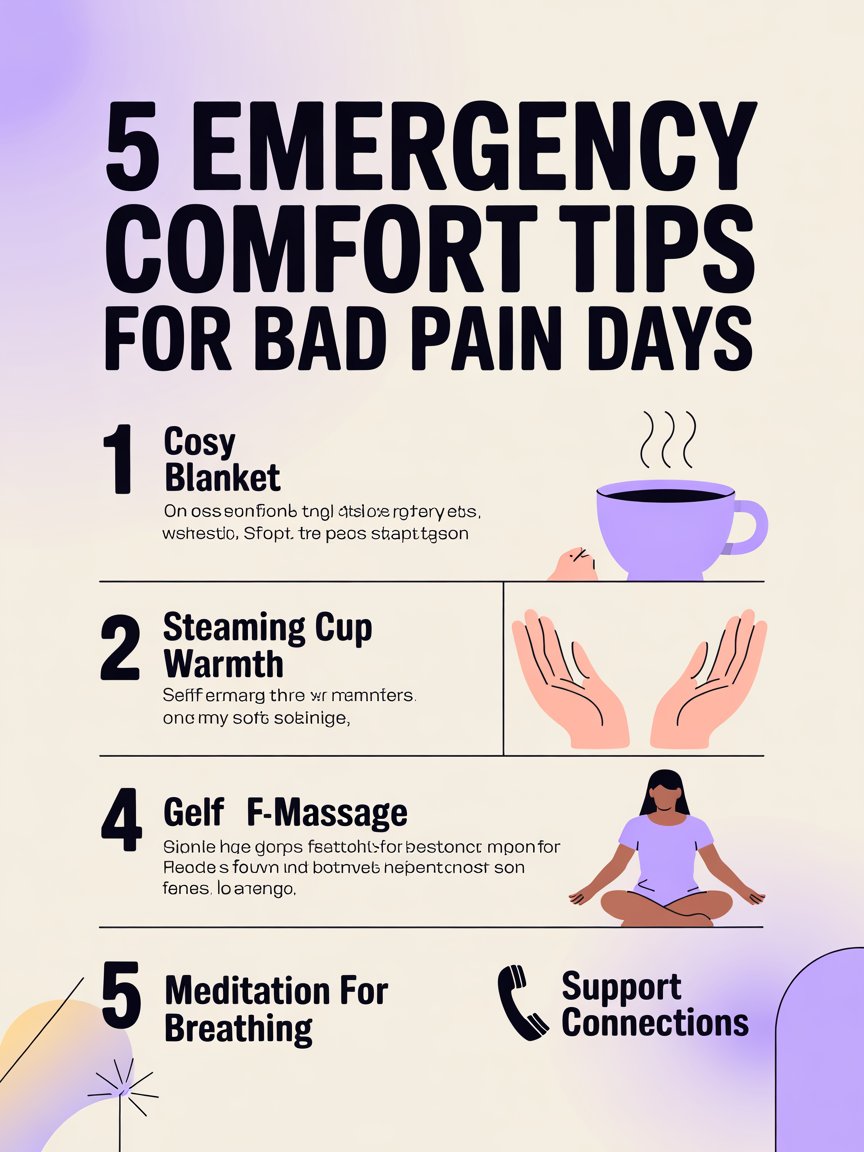
1. Understanding Severe Pain Days
People living with Fibromyalgia sometimes experience days when pain suddenly becomes overwhelming. These “bad pain days” can make even simple activities feel difficult. Having quick comfort strategies can help ease discomfort and make the day more manageable.
2. 1. Apply Heat to Painful Areas
Relax Tight Muscles Quickly
Heat is one of the fastest ways to soothe muscle pain. A heating pad, warm bath, or hot shower can help relax tense muscles and improve blood flow, which may reduce stiffness and discomfort.
3. 2. Rest in a Supportive Position
Reduce Pressure on the Body
Finding a comfortable resting position can make a big difference. Use supportive pillows for your neck, back, or knees to reduce pressure on sensitive areas and allow muscles to relax.
4. 3. Practice Slow, Deep Breathing
Calm the Body’s Stress Response
Severe pain can cause the body to tense up and increase stress levels. Slow, deep breathing helps calm the nervous system and may reduce the intensity of pain signals.
5. 4. Use Gentle Stretching
Prevent Muscles From Tightening
If possible, try slow and gentle stretches. Even small movements can improve circulation and reduce stiffness without placing extra strain on your body.
6. 5. Create a Calm, Quiet Environment
Reduce Sensory Overload
Bright lights, loud noises, and busy surroundings can make pain feel worse. Resting in a quiet, comfortable space with dim lighting can help your body relax.
7. Stay Hydrated
Support Muscle Function
Drinking water throughout the day helps prevent dehydration, which can contribute to headaches, fatigue, and muscle cramps during painful episodes.
8. Choose Easy, Nourishing Foods
Keep Your Energy Stable
On bad pain days, simple and balanced meals are best. Foods rich in nutrients can support energy levels without putting extra stress on the body.
9. Reduce Stressful Activities
Protect Your Energy
Cancel or postpone nonessential tasks when possible. Giving your body time to recover can prevent symptoms from worsening.
10. Use Comfort Items
Small Tools That Help
Soft blankets, supportive cushions, heating wraps, or relaxation music can make your resting space more soothing and comfortable.
11. Take Short Rest Breaks
Balance Rest and Movement
While rest is important, brief changes in position or light movement can prevent stiffness from increasing throughout the day.
12. Listen to Your Body
Recognize Your Limits
Your body often signals when it needs rest or relief. Paying attention to these signals can help you respond quickly before symptoms worsen.
13. Reach Out for Support
You Don’t Have to Handle It Alone
Let family members or friends know when you’re having a difficult pain day. Emotional and practical support can make recovery easier.
14. Prepare for Future Pain Days
Build a Comfort Plan
Keeping items like heating pads, comfortable pillows, water, and healthy snacks nearby can make it easier to manage sudden pain episodes.
15. Remember That Pain Days Pass
Be Patient With Yourself
Bad pain days can feel overwhelming, but they are usually temporary. With gentle care, rest, and supportive habits, your body can gradually return to a more comfortable state.
Leave a Reply