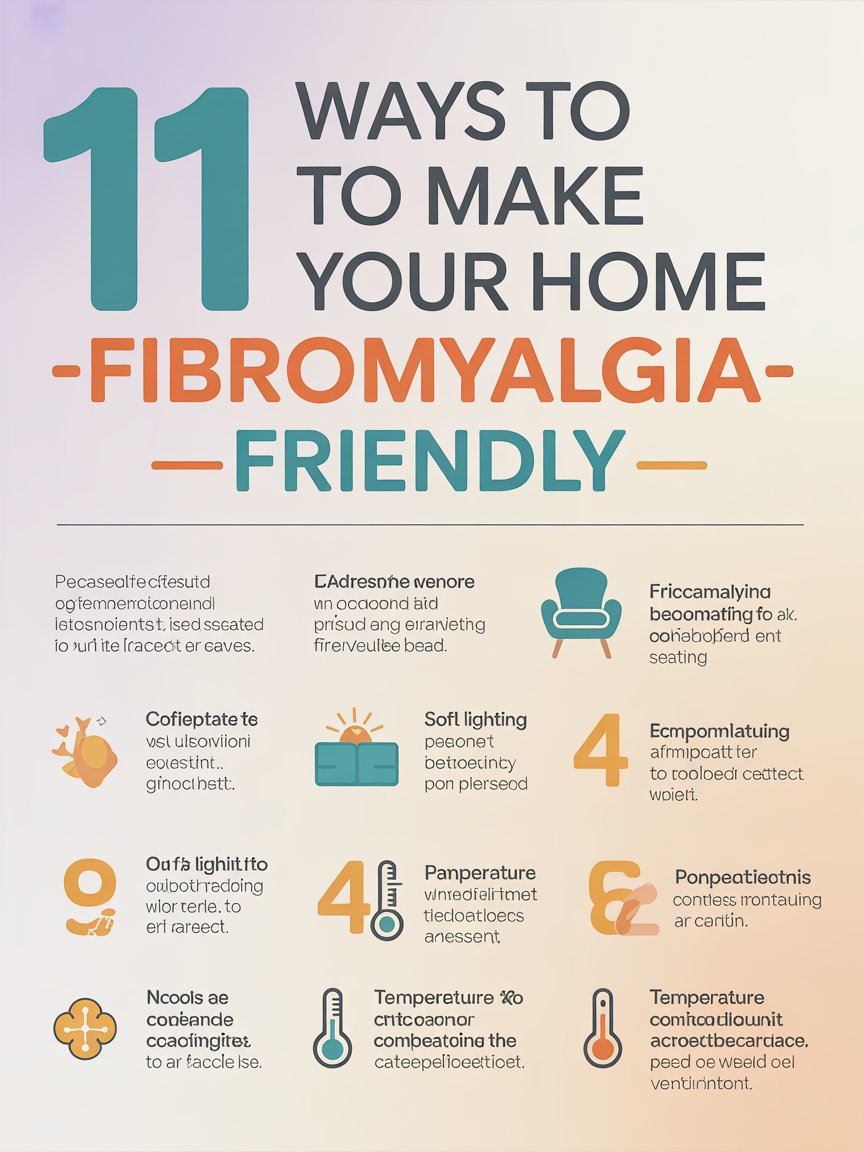
11 Ways to Make Your Home Fibromyalgia-Friendly
Living with fibromyalgia can make everyday activities at home more challenging due to chronic pain, fatigue, and sensitivity to stress or discomfort. Creating a home environment that supports comfort, relaxation, and ease of movement can significantly improve daily life for people with fibromyalgia.
A fibromyalgia-friendly home focuses on reducing physical strain, improving relaxation, and making daily tasks easier. Simple adjustments to your living space can help minimize pain triggers and create a more supportive environment for both physical and mental well-being.
Understanding the Importance of a Supportive Home Environment
Home should be a place where the body can rest and recover. However, clutter, poor lighting, uncomfortable furniture, or difficult household tasks can increase fatigue and pain.
By making small changes throughout the home, individuals with fibromyalgia can reduce stress on their bodies and create a space that promotes healing and relaxation.
1. Invest in a Comfortable Mattress
Sleep quality plays a major role in managing fibromyalgia symptoms. A supportive and comfortable mattress can help reduce pressure on joints and muscles, improving sleep and reducing morning stiffness.
Choosing a mattress that supports proper spinal alignment can make a noticeable difference in overall comfort.
2. Use Soft and Supportive Bedding
Soft bedding materials such as cotton or bamboo fabrics can reduce skin irritation and improve sleep comfort. Many people with fibromyalgia experience heightened sensitivity to touch, so gentle fabrics can help create a more relaxing sleep environment.
Comfortable pillows that support the neck and back are also important for better rest.
3. Keep Frequently Used Items Within Reach
Reaching, bending, or stretching repeatedly can worsen muscle pain. Organizing the home so that commonly used items are easy to access can help reduce unnecessary strain.
Keeping everyday essentials at waist or shoulder height can make daily tasks much easier.
4. Reduce Clutter for Easier Movement
A clutter-free environment not only reduces stress but also makes it easier to move around safely. Clear pathways help prevent unnecessary effort and lower the risk of accidents.
Maintaining simple and organized spaces can also create a calmer and more relaxing atmosphere.
5. Add Comfortable Seating Areas
Having supportive seating throughout the home allows you to rest when needed. Chairs with good back support and soft cushioning can help relieve pressure on the body.
Placing comfortable seating in areas where you spend time, such as the living room or reading corner, encourages regular rest breaks.
6. Use Gentle Lighting
Bright or harsh lighting can sometimes worsen headaches or sensory sensitivity. Soft, warm lighting can create a calming environment and reduce visual stress.
Adjustable lamps or dimmable lights can help you control brightness levels depending on your comfort.
7. Create a Relaxation Space
Designating a quiet corner for relaxation can be very helpful for managing stress and fatigue. This space can include comfortable seating, calming music, books, or relaxation tools.
Having a peaceful area for meditation, reading, or deep breathing can support both mental and physical recovery.
8. Use Assistive Tools for Household Tasks
Simple tools can make everyday chores easier. Lightweight cleaning equipment, long-handled tools, or ergonomic kitchen utensils can reduce strain on muscles and joints.
These tools help conserve energy and make tasks more manageable on days when pain levels are higher.
9. Maintain a Comfortable Room Temperature
Many people with fibromyalgia are sensitive to temperature changes. Keeping the home at a comfortable temperature can help prevent muscle stiffness and discomfort.
Using blankets, fans, or temperature controls can help maintain a balanced indoor climate.
10. Keep a Heating Pad or Warm Blanket Nearby
Heat therapy can provide quick relief for sore muscles. Having a heating pad or warm blanket easily accessible can help reduce pain during flare-ups.
These simple comfort items can provide soothing relief without requiring medication.
11. Organize Your Kitchen for Easy Meal Preparation
Preparing meals can be tiring when living with fibromyalgia. Organizing the kitchen so that frequently used items are easy to reach can make cooking less exhausting.
Using simple meal preparation methods and keeping the workspace organized can help conserve energy during daily cooking tasks.
Creating a Calm and Supportive Atmosphere
Beyond physical comfort, the emotional environment of a home also matters. Calm colors, relaxing scents, and peaceful surroundings can help reduce stress and create a sense of comfort.
A relaxing atmosphere supports both mental wellness and physical recovery.
Making Gradual Improvements
Transforming your home into a fibromyalgia-friendly space does not have to happen all at once. Small adjustments over time can gradually create a more supportive environment.
Even simple changes can make daily activities easier and help reduce pain triggers.
Leave a Reply