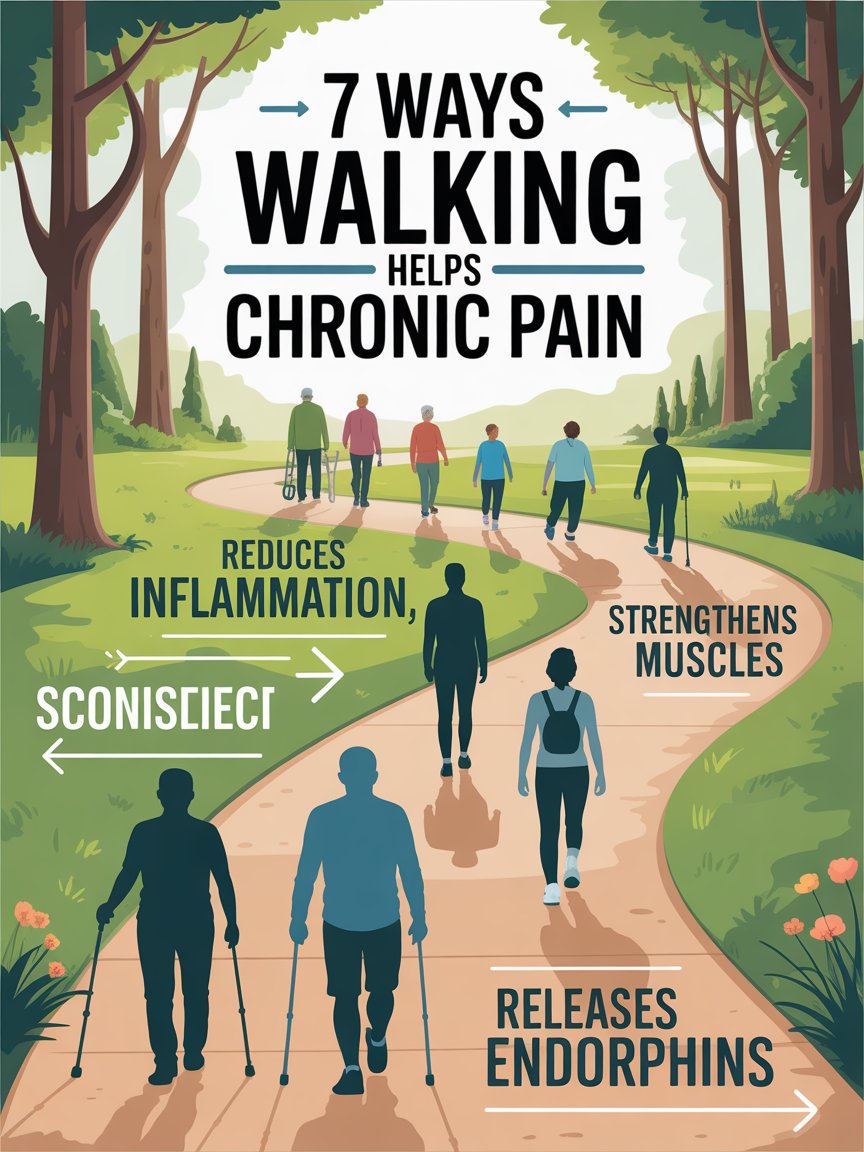
7 Ways Walking Helps Chronic Pain
Chronic pain can make physical activity feel difficult, but gentle movement is often one of the most helpful ways to support the body. Walking is one of the simplest and most accessible forms of exercise. It requires no special equipment and can be adjusted to match your comfort level.
For many people living with conditions like fibromyalgia, arthritis, or long-term muscle pain, regular walking can help improve both physical and mental well-being. Below are seven ways walking can help manage chronic pain.
1. Improves Circulation
Boosts Blood Flow
Walking helps increase blood circulation throughout the body. Better circulation delivers oxygen and nutrients to muscles and tissues.
Supports Healing
Improved blood flow can help reduce stiffness and promote the body’s natural recovery processes.
2. Reduces Muscle Stiffness
Keeps Joints Moving
Gentle walking helps keep muscles and joints active, preventing them from becoming too stiff.
Encourages Flexibility
Regular movement can improve flexibility and make everyday movements easier over time.
3. Releases Natural Pain Relievers
Endorphin Production
Walking encourages the body to release endorphins, which are natural chemicals that help reduce pain and improve mood.
Natural Comfort
These endorphins can create a mild sense of relief and relaxation after physical activity.
4. Improves Sleep Quality
Promotes Better Rest
Regular walking can help regulate sleep patterns and support deeper, more restful sleep.
Reduces Nighttime Discomfort
Better sleep may also help reduce pain sensitivity and fatigue the following day.
5. Reduces Stress and Anxiety
Supports Mental Health
Chronic pain often affects emotional well-being. Walking can help clear the mind and reduce stress.
Encourages Relaxation
Spending time outdoors while walking can further improve mood and promote relaxation.
6. Strengthens Muscles
Builds Gentle Strength
Walking activates several muscle groups, including the legs, hips, and core.
Supports Joint Stability
Stronger muscles help support joints and may reduce strain on painful areas.
7. Helps Maintain Mobility
Prevents Physical Decline
Staying active through walking can help maintain mobility and independence.
Encourages Consistent Movement
Even short daily walks can help maintain flexibility and prevent muscles from becoming weak or tight.
Conclusion
Walking is a simple yet powerful activity that can support people living with chronic pain. By improving circulation, reducing stiffness, strengthening muscles, and supporting mental health, walking offers many benefits for both body and mind.
Starting with short, gentle walks and gradually increasing duration can help make the activity more comfortable and sustainable. Over time, regular walking can become an important part of a balanced approach to managing chronic pain.
Leave a Reply