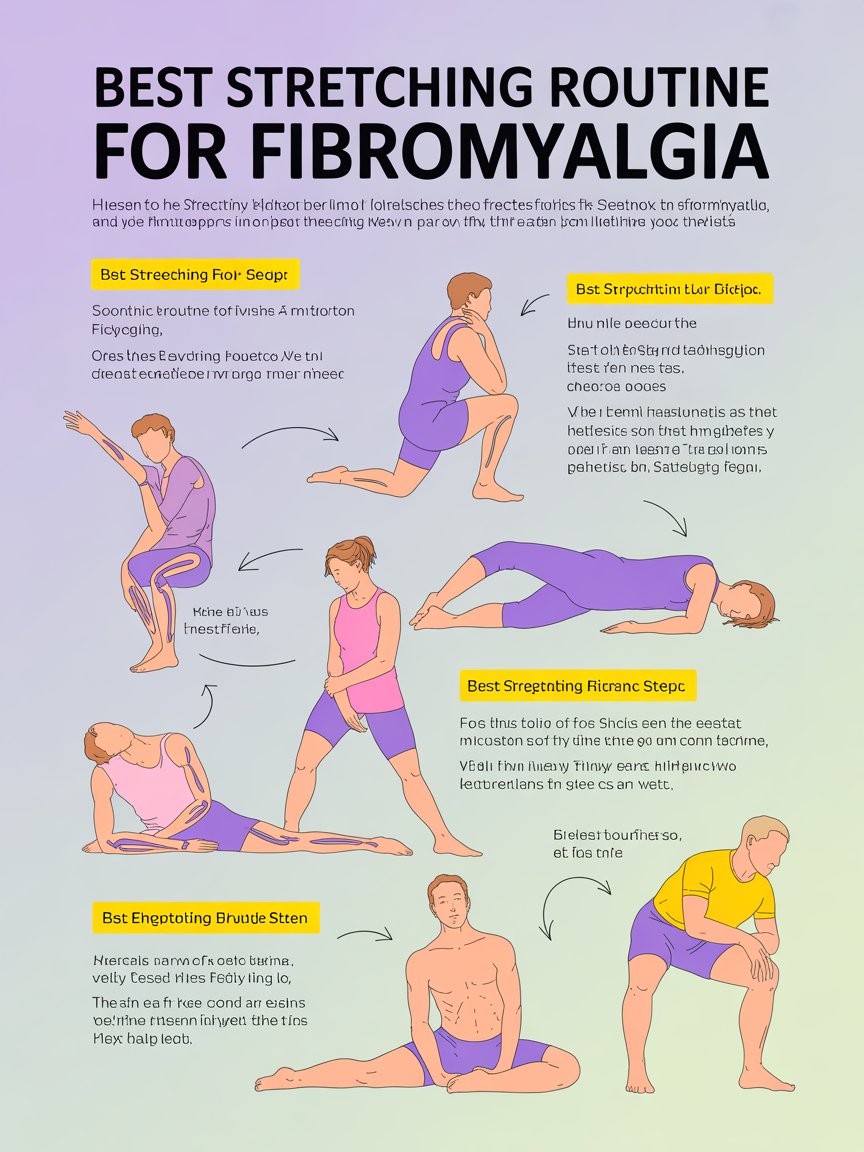
Best Stretching Routine for Fibromyalgia
1. Why Stretching Matters for Fibromyalgia
Living with Fibromyalgia often means dealing with muscle stiffness, widespread pain, and limited mobility. Gentle stretching can help reduce tension, improve flexibility, and support better daily movement without overstraining the body.
2. Benefits of Gentle Stretching
Reducing Stiffness and Improving Circulation
Slow, controlled stretches increase blood flow to muscles and may decrease tightness. Improved circulation can help reduce soreness and make movement feel less uncomfortable over time.
3. Important Safety Guidelines
Start Slow and Listen to Your Body
Before beginning any stretching routine, move gently and avoid pushing into sharp pain. Hold stretches for 15–30 seconds and breathe steadily. The goal is comfort, not intensity.
4. Morning Neck Stretch
Easing Upper Body Tension
Gently tilt your head toward one shoulder until you feel a mild stretch along the side of your neck. Hold, then switch sides. This helps relieve tension that builds overnight.
5. Shoulder Rolls and Arm Circles
Releasing Upper Back Tightness
Slow shoulder rolls forward and backward can loosen tight muscles. Gentle arm circles also help improve range of motion and reduce stiffness in the upper body.
6. Seated Forward Fold
Stretching the Back and Hamstrings
While seated, slowly reach toward your toes without forcing the stretch. This can ease lower back tension and improve flexibility in the back of the legs.
7. Gentle Spinal Twist
Supporting Back Mobility
Sit upright and gently rotate your torso to one side, holding briefly before switching. This stretch can improve spinal flexibility and relieve mid-back stiffness.
8. Hip Flexor Stretch
Reducing Lower Body Tightness
From a standing or kneeling position, gently shift one leg back and press hips slightly forward. Tight hip flexors can worsen lower back discomfort, so stretching this area is helpful.
9. Calf Stretch
Supporting Leg Comfort
Stand facing a wall, step one foot back, and press your heel into the floor. This stretch can reduce calf tightness and improve overall leg flexibility.
10. Gentle Quad Stretch
Loosening the Front of the Thigh
While holding onto a chair for balance, bend one knee and gently bring your heel toward your body. Keep the movement soft and controlled.
11. Wrist and Hand Stretches
Easing Everyday Strain
Extend one arm forward and gently pull back on the fingers to stretch the wrist. This can help relieve tension from typing, phone use, or repetitive tasks.
12. Incorporating Deep Breathing
Relaxing the Nervous System
Pair each stretch with slow, deep breathing. This helps calm the nervous system, which is often more sensitive in fibromyalgia, and may reduce overall pain perception.
13. How Often to Stretch
Building a Consistent Routine
Aim to stretch 5–10 minutes daily, especially in the morning or before bed. Consistency matters more than intensity when managing chronic pain.
14. Combining Stretching With Other Gentle Activities
Yoga and Warm Water Therapy
Low-impact activities like gentle yoga or stretching in warm water can enhance flexibility while minimizing strain. Warm environments often help relax tight muscles.
15. Creating a Personalized Routine
Progress at Your Own Pace
Every person with fibromyalgia is different. Adjust stretches based on comfort level and energy. Over time, a gentle stretching habit can improve mobility, reduce stiffness, and support overall well-being.
Leave a Reply