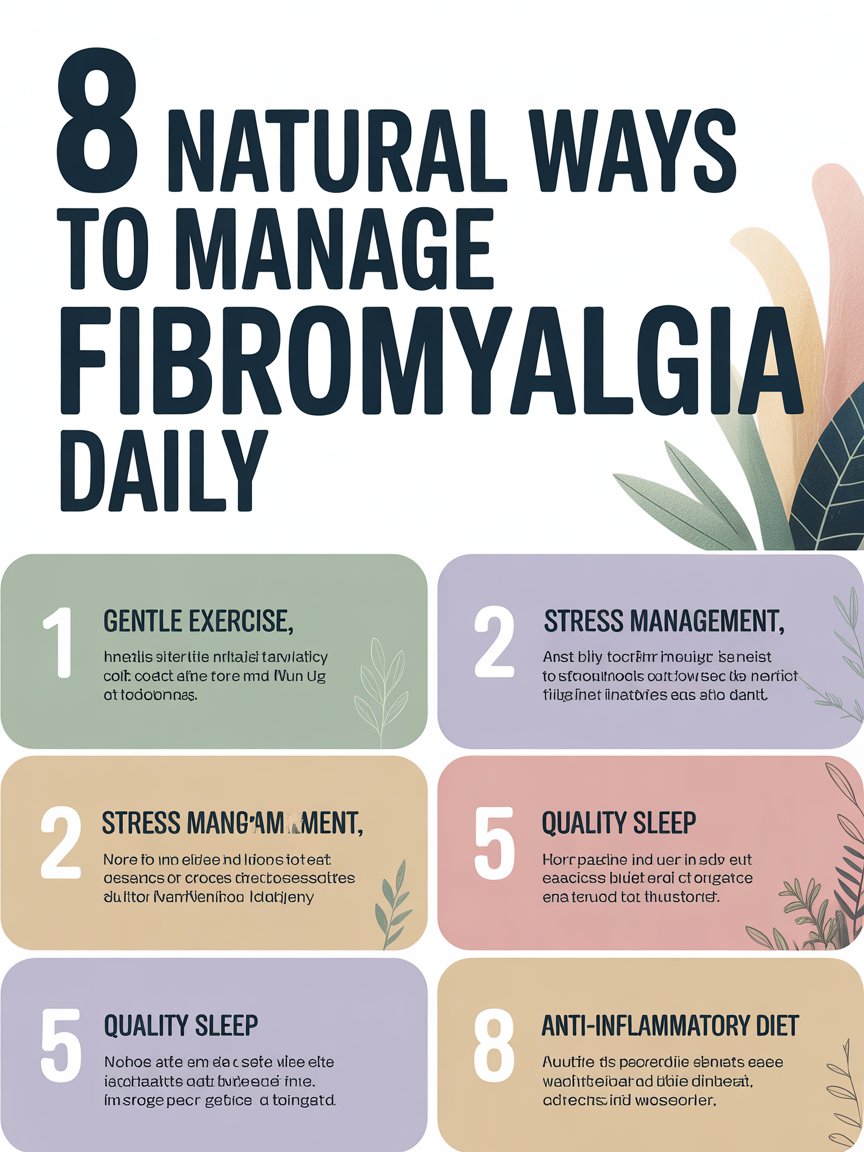
8 Natural Ways to Manage Fibromyalgia Daily
Living with fibromyalgia can be challenging, as symptoms like widespread pain, fatigue, and brain fog can affect everyday life. While medical treatment is important, many people find that natural daily habits play a key role in managing symptoms and improving overall well-being.
By building a consistent routine focused on gentle care and balance, you can reduce flare-ups and feel more in control. Below are eight natural ways to manage fibromyalgia daily.
1. Start Your Day with Gentle Movement
Wake Up Your Body Slowly
Light stretching or a short walk in the morning can help loosen stiff muscles.
Improve Circulation
Gentle movement increases blood flow, which may reduce pain and improve flexibility.
2. Maintain a Balanced Diet
Choose Anti-Inflammatory Foods
Eating fruits, vegetables, whole grains, and healthy fats can help support your body.
Avoid Trigger Foods
Reducing processed foods, sugar, and excess caffeine may help minimize flare-ups.
3. Stay Hydrated Throughout the Day
Support Muscle Function
Proper hydration helps keep muscles and joints functioning smoothly.
Reduce Fatigue
Drinking enough water can improve energy levels and reduce feelings of exhaustion.
4. Practice Stress Management Daily
Identify Stress Triggers
Stress is a common trigger for fibromyalgia symptoms.
Use Relaxation Techniques
Deep breathing, meditation, or journaling can help calm the mind and body.
5. Prioritize Quality Sleep
Stick to a Sleep Schedule
Going to bed and waking up at the same time each day supports better sleep.
Create a Relaxing Environment
A cool, dark, and quiet bedroom can help improve sleep quality.
6. Use Heat Therapy for Pain Relief
Relax Tight Muscles
Warm baths, heating pads, or warm compresses can help ease muscle tension.
Improve Comfort
Heat therapy is a simple and effective way to reduce daily discomfort.
7. Pace Your Activities
Avoid Overexertion
Doing too much at once can lead to flare-ups.
Balance Activity and Rest
Break tasks into smaller steps and take regular breaks throughout the day.
8. Make Time for Relaxation and Joy
Engage in Enjoyable Activities
Hobbies and activities you enjoy can improve mood and reduce stress.
Support Mental Health
Taking time for yourself helps create balance and emotional well-being.
Leave a Reply