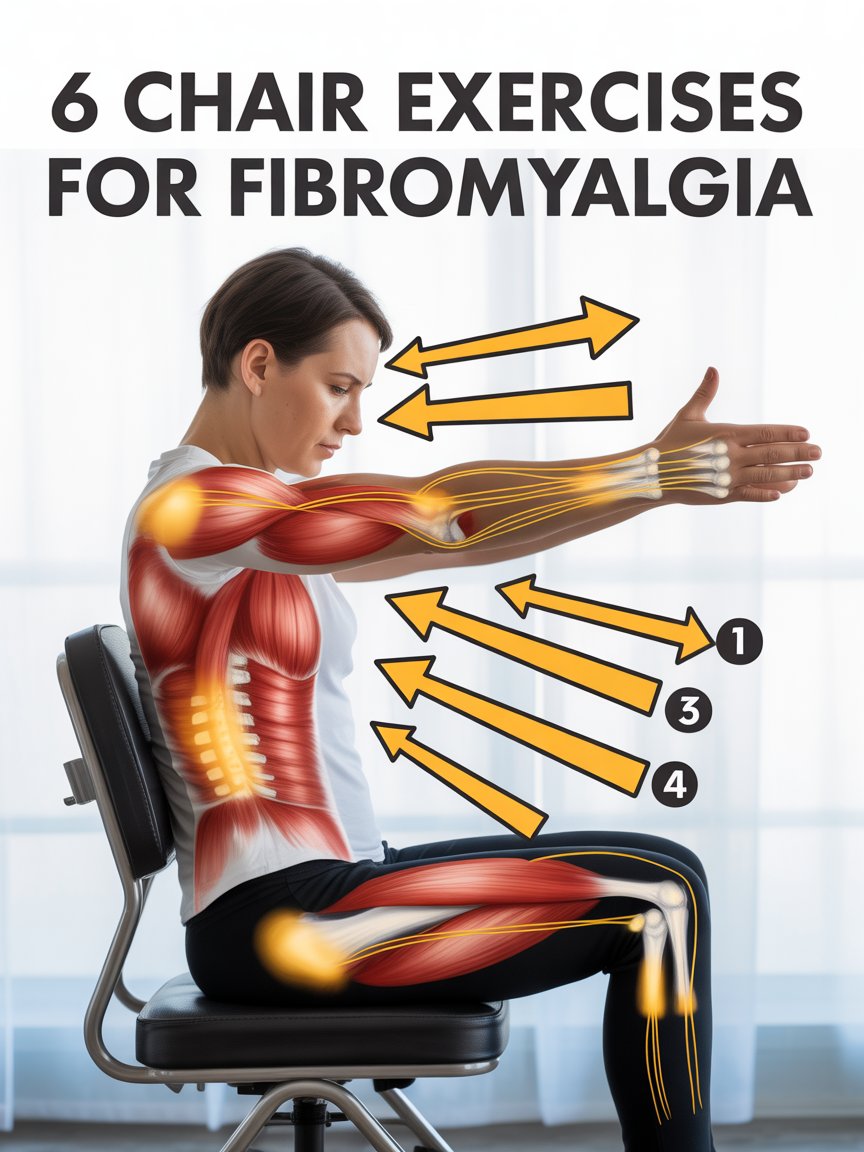
6 Chair Exercises for Fibromyalgia
Introduction
Living with Fibromyalgia often makes traditional workouts feel overwhelming. On days when standing or high-energy movement is difficult, chair exercises offer a gentle and effective way to stay active. These movements can help reduce stiffness, improve circulation, and support overall comfort—all while seated.
Why Chair Exercises Help
Chair exercises are low-impact, easy to modify, and accessible for most fitness levels. They allow you to move your body without placing extra stress on joints or muscles. For individuals with fibromyalgia, this means you can stay consistent with movement even during low-energy or flare-up days.
1. Seated Neck Stretch
This simple stretch helps relieve tension in the neck and shoulders.
Sit upright and gently tilt your head toward one shoulder. Hold for 10–15 seconds, then switch sides. Move slowly and avoid forcing the stretch to prevent discomfort.
2. Seated Shoulder Rolls
A great way to release upper-body stiffness.
Sit comfortably and roll your shoulders backward in slow circles, then forward. Repeat several times while breathing deeply to relax tight muscles.
3. Seated Leg Extensions
This exercise strengthens the legs without strain.
Sit with your feet flat on the floor, then slowly extend one leg straight out. Hold for a few seconds before lowering it back down. Alternate between legs to build strength gradually.
4. Seated Marching
A gentle cardio movement that boosts circulation.
While seated, lift one knee at a time as if you’re marching in place. Keep the movement slow and controlled. This exercise can help improve blood flow and reduce stiffness in the lower body.
5. Seated Torso Twist
This movement improves flexibility in the spine.
Sit tall and gently twist your upper body to one side, holding the chair for support if needed. Hold briefly, then return to center and repeat on the other side. Avoid sudden or deep twisting.
6. Seated Arm Raises
A light upper-body strengthening exercise.
Raise your arms slowly to shoulder height or overhead, then lower them back down. You can perform this with or without light weights, depending on your comfort level.
Tips for Safe Practice
Always start with a few deep breaths to relax your body. Move slowly and avoid pushing into pain. Keep your posture upright and supported by the chair to prevent strain.
Creating a Daily Routine
You can combine 3–4 of these exercises into a short routine lasting 10–15 minutes. Even a few minutes of movement each day can help reduce stiffness and improve energy levels over time.
Listening to Your Body
Fibromyalgia symptoms can vary daily, so it’s important to adjust your exercises accordingly. If you feel increased pain or fatigue, reduce the intensity or take a break.
Benefits Over Time
Regular chair exercises can improve flexibility, support muscle strength, and reduce discomfort. They also promote a sense of control and well-being, which is essential when managing chronic conditions.
Staying Consistent
Consistency is more important than intensity. Try to incorporate these exercises into your daily routine, even on days when your energy is low.
Leave a Reply