Author: admin

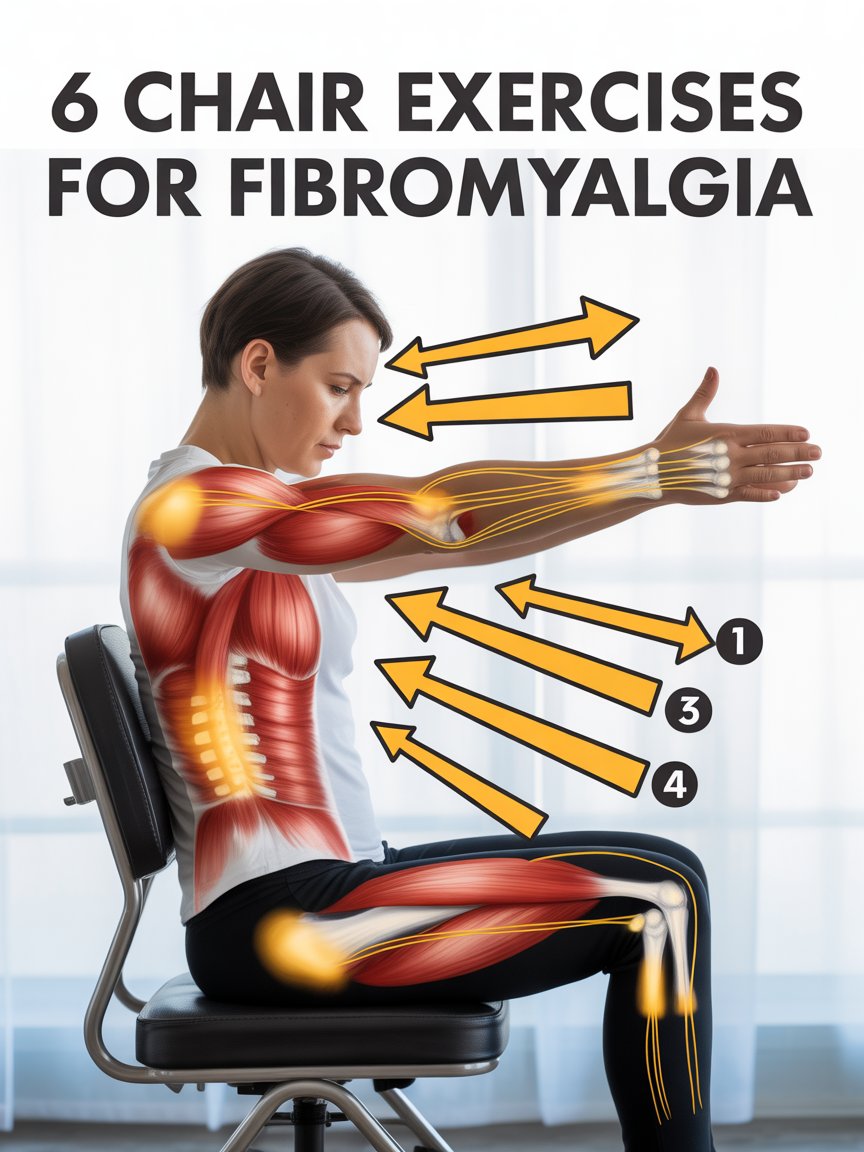
  • 6 Chair Exercises for Fibromyalgia

    6 Chair Exercises for Fibromyalgia

    6 Chair Exercises for Fibromyalgia

    Introduction

    Living with Fibromyalgia often makes traditional workouts feel overwhelming. On days when standing or high-energy movement is difficult, chair exercises offer a gentle and effective way to stay active. These movements can help reduce stiffness, improve circulation, and support overall comfort—all while seated.

    Why Chair Exercises Help

    Chair exercises are low-impact, easy to modify, and accessible for most fitness levels. They allow you to move your body without placing extra stress on joints or muscles. For individuals with fibromyalgia, this means you can stay consistent with movement even during low-energy or flare-up days.


    1. Seated Neck Stretch

    This simple stretch helps relieve tension in the neck and shoulders.
    Sit upright and gently tilt your head toward one shoulder. Hold for 10–15 seconds, then switch sides. Move slowly and avoid forcing the stretch to prevent discomfort.


    2. Seated Shoulder Rolls

    A great way to release upper-body stiffness.
    Sit comfortably and roll your shoulders backward in slow circles, then forward. Repeat several times while breathing deeply to relax tight muscles.


    3. Seated Leg Extensions

    This exercise strengthens the legs without strain.
    Sit with your feet flat on the floor, then slowly extend one leg straight out. Hold for a few seconds before lowering it back down. Alternate between legs to build strength gradually.


    4. Seated Marching

    A gentle cardio movement that boosts circulation.
    While seated, lift one knee at a time as if you’re marching in place. Keep the movement slow and controlled. This exercise can help improve blood flow and reduce stiffness in the lower body.


    5. Seated Torso Twist

    This movement improves flexibility in the spine.
    Sit tall and gently twist your upper body to one side, holding the chair for support if needed. Hold briefly, then return to center and repeat on the other side. Avoid sudden or deep twisting.


    6. Seated Arm Raises

    A light upper-body strengthening exercise.
    Raise your arms slowly to shoulder height or overhead, then lower them back down. You can perform this with or without light weights, depending on your comfort level.


    Tips for Safe Practice

    Always start with a few deep breaths to relax your body. Move slowly and avoid pushing into pain. Keep your posture upright and supported by the chair to prevent strain.


    Creating a Daily Routine

    You can combine 3–4 of these exercises into a short routine lasting 10–15 minutes. Even a few minutes of movement each day can help reduce stiffness and improve energy levels over time.


    Listening to Your Body

    Fibromyalgia symptoms can vary daily, so it’s important to adjust your exercises accordingly. If you feel increased pain or fatigue, reduce the intensity or take a break.


    Benefits Over Time

    Regular chair exercises can improve flexibility, support muscle strength, and reduce discomfort. They also promote a sense of control and well-being, which is essential when managing chronic conditions.


    Staying Consistent

    Consistency is more important than intensity. Try to incorporate these exercises into your daily routine, even on days when your energy is low.

  • 9 Low-Impact Workouts for Pain Management

    9 Low-Impact Workouts for Pain Management

    9 Low-Impact Workouts for Pain Management

    Introduction

    Managing chronic pain doesn’t mean avoiding movement altogether. In fact, the right kind of exercise can reduce stiffness, improve circulation, and boost overall well-being. Low-impact workouts are especially beneficial because they are gentle on the joints while still helping to build strength and flexibility.

    Why Low-Impact Exercise Works

    For individuals living with conditions like Chronic Pain or Fibromyalgia, high-intensity workouts can sometimes worsen symptoms. Low-impact exercises, on the other hand, minimize stress on the body while encouraging consistent movement, which is essential for pain management.


    1. Walking

    One of the simplest and most effective forms of exercise.
    A short daily walk can improve circulation, reduce stiffness, and boost mood. Start with 10–15 minutes and gradually increase your time as your body adapts.


    2. Swimming

    Water-based exercise is ideal for pain relief.
    Swimming reduces pressure on joints while allowing full-body movement. The buoyancy of water supports your body, making it easier to exercise without discomfort.


    3. Water Aerobics

    A gentle yet effective workout in a pool.
    This involves slow, controlled movements in water that improve strength and flexibility. It’s especially helpful for those who find land-based exercises too painful.


    4. Yoga

    A combination of stretching, breathing, and relaxation.
    Yoga helps improve flexibility and reduce muscle tension. Gentle styles are particularly beneficial for calming the nervous system and easing chronic pain symptoms.


    5. Tai Chi

    A slow, flowing form of movement.
    Tai Chi focuses on controlled motions and deep breathing. It enhances balance, reduces stress, and improves overall body awareness.


    6. Pilates

    A core-strengthening workout with controlled movements.
    Pilates helps improve posture, flexibility, and muscle tone without putting strain on joints. It’s great for supporting the spine and reducing back pain.


    7. Stationary Cycling

    A low-impact cardio option.
    Using a stationary bike allows you to strengthen your legs and improve heart health without the joint impact of running. Keep resistance low to avoid overexertion.


    8. Stretching Routines

    Gentle stretching keeps muscles flexible and reduces stiffness.
    Incorporating daily stretches can improve mobility and help prevent pain flare-ups. Focus on slow, controlled movements rather than deep or intense stretches.


    9. Resistance Band Exercises

    A simple way to build strength safely.
    Resistance bands provide light tension that helps strengthen muscles without heavy weights. They are easy to use at home and can be adapted to your comfort level.


    Tips for Safe Exercise

    Always start slowly and listen to your body. Warm up before exercising and cool down afterward to prevent injury. Avoid pushing through pain—discomfort is a sign to rest or modify the movement.


    Creating a Consistent Routine

    Choose 2–3 activities you enjoy and rotate them throughout the week. Consistency is key, even if sessions are short. Regular movement helps maintain flexibility and reduces long-term pain.


    Mental Benefits of Movement

    Exercise doesn’t just help physically—it also improves mood and reduces stress. Gentle workouts can release endorphins, which naturally help manage pain and promote relaxation.


    When to Take a Break

    It’s important to rest during flare-ups or when pain intensifies. Adjust your routine based on how your body feels, and don’t hesitate to take recovery days when needed.


    Long-Term Benefits

    Over time, low-impact workouts can improve strength, flexibility, and endurance. They also help reduce the frequency and intensity of pain episodes, making daily activities easier.

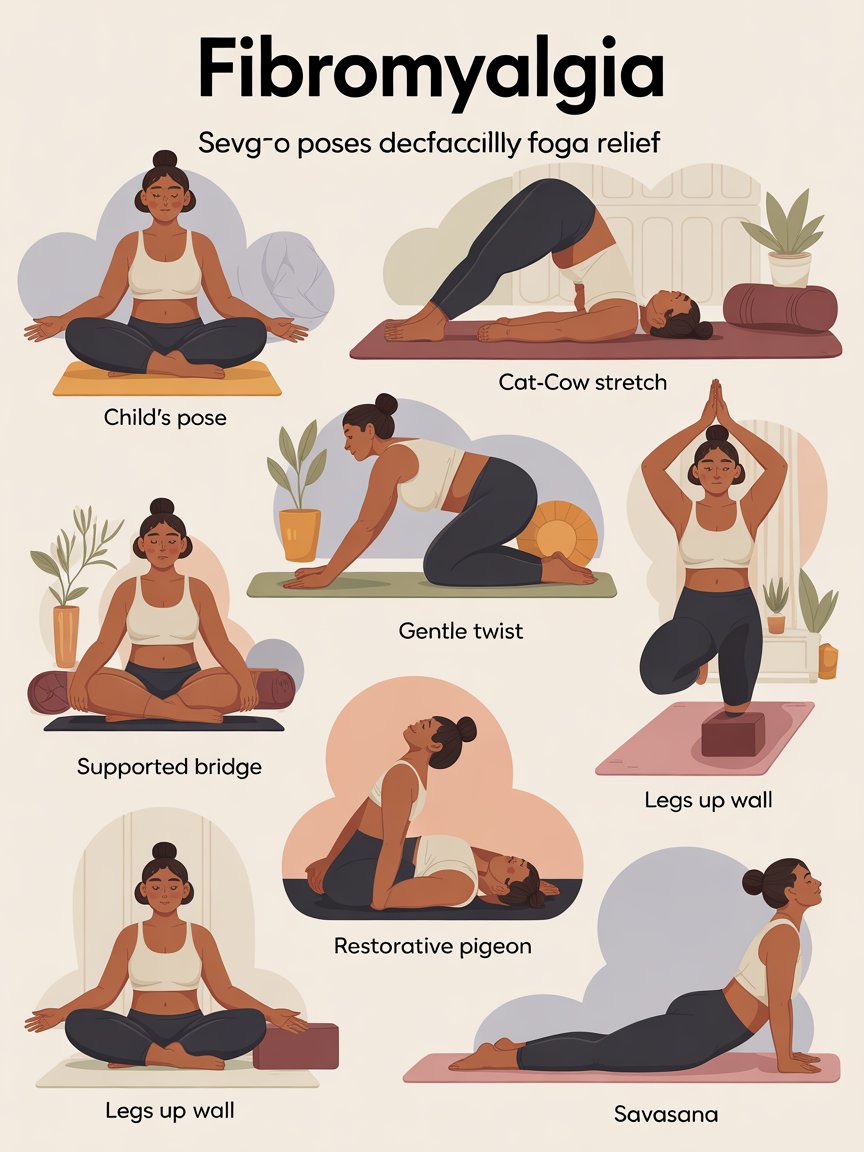
  • 7 Yoga Poses for Fibromyalgia

    7 Yoga Poses for Fibromyalgia

    7 Yoga Poses for Fibromyalgia

    Introduction

    Living with Fibromyalgia can be physically and emotionally challenging. Gentle movement, especially yoga, is often recommended to help manage pain, improve flexibility, and reduce stress. The key is to focus on slow, mindful poses that support the body without causing strain.

    Why Yoga Helps with Fibromyalgia

    Yoga combines gentle stretching, breathing, and relaxation techniques. For people with fibromyalgia, it can help reduce muscle stiffness, improve sleep, and calm the nervous system. Practicing regularly—even for a few minutes a day—can make a noticeable difference in overall comfort.


    1. Child’s Pose (Balasana)

    A deeply calming and restorative pose.
    Kneel on the floor, sit back on your heels, and stretch your arms forward while lowering your torso. This pose gently stretches the back and helps release tension in the shoulders. It’s especially helpful during flare-ups.


    2. Cat-Cow Pose

    This gentle flow improves spinal flexibility.
    Move between arching your back (cat) and lowering your belly while lifting your head (cow). Synchronize your breath with each movement to reduce stiffness and promote relaxation.


    3. Legs-Up-the-Wall Pose (Viparita Karani)

    A relaxing pose that supports circulation.
    Lie on your back and extend your legs up against a wall. This position reduces swelling, relieves tired legs, and promotes calmness. It’s ideal for ending your yoga session.


    4. Seated Forward Bend (Paschimottanasana)

    A gentle stretch for the back and hamstrings.
    Sit with your legs extended and slowly reach toward your feet. Keep your movements soft and avoid forcing the stretch. This pose can ease lower back tension and improve flexibility.


    5. Cobra Pose (Bhujangasana)

    A mild backbend that opens the chest.
    Lie on your stomach and gently lift your chest using your arms while keeping your lower body relaxed. This pose helps counteract poor posture and relieves tightness in the upper body.


    6. Standing Forward Fold (Uttanasana)

    A soothing stretch for the entire body.
    Stand and slowly bend forward, letting your arms hang loosely. Keep your knees slightly bent if needed. This pose helps release tension in the back and neck.


    7. Corpse Pose (Savasana)

    The ultimate relaxation pose.
    Lie flat on your back with your arms relaxed at your sides. Focus on slow, deep breathing and allow your body to fully relax. This pose is essential for reducing stress and calming the mind.


    Tips for Practicing Yoga Safely

    Always move slowly and listen to your body. Avoid pushing into pain, and use props like cushions or blocks for support. Practicing in a warm, quiet space can also help relax your muscles and improve your experience.


    Building a Gentle Routine

    Start with just a few poses and gradually build your routine. Even 10–15 minutes of yoga daily can help reduce symptoms over time. Consistency is more important than intensity.


    Conclusion

    Yoga offers a gentle, supportive way to manage fibromyalgia symptoms. By incorporating these seven poses into your routine, you can improve flexibility, reduce pain, and create a sense of calm. Keep your practice slow, mindful, and consistent for the best results.

  • 8 Stretching Routines for Chronic Pain

    8 Stretching Routines for Chronic Pain

    8 Stretching Routines for Chronic Pain

    Introduction

    Chronic pain can make even the simplest daily movements feel overwhelming. While medication and rest play important roles, gentle stretching routines can significantly improve flexibility, reduce stiffness, and promote overall comfort. Incorporating consistent, low-impact stretches into your daily routine can help ease tension and improve mobility over time.

    Why Stretching Helps with Chronic Pain

    Stretching works by lengthening tight muscles, improving circulation, and reducing inflammation. For people living with chronic pain conditions, regular stretching can also enhance body awareness and reduce the likelihood of injury. The key is to move slowly and mindfully, avoiding any sudden or forceful motions.


    1. Neck and Shoulder Release Stretch

    This stretch targets tension commonly stored in the neck and shoulders.
    Gently tilt your head toward one shoulder and hold for 15–20 seconds, then switch sides. You can also roll your shoulders backward and forward in slow circles. This routine helps relieve stiffness caused by stress, poor posture, or prolonged sitting.


    2. Cat-Cow Spine Stretch

    A great stretch for spinal flexibility and back pain relief.
    Start on your hands and knees, then alternate between arching your back upward (cat) and dipping it downward while lifting your head (cow). Move slowly with your breath to gently mobilize the spine and reduce lower back discomfort.


    3. Seated Forward Bend

    This stretch helps release tension in the lower back and hamstrings.
    Sit with your legs extended and slowly reach toward your toes. You don’t need to touch them—just go as far as comfortable. Hold the stretch while keeping your breathing steady to avoid strain.


    4. Chest Opening Stretch

    Ideal for those who spend long hours sitting or using devices.
    Stand or sit upright and clasp your hands behind your back, gently lifting your arms to open your chest. This stretch improves posture and reduces tightness in the upper body.


    5. Gentle Hip Flexor Stretch

    Tight hips can contribute to lower back pain and discomfort.
    Step one foot forward into a lunge position while keeping your back leg extended. Slowly shift your weight forward to feel a stretch in the hip area. Keep your movements controlled and avoid pushing too far.


    6. Child’s Pose Relaxation Stretch

    A calming stretch that relieves tension in the back and shoulders.
    Kneel on the floor, sit back on your heels, and extend your arms forward while lowering your torso. This gentle pose promotes relaxation and can be especially helpful during pain flare-ups.


    7. Standing Side Stretch

    This stretch targets the sides of the body and improves flexibility.
    Stand tall, raise one arm overhead, and lean gently to the opposite side. Hold for a few seconds before switching sides. It helps release tension in the torso and supports better posture.


    8. Ankle and Calf Stretch

    Often overlooked, this stretch supports mobility and balance.
    Stand facing a wall, place one foot behind you, and press your heel into the ground. Lean forward slightly to stretch the calf muscles. This is especially useful for those who experience stiffness in the lower legs.


    Tips for Safe Stretching

    Always warm up your body slightly before stretching, even if it’s just a short walk. Never push into pain—stretching should feel gentle, not intense. Consistency is more important than intensity, so aim to stretch daily for the best results.


    Creating a Routine That Works

    You don’t need to do all stretches at once. Choose 3–5 stretches that target your problem areas and build a routine around them. Even 10–15 minutes a day can make a noticeable difference over time.


    Listening to Your Body

    Every person experiences chronic pain differently, so it’s important to adjust stretches based on your comfort level. If a stretch causes discomfort beyond mild tension, stop immediately and modify your approach.


    When to Seek Guidance

    If you’re unsure about proper form or dealing with severe pain, consider consulting a physical therapist or healthcare provider. They can recommend personalized stretches tailored to your condition.


    Long-Term Benefits of Stretching

    With regular practice, stretching can improve flexibility, reduce pain intensity, and enhance overall quality of life. It also promotes relaxation, which can help reduce stress-related pain triggers.


    Staying Motivated

    Building a habit takes time, but small, consistent efforts lead to lasting results. Pair your stretching routine with a relaxing activity like listening to music or practicing deep breathing to make it more enjoyable.

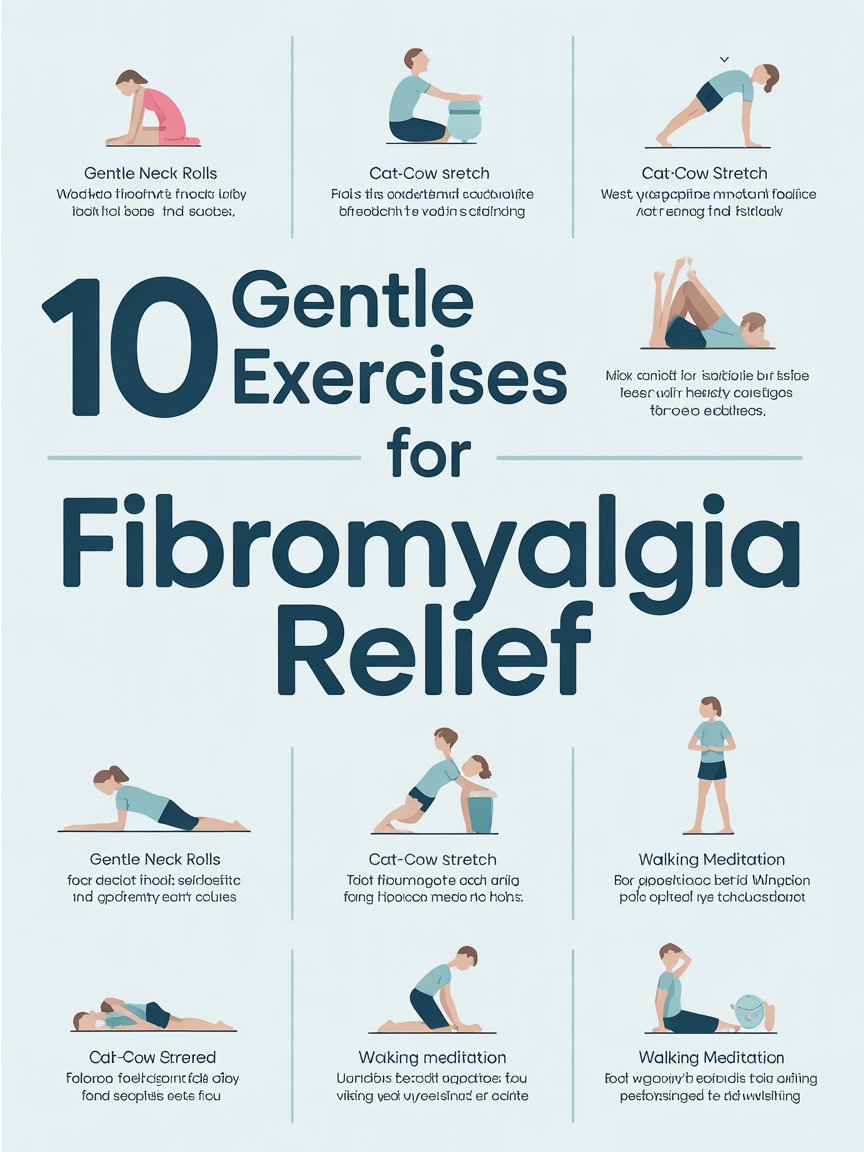
  • 10 Gentle Exercises for Fibromyalgia Relief

    10 Gentle Exercises for Fibromyalgia Relief

    10 Gentle Exercises for Fibromyalgia Relief

    Introduction

    Exercise may feel challenging when you have fibromyalgia, but gentle movement is one of the most effective ways to reduce pain, improve flexibility, and boost energy. The key is to choose low-impact exercises that support your body without causing strain. With consistency and patience, these gentle exercises can help you feel stronger and more comfortable over time.


    1. Stretching

    Simple stretching helps reduce muscle stiffness and improve flexibility.

    Start Slow

    Focus on major muscle groups like the neck, shoulders, back, and legs, holding each stretch gently without pushing too far.


    2. Walking

    Walking is one of the easiest and most accessible exercises.

    Build Gradually

    Start with short distances and increase your time slowly to avoid overexertion.


    3. Yoga

    Yoga combines gentle movement with breathing and relaxation.

    Mind-Body Benefits

    It can improve flexibility, reduce stress, and help calm the nervous system.


    4. Tai Chi

    Tai chi involves slow, flowing movements that are easy on the body.

    Why It Helps

    It improves balance, coordination, and relaxation while reducing pain and stiffness.


    5. Water Aerobics

    Exercising in water reduces pressure on joints and muscles.

    Low-Impact Advantage

    The buoyancy of water makes movement easier and less painful.


    6. Swimming

    Swimming provides a full-body workout without putting stress on joints.

    Gentle Strength Building

    It helps improve endurance and muscle tone while remaining easy on the body.


    7. Stationary Cycling

    Cycling indoors offers controlled, low-impact movement.

    Safe and Adjustable

    You can control speed and resistance, making it easier to match your energy level.


    8. Light Strength Training

    Using light weights can help build muscle support.

    Keep It Simple

    Use small weights or resistance bands and focus on slow, controlled movements.


    9. Deep Breathing Exercises

    Breathing exercises may not seem like exercise, but they support relaxation and pain control.

    Calm the Body

    They help reduce stress and improve oxygen flow, which can ease discomfort.


    10. Gentle Pilates

    Pilates focuses on core strength and controlled movement.

    Stability and Support

    It can improve posture, balance, and muscle tone without high impact.

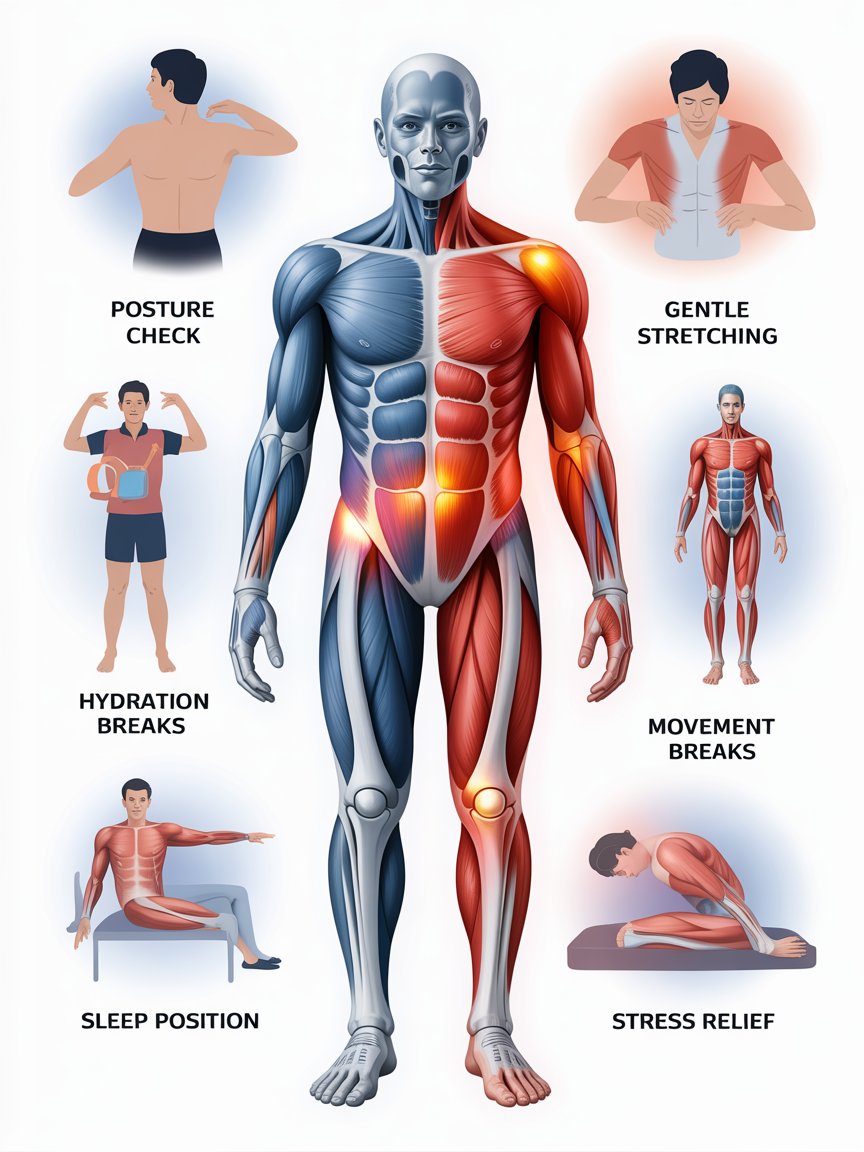
  • 8 Easy Lifestyle Tweaks for Pain Relief

    8 Easy Lifestyle Tweaks for Pain Relief

    8 Easy Lifestyle Tweaks for Pain Relief

    Introduction

    Managing chronic pain doesn’t always require drastic changes. Often, small lifestyle tweaks can lead to meaningful improvements in how you feel each day. By making simple adjustments to your routine, environment, and habits, you can reduce discomfort, improve mobility, and enhance your overall well-being. Here are eight easy lifestyle tweaks to support natural pain relief.


    1. Improve Your Posture

    Poor posture can put extra strain on muscles and joints.

    Small Fix, Big Impact

    Sit and stand with proper alignment, use supportive chairs, and avoid slouching to reduce tension and pain.


    2. Move More—Gently

    Staying still for too long can increase stiffness and discomfort.

    Keep It Light

    Incorporate gentle movement like stretching, walking, or light yoga to keep your body flexible and reduce pain.


    3. Stay Consistently Hydrated

    Hydration plays a key role in muscle and joint health.

    Daily Habit

    Drink water regularly throughout the day to help prevent cramps, fatigue, and stiffness.


    4. Upgrade Your Sleep Setup

    Your sleep environment can affect pain levels.

    Better Rest

    Use a supportive mattress and pillows, and keep your bedroom cool and quiet to improve sleep quality.


    5. Use Heat and Cold Therapy

    Temperature therapy can provide quick relief.

    When to Use What

    Apply heat to relax tight muscles and cold packs to reduce inflammation and numb sharp pain.


    6. Reduce Stress Levels

    Stress can intensify pain perception.

    Simple Techniques

    Practice deep breathing, meditation, or calming activities to relax your mind and body.


    7. Eat Anti-Inflammatory Foods

    Diet can influence how your body responds to pain.

    Smart Choices

    Focus on whole, nutrient-rich foods and limit processed items, sugar, and unhealthy fats.


    8. Break Tasks into Smaller Steps

    Overexertion can worsen pain symptoms.

    Pace Yourself

    Spread tasks throughout the day, take breaks, and avoid pushing beyond your limits.


    Conclusion

    Pain relief doesn’t have to be complicated. Simple lifestyle tweaks—like improving posture, staying active, and managing stress—can make a noticeable difference over time. By staying consistent and listening to your body, you can build habits that support long-term comfort and better daily living.

  • 9 Gentle Routines That Reduce Flare-Ups

    9 Gentle Routines That Reduce Flare-Ups

    9 Gentle Routines That Reduce Flare-Ups

    Introduction

    Fibromyalgia flare-ups can be unpredictable and exhausting, often triggered by stress, overexertion, or poor sleep. The key to reducing flare-ups is consistency and gentle care. By building simple daily routines that support your body, you can lower the frequency and intensity of symptoms. Here are nine gentle routines that can help you stay balanced and feel more in control.


    1. Start the Day Slowly

    Rushing in the morning can trigger pain and fatigue early on.

    Gentle Wake-Up

    Take time to stretch in bed, breathe deeply, and allow your body to adjust before getting up.


    2. Practice Daily Gentle Movement

    Staying active without overdoing it is essential.

    Keep It Light

    Short walks, stretching, or yoga can help reduce stiffness and maintain flexibility.


    3. Follow a Consistent Sleep Schedule

    Irregular sleep can worsen fibromyalgia symptoms.

    Rest Matters

    Go to bed and wake up at the same time each day to support your body’s natural rhythm.


    4. Pace Your Energy Throughout the Day

    Overexertion is a common flare-up trigger.

    Balance Activities

    Break tasks into smaller steps and take regular breaks to conserve energy.


    5. Eat Regular, Balanced Meals

    Skipping meals can lead to energy crashes.

    Fuel Your Body

    Choose nutrient-rich foods that support steady energy and reduce inflammation.


    6. Stay Hydrated

    Dehydration can increase fatigue and muscle discomfort.

    Simple Routine

    Drink water consistently throughout the day to support overall health.


    7. Use Relaxation Techniques Daily

    Stress is a major contributor to flare-ups.

    Calm Your Mind

    Incorporate deep breathing, meditation, or mindfulness to reduce tension.


    8. Wind Down in the Evening

    A calm evening routine prepares your body for rest.

    Relax Before Bed

    Limit screen time, take a warm bath, or read to help your body transition into sleep mode.


    9. Listen to Early Warning Signs

    Flare-ups often have subtle beginnings.

    Stay Aware

    If you notice increased fatigue or pain, slow down and rest before symptoms worsen.

  • 11 Ways to Make Your Life Fibromyalgia-Friendly

    11 Ways to Make Your Life Fibromyalgia-Friendly

    11 Ways to Make Your Life Fibromyalgia-Friendly

    Introduction

    Living with fibromyalgia means learning how to adapt your daily life to reduce pain, manage fatigue, and maintain balance. Small, thoughtful changes can make your environment and routine more supportive, helping you feel more in control. By creating a fibromyalgia-friendly lifestyle, you can improve comfort, conserve energy, and enhance your overall well-being.


    1. Simplify Your Daily Routine

    Overloading your schedule can quickly lead to fatigue and flare-ups.

    Keep It Manageable

    Focus on essential tasks and spread activities throughout the day to avoid exhaustion.


    2. Create a Comfortable Living Space

    Your home environment plays a big role in how you feel.

    Support Your Body

    Use ergonomic furniture, supportive mattresses, and soft lighting to reduce physical strain and sensory overload.


    3. Prioritize Quality Sleep

    Sleep is essential for recovery and pain control.

    Improve Sleep Hygiene

    Stick to a regular sleep schedule and create a calm, quiet, and comfortable bedroom environment.


    4. Learn to Pace Yourself

    Energy management is key to preventing flare-ups.

    Balance Activity and Rest

    Take regular breaks and avoid pushing your limits, even on good days.


    5. Stay Gently Active

    Regular movement helps reduce stiffness and improve mood.

    Choose Low-Impact Exercise

    Activities like walking, stretching, or yoga can keep your body flexible without overexertion.


    6. Eat a Supportive Diet

    Nutrition can influence inflammation and energy levels.

    Focus on Whole Foods

    Include fruits, vegetables, lean proteins, and healthy fats while limiting processed foods and sugar.


    7. Manage Stress Effectively

    Stress can worsen fibromyalgia symptoms.

    Daily Relaxation

    Practice mindfulness, deep breathing, or meditation to calm your nervous system.


    8. Use Heat and Comfort Tools

    Simple tools can provide quick relief.

    Pain Management Aids

    Heating pads, warm baths, and soft blankets can help relax muscles and reduce discomfort.


    9. Stay Organized

    Disorganization can add unnecessary stress.

    Keep Things Simple

    Use planners, reminders, or apps to manage tasks and reduce mental overload.


    10. Build a Support Network

    You don’t have to manage fibromyalgia alone.

    Emotional Support

    Connect with family, friends, or support groups to share experiences and receive encouragement.


    11. Listen to Your Body

    Your body gives signals when it needs rest or care.

    Self-Awareness

    Pay attention to early signs of fatigue or pain and adjust your activities accordingly.

  • 6 Simple Daily Fixes for Chronic Pain

    6 Simple Daily Fixes for Chronic Pain

    6 Simple Daily Fixes for Chronic Pain

    Introduction

    Living with chronic pain can make even the simplest tasks feel overwhelming. While medical treatments are important, small daily changes can also play a powerful role in reducing discomfort and improving quality of life. By building simple, consistent habits, you can better manage pain and support your overall well-being. Here are six easy daily fixes that can make a real difference.


    1. Start Your Day with Gentle Movement

    Waking up with stiffness and pain is common in chronic conditions.

    Why It Helps

    Light stretching or slow movement in the morning helps loosen muscles, improve circulation, and reduce stiffness, making it easier to begin your day.


    2. Use Heat for Quick Relief

    Heat therapy is one of the simplest ways to ease muscle and joint pain.

    Easy Application

    Use a heating pad, warm shower, or hot bath to relax tight muscles and improve blood flow.


    3. Stay Hydrated Throughout the Day

    Dehydration can worsen muscle cramps and fatigue.

    Simple Habit

    Keep a water bottle nearby and sip regularly to support muscle function and energy levels.


    4. Practice Mindful Breathing

    Pain is not just physical—it is also influenced by stress and tension.

    Calm Your System

    Deep breathing exercises help relax the nervous system, reduce stress, and lower pain sensitivity.


    5. Pace Your Activities

    Doing too much at once can trigger pain flare-ups.

    Balance Is Key

    Break tasks into smaller steps, take breaks, and avoid overexertion to conserve energy and reduce strain.


    6. Prioritize Restful Sleep

    Sleep is essential for healing and pain management.

    Better Sleep Routine

    Create a consistent bedtime schedule, limit screen time, and make your sleeping environment comfortable to improve sleep quality.


    Conclusion

    Managing chronic pain doesn’t always require complex solutions. Simple daily fixes—like gentle movement, proper hydration, and better sleep—can have a lasting impact on how you feel. By staying consistent and listening to your body, you can gradually reduce discomfort and improve your daily life.

  • 10 Natural Ways to Boost Energy with Fibromyalgia

    10 Natural Ways to Boost Energy with Fibromyalgia

    10 Natural Ways to Boost Energy with Fibromyalgia

    Introduction

    Fatigue is one of the most challenging symptoms of fibromyalgia. It can feel overwhelming and persistent, making daily tasks difficult. While there’s no quick fix, natural strategies can help improve energy levels over time. By supporting your body with the right habits, you can reduce exhaustion and feel more balanced throughout the day.


    1. Prioritize Restful Sleep

    Quality sleep is essential for restoring energy.

    Improve Sleep Habits

    Stick to a consistent sleep schedule, create a calm bedtime routine, and avoid screens before bed to improve sleep quality.


    2. Start Your Day Slowly

    Rushing in the morning can drain your energy quickly.

    Gentle Beginnings

    Wake up gradually, stretch lightly, and give your body time to adjust before starting your day.


    3. Eat Balanced, Energy-Boosting Meals

    Your diet directly affects your energy levels.

    Smart Nutrition

    Focus on whole foods like fruits, vegetables, lean proteins, and healthy fats to maintain steady energy throughout the day.


    4. Stay Hydrated

    Even mild dehydration can increase fatigue.

    Daily Hydration

    Drink water regularly to support your body’s energy production and overall function.


    5. Incorporate Light Exercise

    Movement may seem difficult, but it can actually boost energy.

    Keep It Gentle

    Activities like walking, stretching, or yoga can improve circulation and reduce fatigue when done consistently.


    6. Manage Stress Effectively

    Stress can quickly drain your energy reserves.

    Relaxation Techniques

    Practice deep breathing, meditation, or mindfulness to calm your nervous system and conserve energy.


    7. Take Short, Regular Breaks

    Pushing through fatigue can make symptoms worse.

    Energy Conservation

    Break tasks into smaller steps and rest between activities to avoid burnout.


    8. Get Natural Sunlight

    Sunlight helps regulate your body’s internal clock and boosts mood.

    Simple Exposure

    Spend a few minutes outdoors each day to improve energy and mental clarity.


    9. Limit Sugar and Processed Foods

    Unhealthy foods can cause energy crashes.

    Choose Wisely

    Reduce intake of sugary snacks and processed meals to maintain stable energy levels.


    10. Support Your Body with Key Nutrients

    Certain vitamins and minerals play a role in energy production.

    Nutritional Support

    Magnesium, B vitamins, and iron may help reduce fatigue when levels are balanced.