Author: admin

  • 8 Ways to Beat Fibromyalgia Fatigue

    8 Ways to Beat Fibromyalgia Fatigue

    8 Ways to Beat Fibromyalgia Fatigue

    1. Understand Why Fibromyalgia Causes Fatigue

    Fatigue is one of the most challenging symptoms of fibromyalgia. It often feels deeper than normal tiredness and may not improve even after a full night’s sleep. This happens because fibromyalgia affects how the nervous system processes pain, sleep, and energy levels. Poor sleep quality, chronic pain, and stress can all contribute to overwhelming exhaustion.

    2. Improve Your Sleep Routine

    Creating a consistent sleep routine can significantly reduce fatigue. Try going to bed and waking up at the same time every day, even on weekends. A comfortable mattress, a dark room, and limited screen time before bed can help improve sleep quality and restore energy levels.

    3. Pace Your Daily Activities

    Overdoing activities on days when you feel better can lead to severe fatigue later. Instead, use pacing techniques by balancing activity with rest. Break larger tasks into smaller steps and allow short breaks in between to conserve energy throughout the day.

    4. Include Gentle Exercise

    Although it may seem difficult when you feel tired, gentle physical activity can actually improve energy levels. Activities like walking, stretching, yoga, or light swimming can help improve circulation and reduce fatigue when done consistently and gradually.

    5. Eat Balanced, Energy-Supporting Foods

    A balanced diet can help support stable energy levels. Whole grains, fruits, vegetables, lean proteins, and healthy fats provide nutrients the body needs to function properly. Avoid large amounts of processed foods and excessive sugar, which can lead to energy crashes.

    6. Manage Stress Levels

    Stress can worsen both pain and fatigue in fibromyalgia. Relaxation techniques such as deep breathing, meditation, or gentle yoga may help calm the nervous system. Reducing daily stress can make it easier for the body to maintain steady energy levels.

    7. Stay Hydrated Throughout the Day

    Dehydration can contribute to feelings of fatigue and weakness. Drinking enough water throughout the day helps the body maintain proper function, supports circulation, and may reduce some symptoms associated with fibromyalgia fatigue.

    8. Talk to Your Doctor About Treatment Options

    If fatigue becomes severe or persistent, medical guidance may be helpful. Doctors may recommend treatments such as medication, sleep therapy, or lifestyle adjustments. Managing fibromyalgia usually requires a combination of strategies tailored to each person’s needs.
  • 10 Sleep Hacks for Fibromyalgia

    10 Sleep Hacks for Fibromyalgia

    1. Why Sleep Is Important for Fibromyalgia

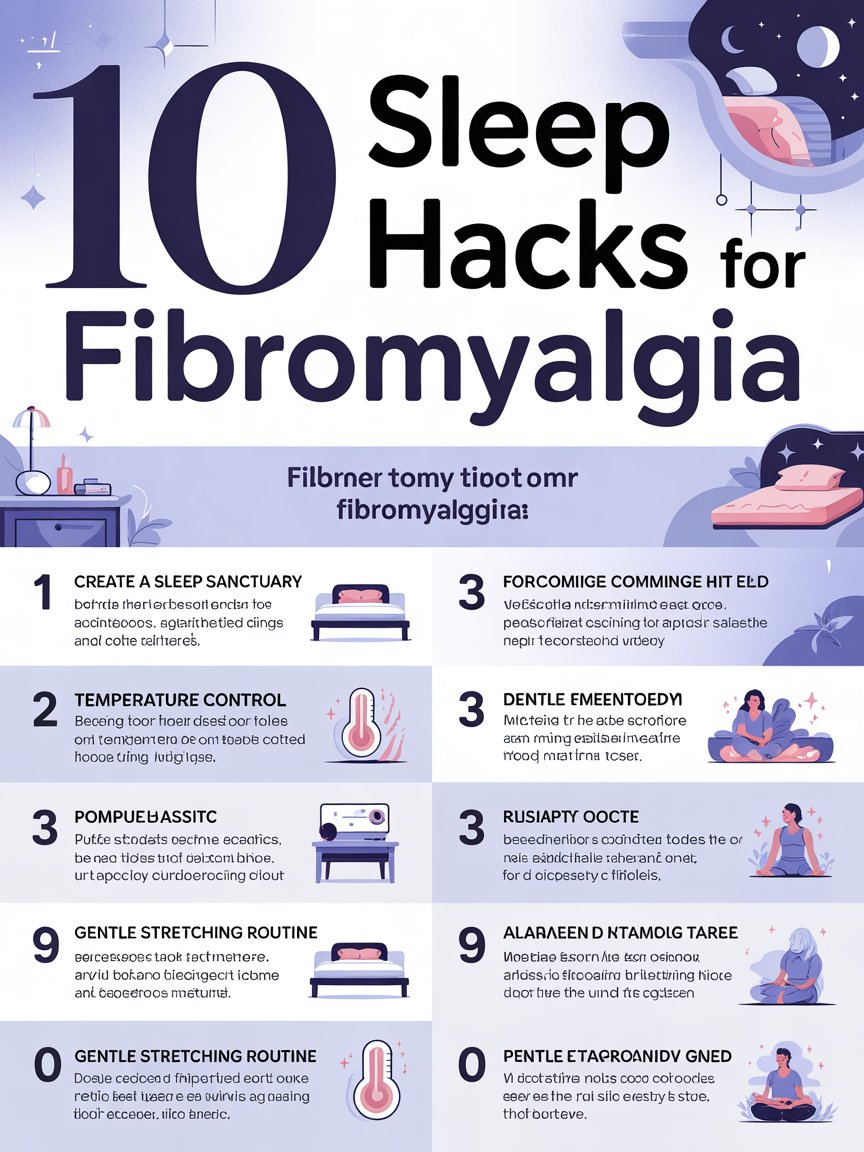
    Sleep problems are very common in people with fibromyalgia. Many individuals experience difficulty falling asleep, frequent waking during the night, or waking up feeling unrefreshed. Poor sleep can worsen pain, fatigue, and brain fog. Improving sleep habits can help reduce symptoms and improve overall quality of life.

    2. Maintain a Consistent Sleep Schedule

    Going to bed and waking up at the same time every day helps regulate the body’s internal clock. A consistent schedule makes it easier to fall asleep and wake up naturally. Even on weekends, try to keep your sleep routine as regular as possible.

    3. Create a Comfortable Sleep Environment

    Your bedroom environment can greatly affect sleep quality. Keep the room dark, quiet, and cool to promote relaxation. A comfortable mattress and supportive pillows can also reduce pressure on sensitive areas of the body.

    4. Limit Screen Time Before Bed

    Using phones, tablets, or computers before bedtime can interfere with sleep. The blue light from screens may disrupt the body’s natural sleep hormone production. Try to stop using electronic devices at least 30–60 minutes before going to bed.

    5. Practice Relaxation Techniques

    Relaxation exercises such as deep breathing, meditation, or gentle stretching can help calm the mind before bedtime. These techniques reduce stress and muscle tension, which may make it easier to fall asleep.

    6. Avoid Caffeine in the Evening

    Caffeine found in coffee, tea, energy drinks, and chocolate can interfere with sleep. People with fibromyalgia may be especially sensitive to stimulants. Limiting caffeine intake in the afternoon and evening may improve sleep quality.

    7. Use Heat Therapy Before Bed

    A warm shower, bath, or heating pad can help relax tense muscles and reduce pain before bedtime. Heat therapy improves blood circulation and can create a calming effect that prepares the body for sleep.

    8. Keep Daytime Naps Short

    While fatigue is common with fibromyalgia, long daytime naps may make it harder to sleep at night. If a nap is needed, try to keep it short, around 20–30 minutes. Short naps can refresh energy without disrupting nighttime sleep.

    9. Try Gentle Evening Stretching

    Light stretching before bed can help release muscle tension built up during the day. Gentle stretches for the neck, back, and legs can help relax the body. This can make it easier to fall asleep and reduce nighttime discomfort.

    10. Manage Stress and Anxiety

    Stress and anxiety can make it difficult to fall asleep or stay asleep. Practicing stress management techniques such as journaling, mindfulness, or calming music can help quiet the mind. Reducing stress levels often leads to better sleep.

    11. Talk to a Doctor if Sleep Problems Continue

    If sleep problems remain severe despite lifestyle changes, it may be helpful to speak with a healthcare professional. Doctors can evaluate sleep issues and recommend treatments if necessary. Addressing sleep problems is an important step in managing fibromyalgia symptoms effectively.

  • 10 Physical Therapy Tips for Fibromyalgia

    10 Physical Therapy Tips for Fibromyalgia

    10 Physical Therapy Tips for Fibromyalgia

    1. Why Physical Therapy Helps Fibromyalgia

    Physical therapy can be very helpful for people living with fibromyalgia. The condition often causes widespread pain, stiffness, fatigue, and reduced mobility. A well-planned physical therapy routine can improve flexibility, strengthen muscles, and reduce pain over time. Gentle movement guided by a professional can help the body function better without triggering flare-ups.

    2. Start with Gentle Movements

    When beginning physical therapy, it is important to start with gentle exercises. Sudden or intense activity can increase pain and fatigue. Slow stretching, light strengthening, and controlled movements help the body gradually adapt to exercise. This approach reduces the risk of symptom flare-ups.

    3. Focus on Stretching Regularly

    Stretching helps relieve muscle tension and improve flexibility. Many people with fibromyalgia experience stiffness in the neck, shoulders, back, and legs. Regular stretching can loosen tight muscles and improve range of motion. A physical therapist may recommend simple stretches to practice daily.

    4. Build Strength Gradually

    Strength training can help support joints and reduce muscle fatigue. However, it should be done slowly and with light resistance. Using resistance bands or light weights may be helpful for beginners. Gradual strength building can improve stability and reduce discomfort during daily activities.

    5. Practice Low-Impact Aerobic Exercise

    Low-impact aerobic exercises can improve circulation and increase stamina. Activities such as walking, cycling, or water exercise are commonly recommended. These exercises strengthen the heart and muscles without placing too much stress on the joints. Consistency is more important than intensity.

    6. Use Heat Therapy Before Exercise

    Applying heat before physical therapy exercises can help relax tight muscles. Warm showers, heating pads, or warm towels can reduce stiffness and prepare the body for movement. Heat increases blood flow, which can make exercises more comfortable.

    7. Pace Yourself to Avoid Flare-Ups

    Pacing is an important technique for managing fibromyalgia. Doing too much activity at once can lead to increased pain and fatigue. Break exercises into shorter sessions and include rest periods if needed. Gradual progress helps prevent overexertion.

    8. Improve Posture and Body Mechanics

    Poor posture can increase strain on muscles and joints. Physical therapy often includes training on proper posture while sitting, standing, or lifting objects. Learning better body mechanics can reduce pain and prevent further muscle tension.

    9. Include Relaxation Techniques

    Relaxation exercises such as deep breathing or gentle mindfulness practices can help reduce stress. Stress often worsens fibromyalgia symptoms. Combining relaxation techniques with physical therapy may help improve both physical and emotional well-being.

    10. Track Your Progress and Symptoms

    Keeping track of exercises and symptoms can help identify what works best. Some activities may improve mobility while others might trigger discomfort. A symptom journal can help both you and your physical therapist adjust the program for better results.

    11. Work with a Qualified Physical Therapist

    A trained physical therapist can design a personalized exercise program based on your needs and limitations. They can guide you on proper techniques and ensure exercises are performed safely. Professional guidance helps maximize benefits while minimizing the risk of injury or flare-ups.

  • 5 Mistakes to Avoid When Exercising with Fibromyalgia

    5 Mistakes to Avoid When Exercising with Fibromyalgia

    5 Mistakes to Avoid When Exercising with Fibromyalgia

    1. Why Exercise Needs Special Care with Fibromyalgia

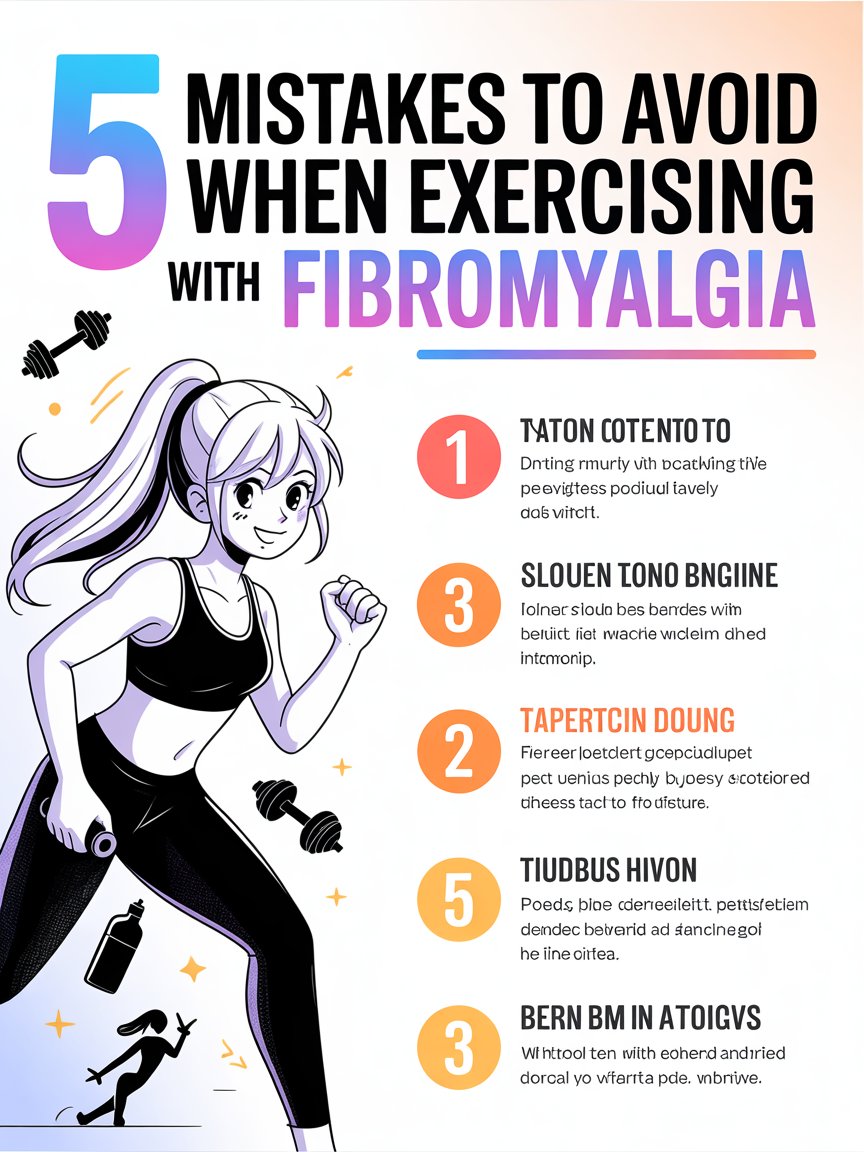
    Exercise can be very beneficial for people living with fibromyalgia, but it must be done carefully. Gentle movement can help reduce stiffness, improve circulation, and boost energy levels. However, certain exercise habits can actually worsen symptoms if not approached properly. Understanding common mistakes can help prevent flare-ups and make exercise more effective and enjoyable.

    2. Doing Too Much Too Soon

    One of the most common mistakes is starting with intense workouts. Many people feel motivated to exercise and push themselves too hard at the beginning. This can lead to increased pain, fatigue, and flare-ups. It is better to start with short, gentle sessions and slowly increase activity levels as the body adapts.

    3. Skipping Warm-Ups and Cool-Downs

    Warm-ups and cool-downs are essential for people with fibromyalgia. Jumping straight into exercise without preparing the muscles can increase stiffness and the risk of injury. A gentle warm-up, such as light stretching or slow walking, helps prepare the body for movement. Cooling down afterward allows the muscles to relax and recover.

    4. Ignoring Pain Signals from the Body

    Listening to your body is crucial when exercising with fibromyalgia. Some discomfort may occur with movement, but sharp or severe pain is a warning sign. Continuing to exercise despite strong pain can worsen symptoms and delay recovery. Adjusting the intensity or taking breaks can help maintain a safe routine.

    5. Choosing High-Impact Exercises

    High-impact activities such as running, jumping, or intense aerobics can put excessive strain on joints and muscles. These types of exercises may trigger pain flare-ups in people with fibromyalgia. Instead, low-impact activities like walking, swimming, yoga, or gentle stretching are often safer and more effective.

    6. Being Inconsistent with Exercise

    Another mistake is exercising only occasionally or stopping completely after a painful episode. Consistency is important for managing fibromyalgia symptoms. Regular gentle movement helps the body adapt and gradually build strength and flexibility. Even short daily sessions can make a positive difference.

    7. Building a Safe Exercise Routine

    Avoiding these common mistakes can help make exercise a helpful part of fibromyalgia management. Starting slowly, choosing gentle activities, and staying consistent are key strategies. By listening to your body and maintaining a balanced routine, exercise can become a safe and effective way to reduce pain and improve overall well-being.

  • 9 Water Exercises for Fibromyalgia Patients

    9 Water Exercises for Fibromyalgia Patients

    9 Water Exercises for Fibromyalgia Patients

    1. Why Water Exercise Helps Fibromyalgia

    Water exercise is often recommended for people with fibromyalgia because it reduces pressure on the joints and muscles. The natural buoyancy of water supports body weight, making movement easier and less painful. Warm water can also relax tight muscles and improve circulation. These benefits allow individuals with fibromyalgia to exercise gently while reducing the risk of flare-ups.

    2. Water Walking

    Water walking is one of the simplest exercises to begin with. Stand in waist-deep water and walk slowly across the pool. The resistance of the water helps strengthen muscles while protecting the joints. This exercise improves circulation and helps build stamina over time.

    3. Gentle Water Jogging

    Water jogging is similar to regular jogging but performed in the pool. Move your legs in a jogging motion while keeping your feet lightly touching the pool floor or slightly lifted. The water resistance helps strengthen muscles without causing impact on the joints.

    4. Leg Lifts in Water

    Stand near the pool wall for balance and slowly lift one leg forward or to the side. Hold the position briefly and lower the leg back down. Repeat with the other leg. This exercise strengthens the hip and leg muscles while maintaining gentle movement.

    5. Arm Circles

    Stand in chest-deep water and extend your arms out to the sides. Slowly rotate your arms in small circles forward and then backward. The resistance of the water helps strengthen the shoulders and arms while improving flexibility.

    6. Wall Push-Ups in the Pool

    Hold onto the edge of the pool or place your hands on the pool wall. Slowly bend your elbows to bring your body toward the wall and then push back. This exercise helps strengthen the chest, shoulders, and arms while remaining low-impact.

    7. Floating Leg Kicks

    Hold onto the pool edge or use a float for support. Slowly kick your legs behind you in a gentle swimming motion. This movement strengthens the legs and improves circulation without stressing the joints.

    8. Side Leg Raises

    Stand in waist-deep water and slowly lift one leg out to the side. Hold for a few seconds and lower it back down. Repeat with the other leg. This exercise helps strengthen the hips and improves balance.

    9. Water Stretching

    Gentle stretching in warm water can help reduce muscle stiffness. Stretch your arms, legs, and back slowly while using the water for support. Water stretching improves flexibility and helps relax tight muscles.

    10. Cool Down with Floating Relaxation

    After finishing exercises, spend a few minutes floating or standing calmly in the water while taking slow breaths. This helps relax the body and prevents muscle tension. Cooling down is an important part of any exercise routine for fibromyalgia.

    11. Tips for Safe Water Exercise

    When performing water exercises, choose warm water if possible, as it helps relax muscles. Start slowly and avoid pushing your body too hard. Short sessions of 10–20 minutes are often enough for beginners. With regular practice, water exercises can improve strength, flexibility, and overall comfort for people living with fibromyalgia.

  • 12 Yoga Poses That Help Fibromyalgia

    12 Yoga Poses That Help Fibromyalgia

    12 Yoga Poses That Help Fibromyalgia

    1. Why Yoga Is Helpful for Fibromyalgia

    Yoga is often recommended for people with fibromyalgia because it combines gentle stretching, controlled breathing, and relaxation. These elements help reduce muscle tension, improve flexibility, and lower stress levels. Since stress and stiffness can worsen fibromyalgia symptoms, regular yoga practice may help manage pain and fatigue. Slow, gentle yoga poses are usually the most suitable for beginners.

    2. Mountain Pose (Tadasana)

    Mountain pose is a simple standing posture that improves balance and posture. Stand with your feet together, arms relaxed at your sides, and take slow, deep breaths. This pose helps align the body and promotes relaxation. It is a good starting point for any yoga routine.

    3. Child’s Pose (Balasana)

    Child’s pose is a restful posture that gently stretches the back, hips, and thighs. Kneel on the floor and lower your chest toward your knees while extending your arms forward. This pose helps release tension in the lower back and encourages deep breathing. It is often used as a resting pose between exercises.

    4. Cat-Cow Stretch (Marjaryasana–Bitilasana)

    The cat-cow stretch is a gentle movement that increases flexibility in the spine. Start on your hands and knees, arch your back upward for the cat position, and then lower your belly while lifting your chest for the cow position. This flowing movement helps relieve stiffness and improve spinal mobility.

    5. Seated Forward Bend (Paschimottanasana)

    This pose gently stretches the hamstrings and lower back. Sit with your legs extended and slowly reach toward your feet. It is important to move slowly and avoid forcing the stretch. This pose can help reduce tension in the back and legs.

    6. Bridge Pose (Setu Bandhasana)

    Bridge pose strengthens the back, glutes, and legs while opening the chest. Lie on your back with knees bent and feet flat on the floor. Lift your hips slowly while keeping your shoulders on the ground. This pose may help improve posture and support the lower back.

    7. Legs-Up-The-Wall Pose (Viparita Karani)

    This relaxing pose involves lying on your back with your legs resting vertically against a wall. It helps improve blood circulation and reduce leg fatigue. Many people find this pose calming and beneficial for relaxation.

    8. Cobra Pose (Bhujangasana)

    Cobra pose gently stretches the chest and spine. Lie on your stomach with your hands under your shoulders and slowly lift your chest while keeping your hips on the floor. This pose can help strengthen the back and reduce stiffness.

    9. Standing Side Stretch

    Standing with your feet shoulder-width apart, raise one arm overhead and lean gently to the opposite side. This stretch opens the sides of the body and improves flexibility in the torso. It can help relieve tightness in the spine and shoulders.

    10. Supine Twist (Supta Matsyendrasana)

    A gentle spinal twist can help release tension in the back and hips. Lie on your back, bend one knee, and gently twist it across your body. Twisting poses help improve spinal flexibility and encourage relaxation.

    11. Reclining Bound Angle Pose (Supta Baddha Konasana)

    Lie on your back and bring the soles of your feet together while letting your knees fall outward. This pose stretches the hips and promotes deep relaxation. It is often used in restorative yoga for stress relief.

    12. Corpse Pose (Savasana)

    Corpse pose is the final relaxation pose in many yoga routines. Lie flat on your back with arms at your sides and focus on slow breathing. This pose allows the body to fully relax and absorb the benefits of the practice. It can also help calm the mind and reduce stress.

    13. Tips for Practicing Yoga with Fibromyalgia

    When practicing yoga with fibromyalgia, move slowly and avoid pushing your body too hard. Use props such as cushions, blocks, or straps for support if needed. Short sessions practiced regularly are often more beneficial than long, intense workouts. Listening to your body and focusing on gentle movement can help you enjoy the benefits of yoga while minimizing pain.

  • 6 Low-Impact Exercises Safe for Fibromyalgia

    6 Low-Impact Exercises Safe for Fibromyalgia

    6 Low-Impact Exercises Safe for Fibromyalgia

    1. Why Low-Impact Exercise Is Important

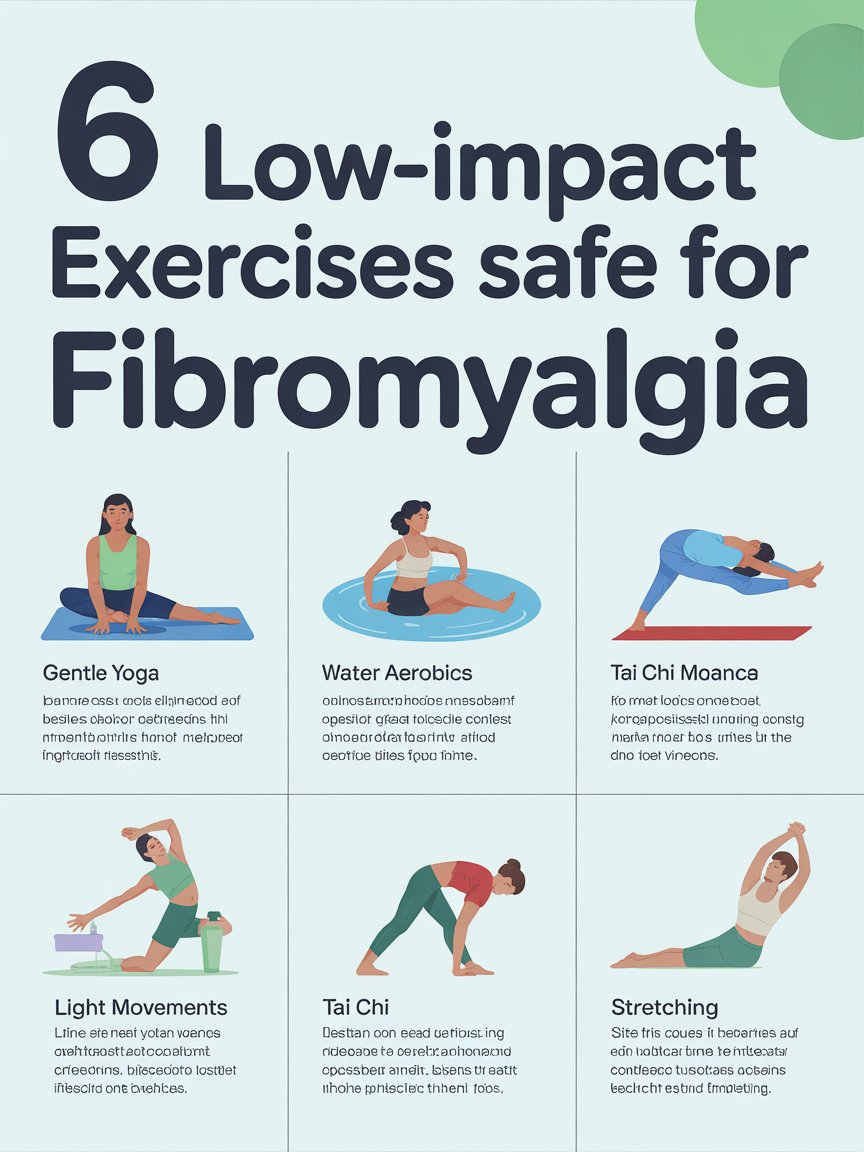
    Fibromyalgia causes widespread pain, fatigue, and muscle stiffness, which can make intense exercise difficult. However, regular physical activity is still important for maintaining flexibility, improving circulation, and reducing stiffness. Low-impact exercises are ideal because they place less stress on the joints and muscles. Starting slowly and choosing gentle movements can help manage symptoms without triggering flare-ups.

    2. Walking for Gentle Movement

    Walking is one of the easiest and safest exercises for people with fibromyalgia. It helps improve cardiovascular health, strengthen muscles, and increase energy levels. A short daily walk can also reduce stress and improve mood. Beginners should start with a comfortable pace and gradually increase time as their body adjusts.

    3. Swimming or Water Exercise

    Water-based exercise is often recommended for people with chronic pain conditions. Swimming or gentle water aerobics reduces pressure on joints because the water supports body weight. Warm water can also relax tight muscles and improve flexibility. These exercises help strengthen muscles while minimizing pain.

    4. Yoga for Flexibility and Relaxation

    Yoga combines gentle stretching, controlled breathing, and relaxation techniques. It can help reduce muscle stiffness and improve balance. Slow or restorative yoga styles are especially helpful for people with fibromyalgia. Regular practice may also reduce stress and improve sleep quality.

    5. Tai Chi for Balance and Calm Movement

    Tai Chi is a slow, flowing form of exercise that focuses on balance and controlled movement. Often described as “meditation in motion,” Tai Chi helps improve coordination and flexibility. It can also reduce stress and promote relaxation. Many people with fibromyalgia find this gentle activity helpful for managing symptoms.

    6. Stationary Cycling for Low-Impact Cardio

    Using a stationary bicycle provides a gentle cardiovascular workout without placing too much stress on the joints. Cycling can improve stamina and circulation. Beginners should start with short sessions at a low resistance level and gradually increase intensity.

    7. Gentle Stretching as Daily Exercise

    Stretching is a simple but effective form of low-impact exercise. Regular stretching helps improve flexibility and reduce muscle stiffness. Simple stretches for the neck, shoulders, back, and legs can be done at home without equipment. Practicing stretching daily may help prevent muscle tightness and improve mobility.

    8. Tips for Exercising Safely with Fibromyalgia

    When starting any exercise routine, it is important to listen to your body and avoid pushing too hard. Begin with short sessions and gradually increase duration as your body adapts. Taking rest breaks and staying hydrated can help prevent fatigue. Consistent, gentle exercise can help reduce pain and improve overall quality of life for people with fibromyalgia.

  • 8 Stretching Routines for Chronic Pain Relief

    8 Stretching Routines for Chronic Pain Relief

    8 Stretching Routines for Chronic Pain Relief

    1. Why Stretching Helps Chronic Pain

    Chronic pain conditions can cause muscle stiffness, tension, and reduced mobility. Gentle stretching helps improve flexibility, increase blood flow, and relax tight muscles. Regular stretching may also reduce stress and improve posture, which can help manage pain over time. Performing simple stretches daily can support better movement and comfort.

    2. Neck Stretch for Tension Relief

    Neck tension is common in people experiencing chronic pain. Slowly tilt your head toward one shoulder and hold the stretch for about 10–15 seconds. Repeat on the other side. This stretch helps loosen tight neck muscles and may reduce headaches caused by muscle tension.

    3. Shoulder Roll Stretch

    Shoulder stiffness can build up from stress or long periods of sitting. Slowly roll your shoulders forward in a circular motion for a few seconds, then reverse the direction. This movement improves blood flow to the shoulder muscles and reduces tightness in the upper body.

    4. Upper Back Stretch

    Clasp your hands together in front of your body and gently push your arms forward while rounding your upper back. Hold this position for 10–15 seconds. This stretch helps release tension in the upper back and shoulders, which are common areas for chronic pain.

    5. Side Body Stretch

    Stand or sit with your feet shoulder-width apart and raise one arm overhead. Lean gently to the opposite side to stretch the side of your body. Hold the stretch briefly and switch sides. This movement helps loosen the spine and improve flexibility in the torso.

    6. Hamstring Stretch

    Tight hamstrings can contribute to lower back pain. Sit with one leg extended and the other bent inward. Slowly reach toward your toes without forcing the movement. Hold the stretch for several seconds and repeat with the other leg.

    7. Lower Back Stretch

    A gentle lower back stretch can relieve stiffness and tension. Sit or stand and slowly bend forward, allowing your arms to hang naturally toward the floor. This stretch helps relax the muscles in the lower back and may reduce discomfort.

    8. Hip Stretch for Mobility

    Tight hips can affect posture and increase pain in the lower body. Sit in a chair and cross one ankle over the opposite knee. Lean forward slightly to feel a stretch in the hip area. Hold briefly and switch sides.

    9. Calf Stretch for Leg Relief

    Stand facing a wall and place your hands against it. Step one foot back while keeping the heel on the floor. Lean forward slightly to stretch the calf muscle. This stretch helps improve leg flexibility and reduce tightness.

    10. Tips for Safe Stretching

    When stretching for chronic pain relief, it is important to move slowly and gently. Avoid bouncing or forcing your body into uncomfortable positions. Stretch regularly, breathe deeply, and stop if you feel sharp pain. Consistent stretching can help improve mobility and support long-term pain management.

  • 10-Minute Daily Workout for Fibromyalgia Pain

    10-Minute Daily Workout for Fibromyalgia Pain

    10-Minute Daily Workout for Fibromyalgia Pain

    1. Why Short Workouts Help Fibromyalgia

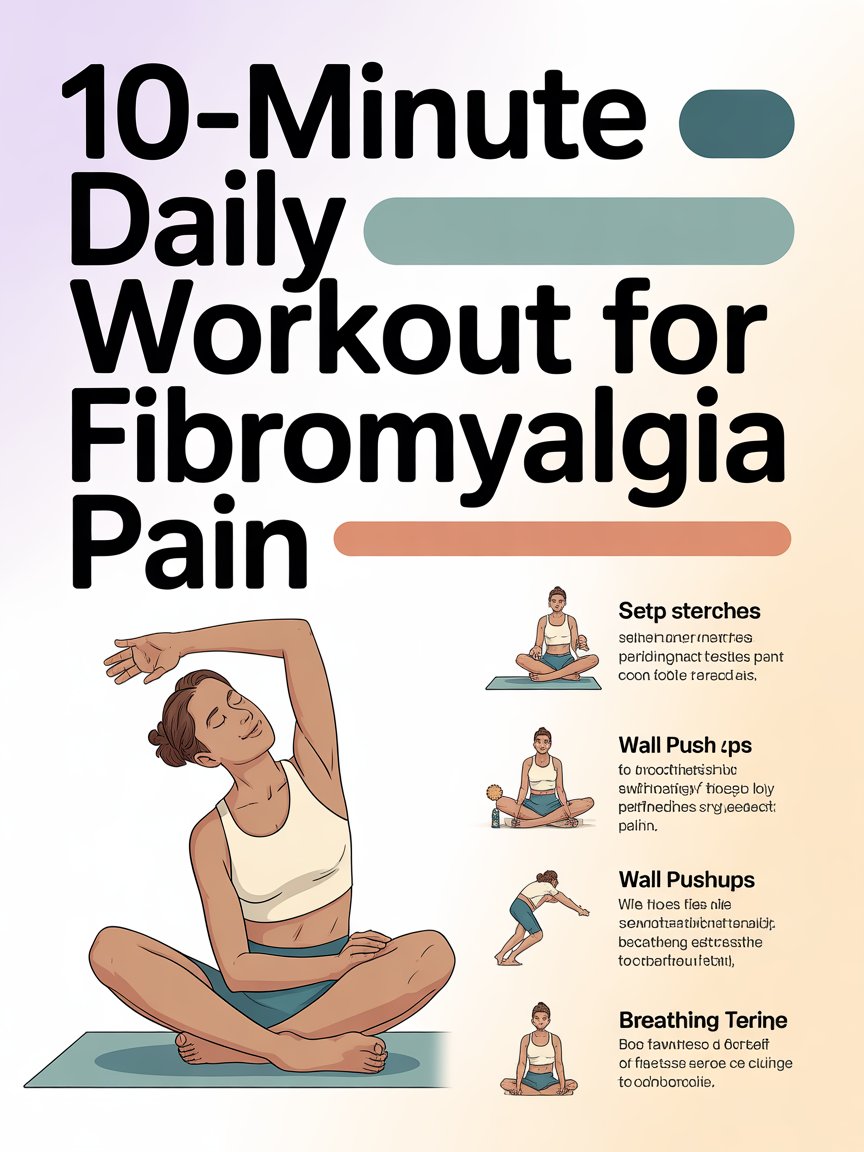
    Fibromyalgia often causes chronic pain, fatigue, and stiffness, which can make long workouts difficult. Short, gentle workouts can still provide important benefits without overwhelming the body. Even a 10-minute routine can improve blood circulation, reduce muscle stiffness, and boost mood. Consistency with small daily movements is often more helpful than intense exercise.

    2. Start with Gentle Deep Breathing (1 Minute)

    Begin the routine with slow, deep breathing to relax the body and mind. Sit or stand comfortably and inhale slowly through your nose, then exhale through your mouth. Deep breathing helps calm the nervous system and reduce muscle tension. This simple step prepares your body for movement.

    3. Neck and Shoulder Rolls (1 Minute)

    Gently roll your shoulders forward and backward to loosen tight muscles. Slowly tilt your head side to side and forward to stretch the neck. Many people with fibromyalgia experience tension in the neck and shoulders, so this movement can provide quick relief.

    4. Arm Stretches (1 Minute)

    Raise one arm across your chest and hold it with the opposite hand for a gentle stretch. Switch arms after a few seconds. This movement stretches the shoulders and upper back muscles. Keep the stretch gentle and avoid forcing the movement.

    5. Seated or Standing Marching (2 Minutes)

    March in place slowly while standing or sitting. Lift your knees slightly and move your arms naturally. This light cardio exercise helps improve circulation and warms up the body without putting stress on the joints.

    6. Gentle Side Stretch (1 Minute)

    Stand with your feet shoulder-width apart and slowly raise one arm overhead. Lean slightly to the opposite side to stretch the side of your body. Hold for a few seconds and switch sides. This movement helps stretch the back and torso muscles.

    7. Wall Push-Ups (1 Minute)

    Stand facing a wall with your hands placed on it at shoulder height. Slowly bend your elbows to bring your body toward the wall, then push back to the starting position. Wall push-ups strengthen the arms and shoulders while remaining low-impact.

    8. Seated Leg Lifts (1 Minute)

    Sit in a chair with your back straight. Slowly lift one leg and hold it for a few seconds, then lower it and switch legs. This exercise strengthens the thighs and improves circulation in the lower body.

    9. Gentle Back Stretch (1 Minute)

    Stand or sit and slowly bend forward to stretch your lower back and hamstrings. If standing feels uncomfortable, you can perform this stretch while seated. Hold the stretch briefly and return slowly to an upright position.

    10. End with Relaxation (1 Minute)

    Finish the routine with another minute of deep breathing or light stretching. Relax your muscles and allow your body to cool down. This helps prevent soreness and leaves you feeling calm and refreshed.

    11. Tips for Staying Consistent

    The goal of this 10-minute routine is to support gentle daily movement. Listen to your body and modify exercises if needed. Doing this routine regularly can help reduce stiffness, improve flexibility, and support overall pain management for people living with fibromyalgia.

  • 7 Gentle Exercises for Fibromyalgia Beginners

    7 Gentle Exercises for Fibromyalgia Beginners

    7 Gentle Exercises for Fibromyalgia Beginners

    1. Why Gentle Exercise Helps Fibromyalgia

    Fibromyalgia often causes widespread pain, fatigue, and muscle stiffness, which can make exercise feel difficult. However, gentle physical activity is one of the most effective ways to manage symptoms. Regular movement helps improve circulation, reduce stiffness, and boost energy levels. The key is to start slowly and choose low-impact exercises that are easy on the body.

    2. Walking for Low-Impact Movement

    Walking is one of the easiest and safest exercises for beginners with fibromyalgia. It helps improve circulation, strengthen muscles, and support heart health without putting too much strain on the body. Start with short walks of 5–10 minutes and gradually increase the duration as your body adapts. Walking outdoors can also improve mood and reduce stress.

    3. Gentle Stretching for Flexibility

    Stretching helps reduce muscle stiffness and improve flexibility. Simple stretches for the neck, shoulders, back, and legs can help loosen tight muscles and relieve discomfort. It is best to perform slow and controlled stretches while breathing deeply. Stretching daily, especially in the morning or before bed, may help reduce pain.

    4. Yoga for Relaxation and Balance

    Yoga combines gentle movement, stretching, and breathing techniques. Many yoga poses can be modified for beginners or those with chronic pain conditions. Practicing yoga regularly may improve flexibility, reduce stress, and help manage fibromyalgia symptoms. Slow-paced or restorative yoga styles are often the most suitable.

    5. Water Aerobics for Joint Support

    Exercising in warm water can be very beneficial for people with fibromyalgia. Water supports the body’s weight, reducing pressure on joints and muscles. Activities such as water walking, light swimming, or gentle water aerobics can help build strength while minimizing pain. Warm water can also help relax tense muscles.

    6. Tai Chi for Gentle Body Movement

    Tai Chi is a slow, flowing exercise that focuses on balance, breathing, and controlled movement. It is often described as “meditation in motion.” This gentle practice may improve balance, flexibility, and relaxation. Many people with fibromyalgia find Tai Chi helpful for reducing stress and improving overall well-being.

    7. Stationary Cycling for Light Cardio

    Using a stationary bicycle can provide a low-impact cardiovascular workout. Cycling helps improve stamina and circulation without placing heavy stress on joints. Beginners should start with short sessions at a comfortable pace and gradually increase time and intensity.

    8. Deep Breathing and Relaxation Exercises

    Deep breathing exercises are simple but effective for managing fibromyalgia symptoms. Controlled breathing helps relax muscles, calm the nervous system, and reduce stress levels. Practicing breathing techniques alongside gentle movement can improve relaxation and pain management.

    9. Start Slowly and Listen to Your Body

    When beginning any exercise routine with fibromyalgia, it is important to move slowly and avoid overexertion. Doing too much too quickly may trigger a flare-up. Start with short sessions and gradually build endurance over time. Consistency and gentle progress are the keys to success for fibromyalgia beginners.