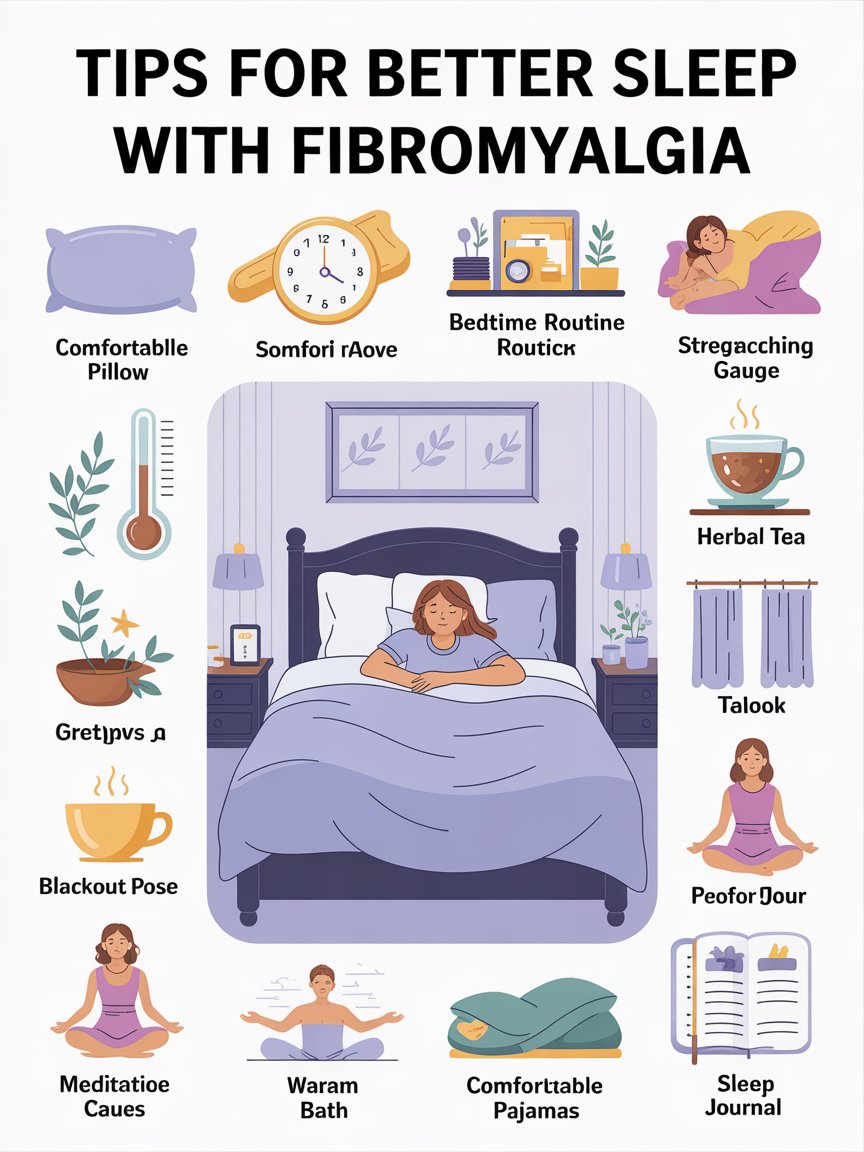
Tips for Better Sleep With Fibromyalgia
1. Understanding Sleep Problems in Fibromyalgia
Fibromyalgia often affects sleep quality, making it difficult for many patients to fall asleep or stay asleep throughout the night. Even after a full night in bed, people with fibromyalgia may wake up feeling tired and unrefreshed. Improving sleep habits can play a major role in reducing fatigue and managing symptoms.
2. Creating a Consistent Sleep Schedule
Going to bed and waking up at the same time every day helps regulate the body’s internal clock. A consistent sleep schedule trains the body to prepare for rest at the same time each night. Over time, this habit can make it easier to fall asleep and wake up feeling more refreshed.
3. Building a Relaxing Bedtime Routine
A calming routine before bed can signal to the body that it is time to relax. Activities such as reading, listening to soft music, or practicing deep breathing can help reduce stress before sleep. A relaxing routine can make the transition from wakefulness to sleep smoother.
4. Creating a Comfortable Sleep Environment
The bedroom environment plays an important role in sleep quality. A quiet, dark, and cool room can promote better rest. Comfortable bedding and supportive pillows can also help reduce pressure on sensitive muscles and joints.
5. Limiting Screen Time Before Bed
Electronic devices such as phones, tablets, and computers emit blue light that can interfere with sleep. This light can suppress the production of melatonin, the hormone that helps regulate sleep. Limiting screen use at least an hour before bedtime may improve sleep quality.
6. Practicing Gentle Evening Stretching
Light stretching before bed can help relax muscles and reduce stiffness. Gentle stretches can release tension built up during the day and prepare the body for rest. This can be particularly helpful for fibromyalgia patients who experience nighttime discomfort.
7. Managing Stress Before Sleep
Stress and anxiety can make it difficult to fall asleep. Practicing relaxation techniques such as meditation or mindfulness can calm the mind and body. Reducing mental tension before bedtime can lead to deeper and more restful sleep.
8. Avoiding Heavy Meals Late at Night
Eating large meals close to bedtime may interfere with sleep. The body needs time to digest food, which can make it harder to relax and fall asleep. Choosing lighter evening meals can help the body settle down for rest.
9. Limiting Caffeine Intake
Caffeine is a stimulant that can stay in the body for several hours. Drinking coffee, tea, or caffeinated beverages late in the day may disrupt sleep patterns. Reducing caffeine intake in the afternoon and evening can help improve sleep.
10. Using Heat Therapy for Relaxation
Warm baths or heating pads can help relax tight muscles before bed. Heat therapy improves blood flow and reduces muscle stiffness. Many fibromyalgia patients find that warmth helps them fall asleep more comfortably.
11. Staying Physically Active During the Day
Regular daytime activity can help improve nighttime sleep. Gentle exercise such as walking or yoga helps regulate the sleep cycle and reduce stress. However, intense exercise late in the evening may interfere with sleep for some people.
12. Keeping a Sleep Journal
Tracking sleep habits can help identify patterns that affect sleep quality. Recording bedtime, wake-up time, and nighttime disturbances may reveal helpful insights. This information can guide adjustments to daily routines.
13. Reducing Noise and Light Disturbances
External disturbances can interrupt sleep and prevent deep rest. Using blackout curtains, white noise machines, or earplugs can help create a more peaceful sleeping environment. Minimizing disruptions helps the body remain in deeper sleep stages.
14. Talking to a Healthcare Professional
If sleep problems continue despite lifestyle changes, professional guidance may be helpful. Healthcare providers can recommend treatments or therapies that improve sleep quality. Addressing sleep issues can significantly improve fibromyalgia management.
15. Building Healthy Long-Term Sleep Habits
Better sleep often comes from consistent and healthy habits over time. Establishing routines, managing stress, and creating a comfortable sleep environment all contribute to improved rest. With the right strategies, individuals with fibromyalgia can experience better sleep and improved overall well-being.