Author: admin

  • How Doctors Diagnose Fibromyalgia

    How Doctors Diagnose Fibromyalgia

    1. Understanding Fibromyalgia and Why Diagnosis Is Difficult

    Fibromyalgia is a long-term condition that causes widespread pain, fatigue, sleep problems, and cognitive issues. Diagnosing fibromyalgia is challenging because there is no single lab test or scan that can confirm it. The symptoms often overlap with other conditions, which makes early and accurate diagnosis difficult for both patients and doctors.

    2. The Importance of Seeing a Doctor Early

    Many people live with fibromyalgia symptoms for years before seeking medical help. Early consultation with a doctor is important because proper diagnosis can prevent unnecessary tests and treatments. Recognizing symptoms early helps patients get the right support and pain management strategies sooner.

    3. Initial Medical History and Symptom Review

    Doctors begin the diagnostic process by taking a detailed medical history. They ask about pain patterns, fatigue levels, sleep quality, headaches, digestive issues, and mental health symptoms such as anxiety or depression. This helps doctors understand how long symptoms have been present and how they affect daily life.

    4. Physical Examination and Pain Assessment

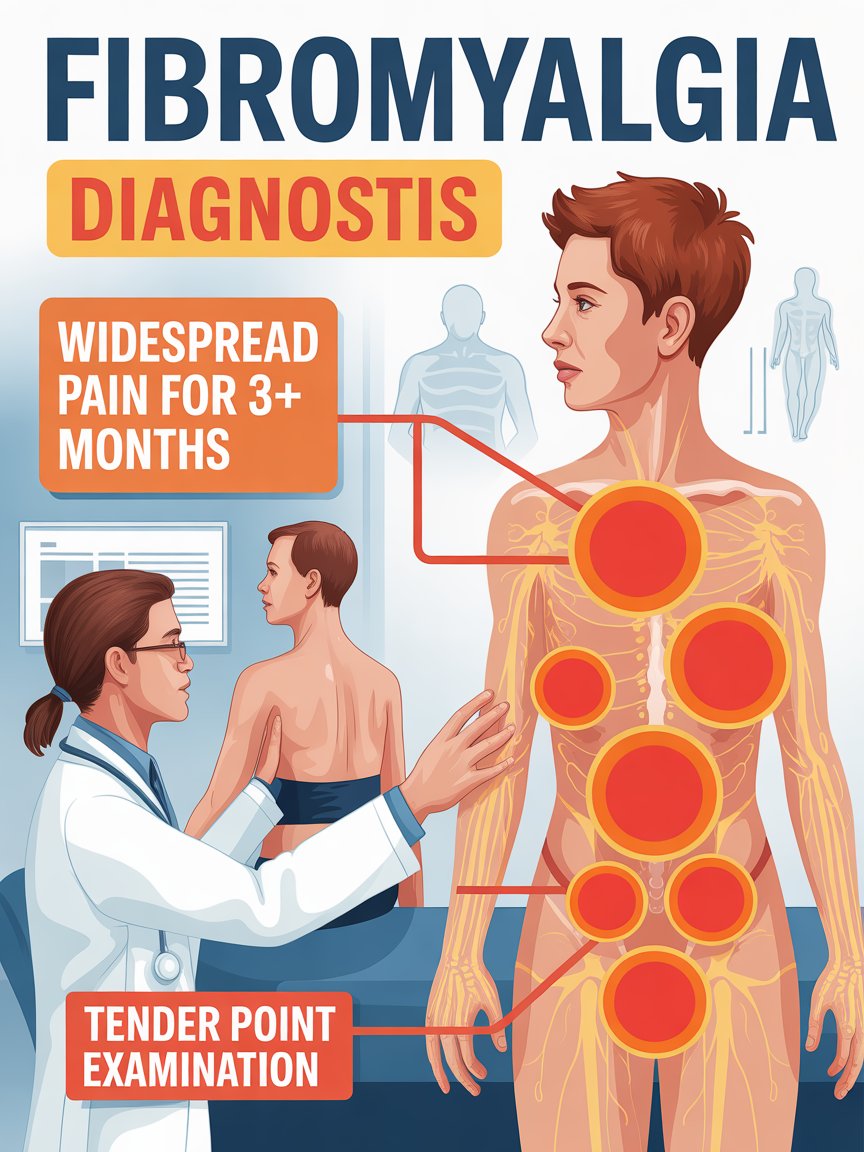
    During a physical exam, doctors assess areas of tenderness and evaluate muscle and joint pain. While fibromyalgia does not cause visible inflammation or joint damage, patients often experience pain when pressure is applied to certain parts of the body. This examination helps rule out other physical causes of pain.

    5. Widespread Pain Criteria Explained

    One key part of diagnosing fibromyalgia is identifying widespread pain. Doctors look for pain on both sides of the body, above and below the waist, and in the spine. This pattern of pain helps differentiate fibromyalgia from localized pain conditions or injuries.

    6. The Role of Symptom Severity Scoring

    Doctors may use symptom severity scales to measure how intense symptoms are. These include fatigue, unrefreshing sleep, memory problems (often called “fibro fog”), and other physical complaints. Higher severity scores increase the likelihood of a fibromyalgia diagnosis.

    7. Using Diagnostic Guidelines for Fibromyalgia

    Most doctors follow established diagnostic guidelines created by medical organizations. These guidelines focus on widespread pain and symptom severity lasting for at least three months. This approach replaces older methods that relied mainly on tender point testing.

    8. Ruling Out Other Medical Conditions

    Fibromyalgia shares symptoms with many conditions such as arthritis, lupus, thyroid disorders, and chronic fatigue syndrome. Doctors order blood tests to rule out these illnesses. Normal test results combined with persistent symptoms may point toward fibromyalgia.

    9. Blood Tests and Why They Matter

    Although fibromyalgia does not show up on blood tests, doctors may request tests to check for inflammation, vitamin deficiencies, or autoimmune diseases. These tests help exclude other conditions that could explain the symptoms, ensuring the diagnosis is accurate.

    10. Imaging Tests and Their Limited Role

    X-rays, MRIs, or CT scans are sometimes used to rule out structural problems such as joint damage or spinal issues. These imaging tests usually appear normal in people with fibromyalgia, but they are useful in eliminating other causes of chronic pain.

    11. The Role of Specialists in Diagnosis

    In some cases, patients are referred to specialists such as rheumatologists or neurologists. These doctors have experience diagnosing chronic pain conditions and can confirm fibromyalgia when symptoms match the diagnostic criteria. Specialist evaluation adds confidence to the diagnosis.

    12. Mental Health Evaluation and Fibromyalgia

    Doctors may assess mental health because anxiety, depression, and stress can worsen fibromyalgia symptoms. This does not mean fibromyalgia is “all in the mind,” but mental health plays a role in symptom severity. Addressing emotional well-being is an important part of overall care.

    13. Why Fibromyalgia Is Often Misdiagnosed

    Fibromyalgia is frequently misdiagnosed because symptoms are invisible and vary from person to person. Many patients are told their pain is due to stress or aging before receiving a proper diagnosis. Increased awareness among doctors is improving diagnosis rates.

    14. What to Expect After Diagnosis

    Once diagnosed, doctors work with patients to create a personalized treatment plan. This may include medication, physical therapy, exercise, stress management, and lifestyle changes. Proper diagnosis helps patients feel validated and more in control of their condition.

    15. Advocating for Yourself During the Diagnostic Process

    Patients play an important role in getting an accurate diagnosis. Keeping a symptom diary, noting pain locations, fatigue levels, and triggers can help doctors understand the condition better. Being open and honest with your doctor can speed up the diagnostic process and lead to better care.


  • Fibromyalgia Pain: Why It Feels Different

    Fibromyalgia Pain: Why It Feels Different

    Here’s a 15-paragraph, SEO-friendly article with clear headings and subheadings for your title:


    Fibromyalgia Pain: Why It Feels Different

    1. Understanding Fibromyalgia Pain

    Fibromyalgia pain is unlike ordinary muscle aches or joint pain. People often describe it as deep, widespread, and persistent, affecting multiple areas of the body at once. This pain doesn’t come from visible injury or inflammation, which can make it confusing and frustrating for those experiencing it. Understanding how fibromyalgia pain works is the first step toward managing it effectively.

    2. How Fibromyalgia Pain Differs from Regular Pain

    Unlike pain caused by injury or arthritis, fibromyalgia pain is linked to how the brain and nervous system process pain signals. The body reacts as if it is hurt, even when there is no physical damage. This makes the pain feel more intense and long-lasting than typical aches and pains.

    3. Central Sensitization: The Main Reason Behind the Pain

    One of the key reasons fibromyalgia pain feels different is a condition called central sensitization. This means the nervous system becomes overly sensitive to pain signals. Even light pressure, mild temperature changes, or normal daily movements can feel painful because the brain amplifies these signals.

    4. Widespread Pain Across the Body

    Fibromyalgia pain is usually widespread, meaning it affects both sides of the body and areas above and below the waist. Common pain points include the neck, shoulders, back, hips, and legs. This widespread pattern is one of the features doctors use to help diagnose fibromyalgia.

    5. Burning, Stabbing, and Aching Sensations

    People with fibromyalgia describe many different types of pain. Some feel a deep aching in the muscles, while others experience burning, stabbing, or throbbing sensations. These shifting pain patterns can make fibromyalgia unpredictable and emotionally exhausting to live with.

    6. Tenderness and Sensitivity to Touch

    Fibromyalgia often causes tenderness in specific areas of the body. Even gentle touch, tight clothing, or a light massage can feel uncomfortable or painful. This increased sensitivity, known as allodynia, highlights how differently the nervous system reacts in people with fibromyalgia.

    7. Fatigue Makes the Pain Feel Worse

    Chronic fatigue is closely linked to fibromyalgia pain. When the body is exhausted, the ability to cope with pain decreases. Poor sleep quality, which is common in fibromyalgia, further intensifies pain levels and creates a cycle of tiredness and discomfort.

    8. The Role of the Brain and Neurotransmitters

    Brain chemicals that regulate pain, such as serotonin and dopamine, may be imbalanced in people with fibromyalgia. These imbalances can lower the body’s natural pain threshold, making everyday sensations feel painful. This explains why fibromyalgia pain can feel stronger even without injury.

    9. Stress and Emotional Factors

    Stress, anxiety, and emotional trauma can worsen fibromyalgia pain. The nervous system reacts strongly to emotional stress, which can trigger pain flare-ups. Managing stress through relaxation techniques, therapy, or mindfulness can play an important role in reducing symptom severity.

    10. Weather Changes and Pain Sensitivity

    Many people with fibromyalgia report increased pain during cold, damp, or rapidly changing weather conditions. While research is still ongoing, changes in barometric pressure and temperature may affect nerve sensitivity, making symptoms feel more intense.

    11. Pain Flare-Ups and Unpredictable Patterns

    Fibromyalgia pain often comes in flare-ups, where symptoms suddenly worsen. These flare-ups can be triggered by physical overexertion, illness, stress, or lack of sleep. The unpredictable nature of these flares can make daily planning difficult for patients.

    12. How Fibromyalgia Pain Affects Daily Life

    Living with constant pain impacts work, relationships, and mental health. Simple tasks like walking, sitting for long periods, or household chores can feel overwhelming. Over time, this can lead to feelings of frustration, isolation, and emotional distress.

    13. Why Fibromyalgia Pain Is Often Misunderstood

    Because fibromyalgia doesn’t show up on standard medical tests, people may feel that their pain is not taken seriously. This lack of visible symptoms can lead to misunderstanding from others and delays in diagnosis. Awareness and education are crucial to improving support for patients.

    14. Managing Fibromyalgia Pain Effectively

    While there is no cure for fibromyalgia, pain can be managed with a combination of lifestyle changes, gentle exercise, stress management, proper sleep habits, and medical treatment. Personalized care plans often work best, as symptoms and triggers vary from person to person.

    15. Living Well Despite Fibromyalgia Pain

    Although fibromyalgia pain feels different and can be challenging, many people learn to manage their symptoms and lead fulfilling lives. With the right support, self-care strategies, and medical guidance, it is possible to reduce flare-ups and improve overall quality of life.

  • Best Morning Routine for Fibromyalgia Relief

    Best Morning Routine for Fibromyalgia Relief

    1. Why Mornings Are Hard with Fibromyalgia

    Mornings can be especially challenging for people with fibromyalgia due to pain, stiffness, and extreme fatigue after waking up. The body often feels tight and heavy, making it hard to get out of bed. Poor sleep quality can also make symptoms worse in the early hours. Creating a gentle and consistent morning routine can help reduce discomfort and start the day with more ease.

    2. Wake Up Slowly and Gently

    Instead of jumping out of bed, take a few minutes to wake up slowly. Stretch your arms and legs gently while still lying down. Deep breathing can help relax tense muscles and reduce morning pain. Giving your body time to adjust can make getting up less painful.

    3. Gentle Bed Stretches to Reduce Stiffness

    Simple stretches in bed can loosen tight muscles and joints. Slowly roll your shoulders, bend your knees, and move your ankles in circles. These gentle movements help improve blood flow and reduce stiffness. Avoid sudden or forceful movements that may increase pain.

    4. Warmth Therapy to Ease Muscle Pain

    Applying warmth in the morning can help relax sore muscles. A warm shower, heating pad, or warm towel can reduce stiffness and pain. Heat increases blood flow and helps muscles loosen naturally. Many people with fibromyalgia find warmth soothing first thing in the morning.

    5. Hydrate Your Body After Waking Up

    Drinking a glass of water after waking helps rehydrate your body and supports muscle function. Dehydration can worsen fatigue and body aches. Warm water or herbal tea can be especially comforting in the morning. Proper hydration supports overall energy levels throughout the day.

    6. Eat a Light, Balanced Breakfast

    A healthy breakfast can help stabilize energy and reduce fatigue. Choose foods with protein, healthy fats, and fiber, such as eggs, yogurt, oats, or fruit. Avoid heavy, sugary foods that may cause energy crashes. Eating well in the morning supports better symptom management.

    7. Gentle Movement or Light Exercise

    Light movement can reduce stiffness and improve circulation. A short walk, gentle yoga, or slow stretching can help wake up the body. Regular gentle exercise may reduce pain over time. Always listen to your body and stop if pain increases.

    8. Practice Deep Breathing or Relaxation

    Stress can increase pain sensitivity in fibromyalgia. Taking a few minutes for deep breathing, meditation, or mindfulness can calm the nervous system. Relaxation helps reduce muscle tension and mental stress. Starting the day calmly can make symptoms feel more manageable.

    9. Take Medications or Supplements as Prescribed

    If your doctor has prescribed medication for fibromyalgia symptoms, take it as directed in your morning routine. Some people also take doctor-approved supplements. Never change dosages without medical advice. Staying consistent with treatment can improve daily symptom control.

    10. Pace Yourself While Getting Ready

    Avoid rushing in the morning, as stress and quick movements can increase pain. Give yourself extra time to get dressed and prepare for the day. Sit down when possible to reduce strain on your body. Pacing helps conserve energy and prevent flare-ups.

    11. Dress Comfortably for Pain Relief

    Wear loose, soft clothing that does not press on sensitive areas. Tight clothes can increase discomfort for people with fibromyalgia. Choose layers to stay warm and comfortable. Comfort in clothing can reduce irritation throughout the day.

    12. Use Positive Morning Affirmations

    Starting the day with positive thoughts can help improve mood and motivation. Gentle affirmations like “I will take today one step at a time” can reduce anxiety. While affirmations don’t remove pain, they can support emotional resilience. A positive mindset can help you cope better with symptoms.

    13. Plan Your Day with Realistic Goals

    Setting small, realistic goals for the day helps avoid overexertion. Break tasks into manageable steps and allow rest breaks. Overdoing activities in the morning can lead to increased pain later. Planning helps balance activity and rest.

    14. Track What Helps Your Morning Symptoms

    Keep a simple journal to note what parts of your routine help the most. Everyone’s fibromyalgia symptoms are different. Tracking patterns can help you find the best morning habits for your body. Over time, you can adjust your routine for better relief.

    15. When to Adjust Your Routine or Seek Help

    If mornings remain extremely painful or exhausting despite routine changes, talk to your doctor. Your treatment plan may need adjustment. Fibromyalgia management is personal and may change over time. Professional guidance can help you find better ways to start your day with less pain.

  • Daily Life With Fibromyalgia: What to Expect

    Daily Life With Fibromyalgia: What to Expect

    1. Understanding Fibromyalgia in Everyday Life

    Living with fibromyalgia means dealing with a chronic condition that affects how your body processes pain. People with fibromyalgia experience widespread pain, fatigue, and sensitivity that can make even simple daily activities feel exhausting. The condition doesn’t look the same for everyone, which makes daily life unpredictable.

    2. Chronic Pain and Body Sensitivity

    One of the biggest challenges of daily life with fibromyalgia is constant body pain. Muscles may feel sore, stiff, or burning without an obvious reason. Even light touches, tight clothing, or small movements can feel painful, making routine tasks uncomfortable.

    3. Extreme Fatigue That Doesn’t Improve With Rest

    Fibromyalgia-related fatigue goes beyond normal tiredness. Many people wake up feeling unrefreshed even after a full night’s sleep. This deep exhaustion can make working, studying, or caring for family much harder.

    4. Sleep Problems and Restless Nights

    Trouble Falling and Staying Asleep

    Sleep disturbances are common in fibromyalgia. Pain, restless legs, or frequent waking can interrupt deep sleep cycles. Poor sleep then worsens pain and fatigue the next day, creating a difficult cycle.

    5. Brain Fog and Memory Issues

    Difficulty Focusing and Remembering

    Many people experience “fibro fog,” which affects concentration, memory, and mental clarity. Simple tasks like remembering appointments, following conversations, or staying focused at work can become challenging.

    6. Emotional Ups and Downs

    Mental Health and Chronic Illness

    Living with daily pain and fatigue can affect emotional well-being. Anxiety, frustration, and low mood are common, especially when symptoms interfere with personal goals, relationships, or independence.

    7. Managing Daily Tasks and Household Chores

    Everyday activities like cooking, cleaning, or shopping may feel overwhelming. People with fibromyalgia often need to pace themselves, take breaks, and prioritize essential tasks to avoid flare-ups.

    8. Work Life With Fibromyalgia

    Balancing Career and Health

    Holding a job with fibromyalgia can be challenging due to unpredictable symptoms. Some people benefit from flexible hours, remote work, or reasonable adjustments at the workplace to manage pain and fatigue better.

    9. Social Life and Relationships

    Fibromyalgia can affect social interactions. Canceling plans due to pain or fatigue may lead to misunderstandings with friends and family. Open communication helps loved ones understand limitations and offer support.

    10. Physical Activity and Gentle Movement

    Finding the Right Balance

    While exercise may seem difficult, gentle activities like walking, stretching, yoga, or swimming can help reduce stiffness and improve energy levels. The key is to start slow and avoid overexertion.

    11. Managing Flare-Ups

    Recognizing Triggers

    Flare-ups are periods when symptoms worsen. Stress, lack of sleep, weather changes, or overactivity can trigger flares. Learning personal triggers helps in planning daily routines and preventing symptom spikes.

    12. Pain Management Strategies

    Daily Coping Techniques

    Pain management may include prescribed medications, heat or cold therapy, relaxation techniques, and gentle massage. Mind-body practices like deep breathing and meditation can also help ease daily discomfort.

    13. Diet and Lifestyle Choices

    Supporting the Body Naturally

    While no specific diet cures fibromyalgia, balanced nutrition, proper hydration, and limiting caffeine or processed foods can support overall health. Small lifestyle changes can improve energy and symptom control.

    14. Building a Support System

    Family, Friends, and Support Groups

    Having emotional and practical support makes daily life easier. Connecting with others who live with fibromyalgia, either online or in support groups, helps reduce feelings of isolation and provides helpful coping tips.

    15. Living a Fulfilling Life With Fibromyalgia

    Although fibromyalgia changes daily life, it does not define a person’s identity. With self-care, medical support, lifestyle adjustments, and patience, many people learn to manage symptoms and continue to live meaningful, fulfilling lives.

  • Fibromyalgia Symptoms Explained Clearly

    Fibromyalgia Symptoms Explained Clearly

    1. What Is Fibromyalgia?

    Fibromyalgia is a long-term health condition that causes widespread pain, fatigue, and sensitivity throughout the body. It affects how the brain and nervous system process pain signals, making normal sensations feel more painful. The condition is more common in women but can affect people of any age or background. Understanding its symptoms is the first step toward proper management and better quality of life.

    2. Widespread Muscle and Body Pain

    One of the main symptoms of fibromyalgia is persistent pain that affects both sides of the body and lasts for months. The pain is often described as a deep ache, burning sensation, or throbbing discomfort. Unlike normal muscle soreness, fibromyalgia pain does not improve much with rest. This widespread pain can make daily activities feel exhausting and overwhelming.

    3. Extreme Fatigue That Doesn’t Go Away

    People with fibromyalgia often feel tired even after getting enough sleep. This constant fatigue can feel like having the flu every day. Simple tasks such as walking, cooking, or working may feel draining. The body struggles to recover energy, leading to ongoing weakness and lack of motivation.

    4. Sleep Problems and Non-Restorative Sleep

    Many individuals with fibromyalgia experience poor sleep quality. They may fall asleep easily but wake up feeling unrefreshed. Sleep is often interrupted by pain, restless legs, or frequent waking during the night. Over time, poor sleep can make pain and fatigue even worse.

    5. Brain Fog and Memory Issues (Fibro Fog)

    Fibro fog refers to problems with concentration, memory, and mental clarity. People may forget names, struggle to focus, or find it hard to follow conversations. This mental cloudiness can be frustrating and affect work or studies. Stress and lack of sleep can make fibro fog more noticeable.

    6. Headaches and Migraines

    Frequent headaches and migraines are common in people with fibromyalgia. These headaches may be tension-related or linked to sensitivity in the neck and shoulders. Migraines can be severe and may come with nausea and sensitivity to light or sound. Ongoing pain and stress can trigger or worsen these headaches.

    7. Sensitivity to Touch, Light, and Noise

    Fibromyalgia increases sensitivity to physical and sensory stimuli. Gentle touch may feel painful, and bright lights or loud sounds can feel overwhelming. Some people also become sensitive to smells or temperature changes. This heightened sensitivity is due to the nervous system becoming overactive.

    8. Joint Stiffness and Morning Pain

    Stiffness in the joints and muscles, especially in the morning, is another common symptom. People may feel like their body is tight or difficult to move after waking up. Cold weather or long periods of inactivity can make stiffness worse. Gentle stretching and warm showers often provide some relief.

    9. Digestive Problems and IBS

    Many people with fibromyalgia also experience digestive issues such as bloating, constipation, diarrhea, or stomach cramps. These symptoms are often linked to irritable bowel syndrome (IBS). Digestive discomfort can add to daily stress and fatigue. Managing diet and stress levels may help reduce these symptoms.

    10. Numbness, Tingling, and Nerve Sensations

    Some individuals feel numbness, tingling, or a “pins and needles” sensation in their hands and feet. These feelings can come and go without warning. While these sensations are not usually dangerous, they can be uncomfortable and worrying. They are believed to be related to nerve sensitivity.

    11. Mood Changes, Anxiety, and Depression

    Living with chronic pain can affect emotional health. Many people with fibromyalgia experience anxiety, low mood, or depression. The constant discomfort and fatigue can feel overwhelming and isolating. Emotional support and mental health care are an important part of managing fibromyalgia.

    12. Sensitivity to Cold and Heat

    People with fibromyalgia may struggle to regulate body temperature. Cold weather can worsen pain and stiffness, while heat may cause fatigue and dizziness. Some individuals feel uncomfortable in normal temperature changes. Wearing layers and staying in a comfortable environment can help manage this symptom.

    13. Increased Pain During Stress or Weather Changes

    Stress, emotional tension, and sudden changes in weather can trigger symptom flare-ups. Pain and fatigue often become worse during stressful periods or cold, damp weather. Learning stress management techniques can help reduce the intensity of symptoms. Recognizing personal triggers is key to better control.

    14. Symptoms Vary from Person to Person

    Fibromyalgia does not look the same in everyone. Some people experience severe pain and fatigue, while others have milder symptoms. Symptoms may change over time and come in waves. Understanding personal symptom patterns helps in finding the right treatment plan.

    15. When to See a Doctor

    If you experience long-lasting body pain, fatigue, and sleep problems, it is important to consult a doctor. Early diagnosis can help rule out other conditions and start proper management. While fibromyalgia has no cure, treatments can greatly improve daily life. A healthcare provider can guide you toward medications, lifestyle changes, and supportive therapies.

  • 10 Early Signs of Fibromyalgia You Shouldn’t Ignore

    10 Early Signs of Fibromyalgia You Shouldn’t Ignore

    Introduction: Why Early Signs Matter

    Fibromyalgia is a chronic condition that affects how the brain processes pain signals, leading to widespread discomfort and a range of other symptoms. Because there’s no single test to diagnose it, many people live with unexplained symptoms for years. Recognizing early warning signs can help you seek medical guidance sooner and potentially manage symptoms more effectively.

    1. Widespread, Ongoing Pain

    One of the most common early signs of fibromyalgia is persistent pain felt on both sides of the body and above and below the waist. This pain is often described as a deep, aching soreness that lasts for months. Unlike pain caused by injury, it may shift locations and feel worse on some days than others.

    2. Constant Fatigue That Doesn’t Improve With Rest

    Many people with early fibromyalgia experience overwhelming tiredness that doesn’t go away after sleep or relaxation. This fatigue can make everyday tasks feel exhausting and may limit your ability to stay active or focused. It often shows up alongside pain, creating a cycle that’s hard to break.

    3. Poor Sleep and Restless Nights

    Sleep problems are another early warning sign. You might struggle to fall asleep, wake up frequently, or feel like your sleep is shallow and unrefreshing. Even if you sleep for several hours, you may wake up feeling just as tired as when you went to bed.

    4. “Fibro Fog” and Trouble Concentrating

    Cognitive difficulties, often called “fibro fog,” can appear early in fibromyalgia. This may include forgetfulness, difficulty concentrating, and feeling mentally scattered. Simple tasks may take more effort, and you might find it harder to follow conversations or stay organized.

    5. Morning Stiffness and Body Aches

    Waking up feeling stiff or sore is a common early symptom. Your muscles and joints may feel tight for hours after getting out of bed, even if you didn’t exercise the day before. This stiffness can return after long periods of sitting or inactivity.

    6. Increased Sensitivity to Touch and Temperature

    People with fibromyalgia often become more sensitive to physical sensations. Light touches, tight clothing, cold temperatures, or even loud noises may feel uncomfortable or painful. This heightened sensitivity is linked to changes in how the nervous system processes sensory input.

    7. Frequent Headaches or Migraines

    Recurring headaches or migraines can be another early clue. These may feel like tension headaches or intense migraines that appear more often than usual. Stress, poor sleep, and muscle tension can make these headaches worse.

    8. Digestive Problems and Gut Discomfort

    Many individuals with fibromyalgia experience digestive issues such as bloating, constipation, diarrhea, or symptoms similar to irritable bowel syndrome (IBS). While these symptoms may seem unrelated to muscle pain, they often occur together and can worsen during flare-ups.

    9. Mood Changes and Emotional Sensitivity

    Anxiety, low mood, or irritability can appear early in fibromyalgia. Living with ongoing pain and fatigue can take a toll on emotional well-being. In some cases, changes in brain chemistry linked to fibromyalgia may also influence mood.

    10. Numbness, Tingling, or Restless Sensations

    Some people notice tingling, numbness, or crawling sensations in their hands, feet, or arms. You may also feel restless legs at night, making it hard to stay still or fall asleep. These sensations can be uncomfortable and disruptive.

    When to See a Doctor

    If you recognize several of these signs and they’ve lasted for more than a few weeks or months, it’s a good idea to talk to a healthcare professional. While fibromyalgia can’t be confirmed with a single test, a doctor can rule out other conditions and guide you toward appropriate care.

    How Early Awareness Can Help

    Catching fibromyalgia early can help you take steps to manage symptoms through lifestyle changes, stress management, gentle exercise, and medical support. Early awareness doesn’t mean jumping to conclusions, but it empowers you to listen to your body and advocate for your health.

    Final Thoughts

    Fibromyalgia can be frustrating and confusing, especially in the early stages when symptoms seem vague or unrelated. Paying attention to persistent patterns—rather than isolated bad days—can make a big difference. The sooner you acknowledge what your body is telling you, the sooner you can start building a plan to feel better and live more comfortably.