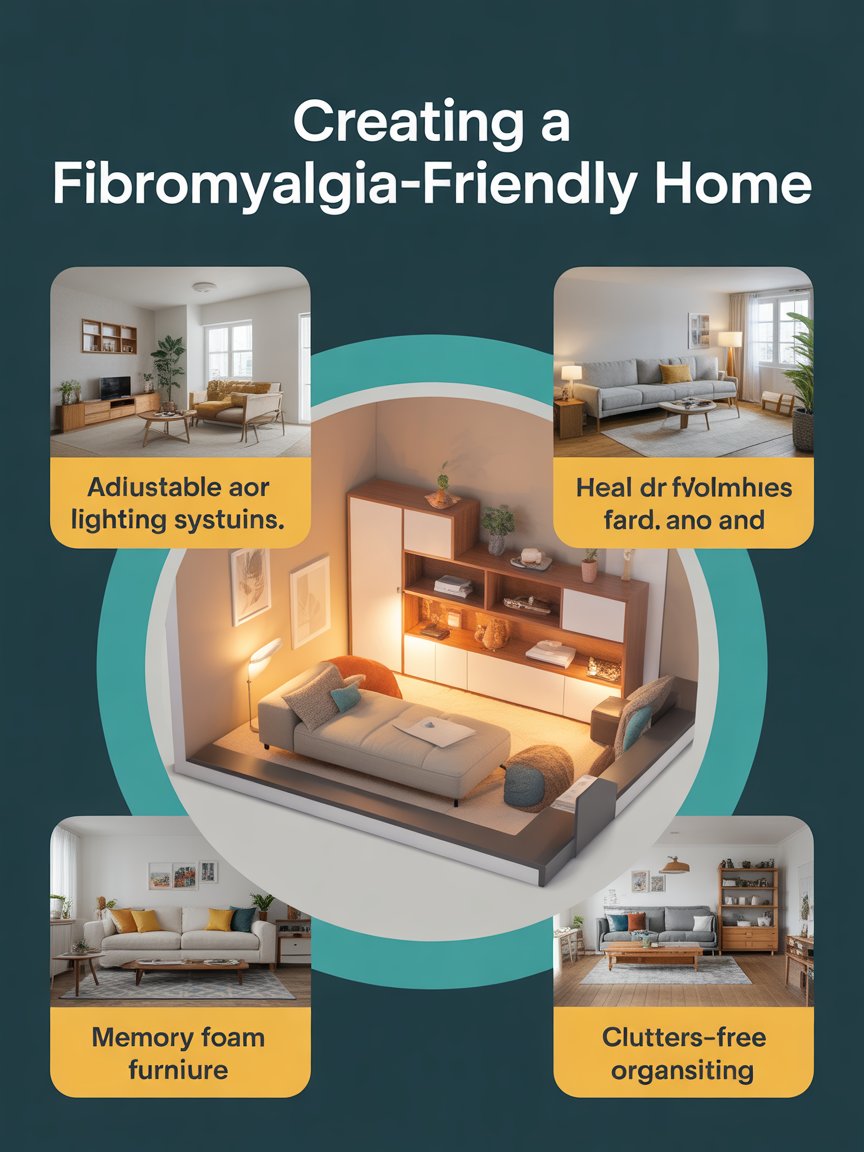
Creating a Fibromyalgia-Friendly Home
1. Understanding the Importance of a Comfortable Home
Living with Fibromyalgia can make everyday tasks more challenging due to pain, fatigue, and sensitivity. Because of this, creating a comfortable and supportive home environment can play a major role in symptom management.
A fibromyalgia-friendly home focuses on reducing physical strain, improving relaxation, and making daily activities easier to handle.
2. Prioritizing Comfortable Furniture
Supportive furniture can help reduce pain and muscle tension. Chairs and sofas that provide proper back and neck support allow the body to relax more comfortably.
Soft cushions, ergonomic seating, and adjustable chairs can help prevent stiffness and reduce pressure on sensitive muscles.
3. Creating a Restful Bedroom Environment
Sleep problems are common with fibromyalgia, so the bedroom should be designed for comfort and relaxation. A supportive mattress and soft bedding can help reduce pressure on the body.
Keeping the bedroom quiet, dark, and cool may also improve sleep quality and help the body recover overnight.
4. Managing Lighting Sensitivity
Many people with fibromyalgia are sensitive to bright lights. Soft lighting, warm-toned bulbs, and adjustable lamps can help reduce eye strain and headaches.
Curtains or blinds can also help control natural light during the day.
5. Reducing Noise and Sensory Overload
Noise sensitivity is another challenge for some individuals with fibromyalgia. A calm and quiet home environment can help reduce stress and sensory overload.
Using rugs, curtains, or sound-absorbing materials can help minimize loud noises and create a peaceful atmosphere.
6. Organizing the Home for Easy Access
Keeping frequently used items within easy reach can reduce physical strain. Organizing kitchen supplies, clothing, and daily necessities in convenient places helps conserve energy.
Simple organization strategies can make daily routines smoother and less tiring.
7. Creating Relaxation Spaces
Having a dedicated relaxation area in the home can support stress management. A comfortable chair, soft blankets, and calming décor can create a soothing space for rest.
Relaxation spaces can also be used for meditation, reading, or gentle stretching.
8. Maintaining Comfortable Temperatures
Many people with fibromyalgia experience temperature sensitivity. Keeping the home at a comfortable temperature can help prevent discomfort and muscle stiffness.
Using fans, heaters, or adjustable thermostats allows individuals to maintain a stable environment.
9. Using Assistive Tools and Devices
Small household tools can make daily tasks easier. Lightweight kitchen utensils, jar openers, and ergonomic cleaning tools can reduce strain on the hands and muscles.
Assistive devices help conserve energy and make chores more manageable.
10. Creating a Clutter-Free Environment
A tidy and organized home can reduce both physical and mental stress. Clutter may increase the effort needed to move around or complete daily tasks.
Keeping living spaces simple and organized helps promote a calm and comfortable environment.
11. Adding Gentle Exercise Areas
Light physical activity is beneficial for people with fibromyalgia. Creating a small area for stretching or yoga can encourage gentle movement.
A yoga mat, resistance bands, or soft flooring can make exercise safer and more comfortable.
12. Improving Air Quality
Clean air can support overall health and comfort. Proper ventilation, indoor plants, or air purifiers can help improve air quality.
A fresh and breathable environment may reduce headaches and fatigue.
13. Using Warmth for Pain Relief
Heat therapy can be helpful for managing fibromyalgia pain. Heating pads, warm blankets, or heated mattress covers can soothe sore muscles.
Having these items easily available can provide quick relief during painful moments.
14. Designing a Stress-Free Environment
Stress can worsen fibromyalgia symptoms, so creating a calm home atmosphere is important. Soft colors, relaxing scents, and comfortable décor can help promote emotional well-being.
A peaceful environment allows the body and mind to relax more easily.
15. Making Home a Place of Healing
A well-designed home can greatly improve daily life for people living with fibromyalgia. By focusing on comfort, organization, and relaxation, individuals can create a supportive space that reduces strain and stress.
With thoughtful adjustments, a home can become a place that encourages rest, healing, and improved quality of life.
Leave a Reply