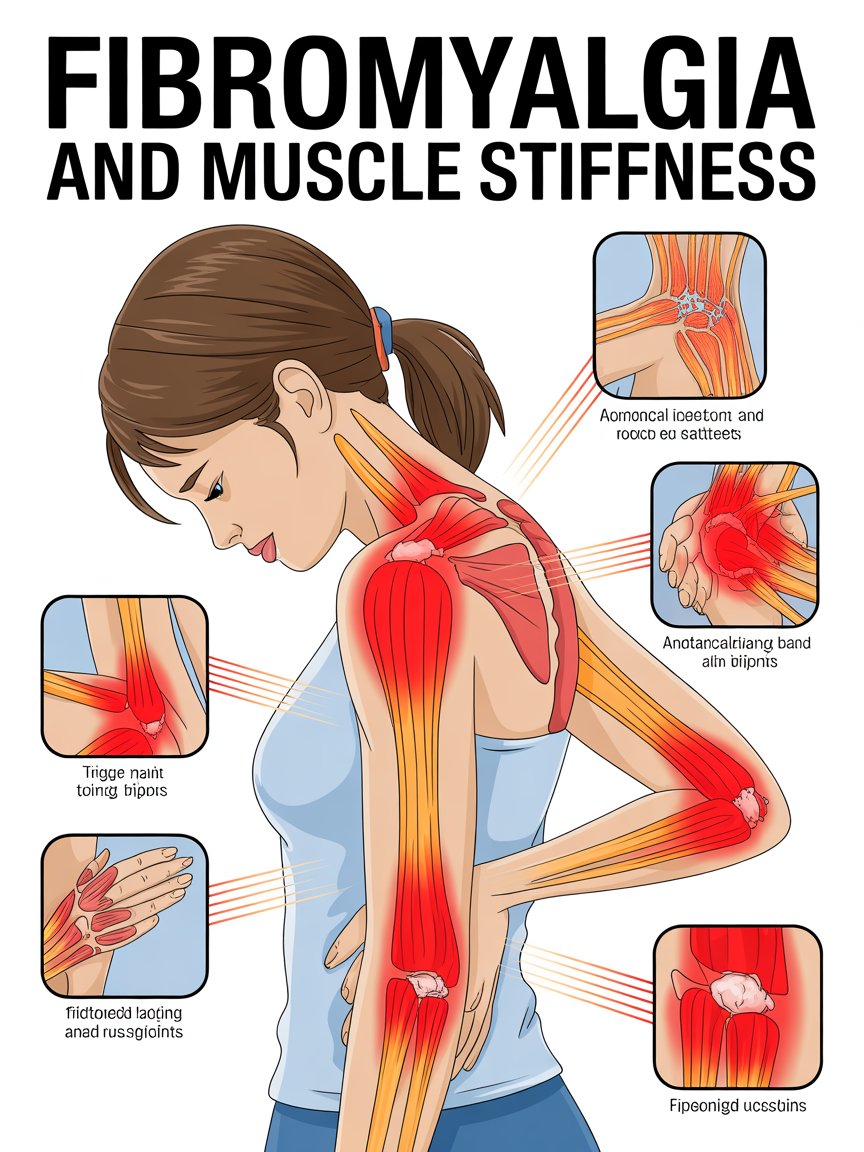
Fibromyalgia and Muscle Stiffness
1. Understanding Fibromyalgia and Muscle Stiffness
Fibromyalgia is a chronic condition that causes widespread pain, fatigue, and sensitivity throughout the body. One of the most common complaints among people living with this condition is persistent muscle stiffness. This stiffness can make daily activities more difficult and uncomfortable, especially in the morning or after long periods of rest.
2. Why Muscle Stiffness Happens in Fibromyalgia
Muscle stiffness in fibromyalgia is believed to be linked to how the nervous system processes pain signals. The brain and spinal cord may amplify pain sensations, making muscles feel tighter and more sensitive than usual. This abnormal pain processing can cause even minor tension to feel intense.
3. The Role of the Nervous System
Fibromyalgia is often associated with an overactive nervous system. When nerves become overly sensitive, muscles may react with tension or tightness. This constant state of heightened sensitivity can contribute to the ongoing stiffness many patients experience.
4. Morning Stiffness and Its Impact
Many people with fibromyalgia report that muscle stiffness is worst in the morning. After a night of sleep, muscles may feel tight and difficult to move. This stiffness can last from a few minutes to several hours, affecting the ability to start the day comfortably.
5. How Poor Sleep Contributes to Stiffness
Sleep disturbances are common in fibromyalgia and can worsen muscle stiffness. When the body does not get deep, restorative sleep, muscles may not recover properly. As a result, stiffness and soreness can build up over time.
6. Physical Inactivity and Muscle Tightness
While rest is sometimes necessary, too much inactivity can increase muscle stiffness. When muscles are not used regularly, they may become tight and less flexible. Gentle movement can help keep muscles more relaxed and mobile.
7. The Role of Stress in Muscle Stiffness
Stress can significantly affect muscle tension in fibromyalgia. Emotional stress often leads to physical tension, which may worsen muscle stiffness and pain. Managing stress can play an important role in reducing symptoms.
8. Gentle Stretching for Relief
Regular stretching is one of the most effective ways to reduce muscle stiffness. Gentle stretches can improve flexibility, increase blood flow to muscles, and help ease tension. Even a few minutes of stretching each day can make a noticeable difference.
9. Benefits of Light Exercise
Low-impact exercises such as walking, swimming, or yoga can help reduce muscle stiffness over time. These activities keep muscles active without putting too much strain on the body. Consistent movement helps maintain strength and flexibility.
10. Heat Therapy for Relaxing Muscles
Heat can be very soothing for stiff muscles. Warm baths, heating pads, or warm showers can help relax muscle tissue and improve circulation. Many people with fibromyalgia find heat therapy helpful during flare-ups.
11. Massage and Muscle Relaxation
Massage therapy may help relieve muscle stiffness by loosening tight muscles and improving blood flow. Gentle massage techniques are usually recommended because deep pressure may sometimes cause discomfort for sensitive muscles.
12. Hydration and Muscle Function
Proper hydration supports healthy muscle function. Dehydrated muscles may become more prone to cramping and stiffness. Drinking enough water throughout the day can help muscles stay more flexible.
13. Maintaining Good Posture
Poor posture can contribute to muscle tension and stiffness, especially in the neck, shoulders, and back. Paying attention to posture while sitting, working, or using electronic devices can help reduce unnecessary strain on muscles.
14. Creating a Daily Routine for Muscle Care
A balanced daily routine that includes gentle movement, relaxation, and proper rest can help manage muscle stiffness. Small habits such as stretching in the morning, taking short walks, and practicing relaxation techniques can support muscle health.
15. Living Comfortably With Fibromyalgia
Although muscle stiffness is a common symptom of fibromyalgia, many strategies can help reduce its impact. By combining gentle exercise, stress management, good sleep habits, and supportive therapies, individuals can improve comfort and maintain a better quality of life.
Leave a Reply