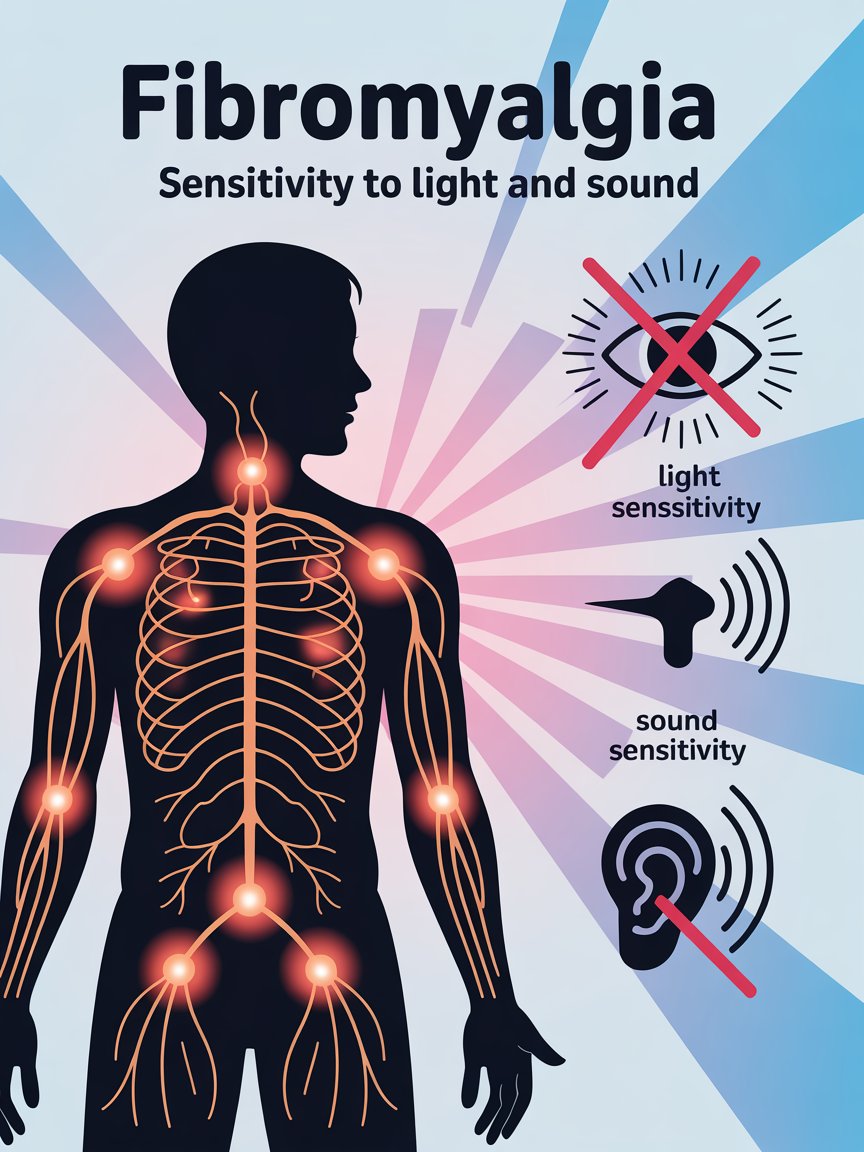
Fibromyalgia and Sensitivity to Light and Sound
1. Understanding Sensory Sensitivity in Fibromyalgia
Fibromyalgia is commonly associated with widespread pain and fatigue, but many individuals also experience heightened sensitivity to light and sound. These sensory symptoms can make daily activities more difficult and draining. Recognizing this aspect of fibromyalgia is essential for better symptom management.
2. What Is Sensory Amplification?
People with fibromyalgia often experience sensory amplification, where the brain processes normal stimuli as intense or uncomfortable. This means ordinary brightness or background noise may feel overwhelming. The nervous system reacts more strongly than expected.
3. The Science Behind Central Sensitization
Fibromyalgia is linked to central sensitization, a condition in which the central nervous system becomes overly reactive. The brain not only amplifies pain signals but also enhances responses to sensory input. As a result, light and sound can feel unusually sharp or distressing.
4. Light Sensitivity (Photophobia)
Many individuals report discomfort from bright sunlight, fluorescent lights, or digital screens. This condition, known as photophobia, can trigger headaches or increase fatigue. Even indoor lighting may need adjustment for comfort.
5. Sound Sensitivity (Hyperacusis)
Hyperacusis refers to an increased sensitivity to everyday sounds. Normal conversations, traffic noise, or background music may feel piercing or distracting. Busy environments can quickly lead to sensory overload.
6. The Link Between Fibromyalgia and Migraines
There is a notable overlap between fibromyalgia and migraines. Migraines frequently include sensitivity to light and sound, suggesting shared neurological pathways. This overlap may intensify symptoms for some individuals.
7. How Sensory Sensitivity Affects Daily Life
Sensitivity to light and sound can impact work, social events, and even household tasks. Offices with bright overhead lights or loud coworkers may become exhausting. Simple errands in crowded areas can feel overwhelming.
8. Emotional and Psychological Impact
Constant exposure to uncomfortable stimuli may increase irritability and anxiety. Over time, individuals may begin avoiding certain environments. This can lead to feelings of isolation or frustration.
9. Sleep Disruptions Caused by Sensory Input
People with fibromyalgia often struggle with poor sleep quality. Even minor nighttime noises or light from electronic devices can interrupt rest. This worsens fatigue and may intensify pain the following day.
10. Practical Ways to Manage Light Sensitivity
Adjusting lighting at home is a helpful first step. Using warm, dim lighting, installing blackout curtains, and applying screen filters can reduce strain. Wearing sunglasses outdoors may also provide relief.
11. Strategies for Coping With Sound Sensitivity
Noise-canceling headphones, earplugs, or white noise machines can help minimize auditory stress. Scheduling quiet time during the day prevents overload. Choosing calm environments when possible makes a significant difference.
12. Stress Reduction and Nervous System Support
Relaxation techniques such as deep breathing, meditation, and gentle stretching may calm the nervous system. Reducing overall stress can lessen the intensity of sensory reactions. Consistent practice is important for long-term benefit.
13. Medical and Therapeutic Support
Healthcare providers may suggest medications that help regulate nerve sensitivity. Cognitive behavioral therapy (CBT) can assist in managing reactions to triggers. Professional guidance ensures a safe and personalized approach.
14. Tracking Triggers for Better Control
Keeping a symptom journal helps identify patterns related to light and sound exposure. Recording time, environment, and symptom intensity provides useful insight. This information supports better planning and prevention.
15. Creating a Sensory-Friendly Lifestyle
Living with fibromyalgia and sensory sensitivity requires thoughtful adjustments. By modifying environments, managing stress, and seeking support, individuals can improve comfort and function. With awareness and proactive strategies, it is possible to reduce the impact of light and sound sensitivity on daily life.
Leave a Reply