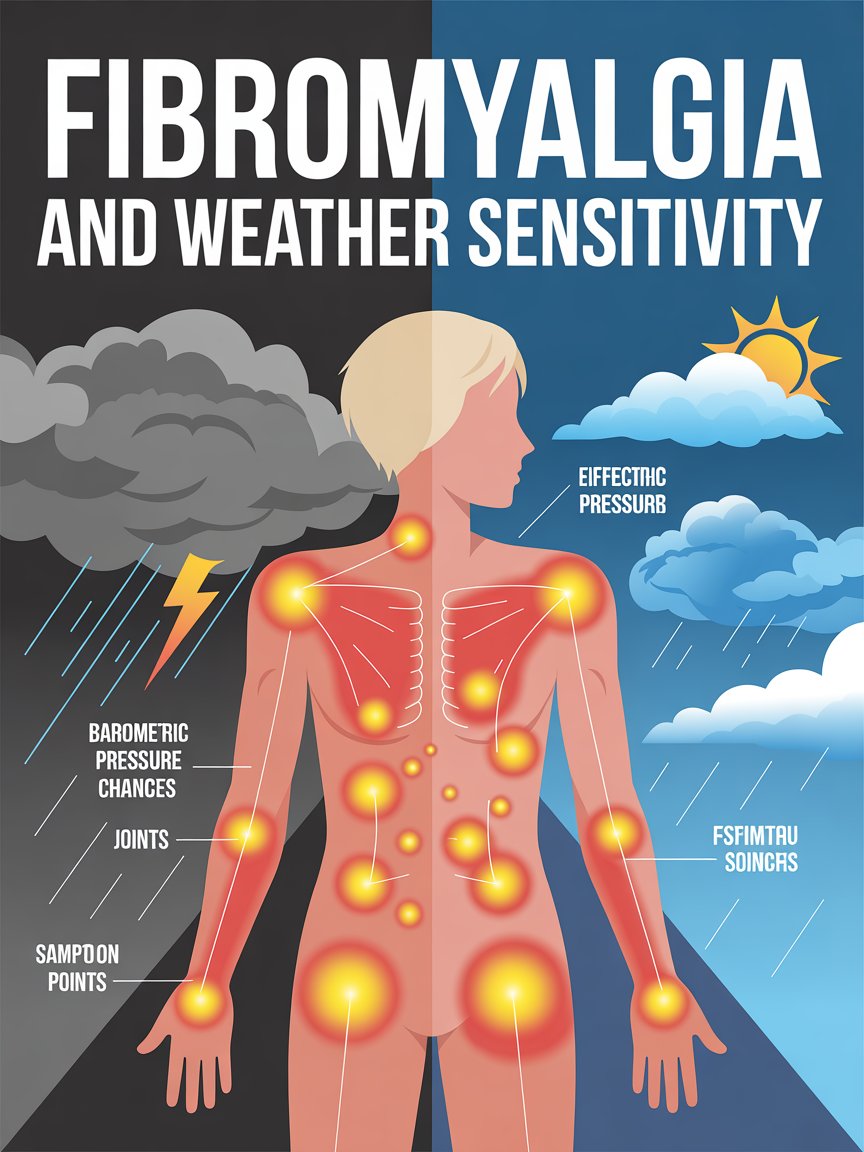
Fibromyalgia and Weather Sensitivity
1. Introduction to Weather Sensitivity in Fibromyalgia
Many people living with Fibromyalgia report that their symptoms change with the weather. Shifts in temperature, humidity, or air pressure can sometimes make pain, fatigue, and stiffness worse. This connection is often referred to as weather sensitivity.
Although not everyone experiences this effect, many individuals notice that certain weather conditions trigger symptom flare-ups. Understanding this relationship can help people better prepare for difficult days.
2. Why Weather Can Affect the Body
Weather changes can influence the body in several ways. Temperature shifts and atmospheric pressure changes may affect muscles, joints, and nerves.
For people with fibromyalgia, whose nervous systems are already more sensitive to pain signals, these environmental changes can intensify discomfort and fatigue.
3. Temperature Changes and Pain Levels
Sudden changes in temperature are a common trigger for fibromyalgia symptoms. Cold weather can cause muscles to tighten, which may increase pain and stiffness.
On the other hand, extremely hot temperatures can lead to exhaustion and worsen fatigue. Many people with fibromyalgia find that moderate temperatures feel more comfortable for their bodies.
4. The Impact of Cold Weather
Cold weather is frequently linked to increased fibromyalgia pain. Low temperatures may cause muscles to contract and joints to feel stiff.
People often report greater body aches during winter months or when exposed to cold environments for long periods.
5. Heat and Fibromyalgia Fatigue
While warmth can sometimes relax muscles, excessive heat may worsen fatigue and dizziness. High temperatures can also make it difficult for some individuals to stay active.
Staying hydrated and avoiding prolonged exposure to heat can help reduce discomfort during warmer weather.
6. Humidity and Muscle Discomfort
Humidity levels can also influence fibromyalgia symptoms. High humidity may make the air feel heavier, which can increase feelings of tiredness and body aches.
Some people report that humid conditions make their muscles feel more tender and sensitive.
7. Barometric Pressure Changes
Barometric pressure refers to the weight of the air in the atmosphere. Sudden drops in air pressure, often before storms, may trigger increased pain in people with fibromyalgia.
Although the exact reason is not fully understood, many individuals consistently notice symptom changes when storms approach.
8. Seasonal Changes and Symptom Flare-Ups
Different seasons can bring different challenges for fibromyalgia patients. Winter may increase stiffness and pain, while summer may worsen fatigue and dehydration.
Seasonal awareness allows individuals to prepare their routines and self-care strategies in advance.
9. Managing Cold Weather Sensitivity
There are several ways to reduce the impact of cold weather. Wearing warm clothing, using heating pads, and keeping living spaces comfortably warm can help relax muscles.
Gentle stretching can also improve circulation and reduce stiffness during colder months.
10. Coping With Heat and Humidity
When temperatures rise, it is important to stay cool and hydrated. Light clothing, shaded areas, and proper ventilation can help regulate body temperature.
Taking breaks and avoiding intense activity during the hottest parts of the day may also prevent fatigue.
11. Monitoring Weather Patterns
Some people find it helpful to track their symptoms alongside weather conditions. This can reveal patterns between pain levels and certain weather changes.
Once patterns are identified, individuals can plan rest, exercise, and other activities around expected weather shifts.
12. Maintaining a Consistent Routine
Keeping a stable daily routine can help reduce the impact of weather-related flare-ups. Regular sleep, balanced meals, and light physical activity support overall health.
A consistent routine can make the body more resilient to environmental changes.
13. Stress and Weather Sensitivity
Weather changes can sometimes increase emotional stress, especially when symptoms worsen. Stress itself may intensify pain and fatigue.
Practicing relaxation techniques such as meditation, deep breathing, or gentle yoga can help calm the body during difficult weather conditions.
14. Listening to Your Body’s Signals
Everyone experiences fibromyalgia differently. Paying attention to how your body reacts to weather changes is an important part of symptom management.
When early signs of discomfort appear, adjusting activities and allowing time for rest can prevent symptoms from becoming severe.
15. Living Comfortably Despite Weather Changes
Weather sensitivity can be challenging for people with fibromyalgia, but understanding its effects can make it easier to manage. By preparing for temperature changes and adjusting daily habits, individuals can reduce the impact of weather on their symptoms.
Leave a Reply