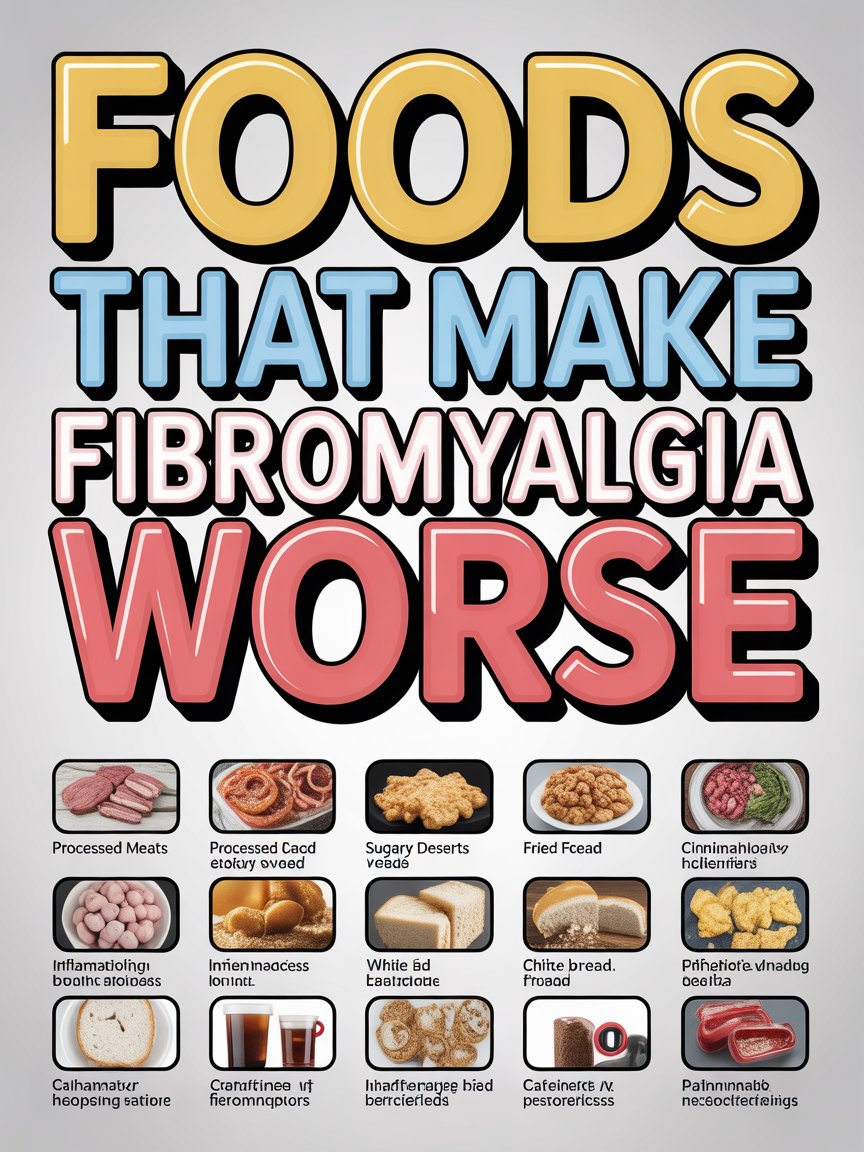
Foods That Make Fibromyalgia Worse
1. How Diet Can Affect Fibromyalgia Symptoms
For people living with fibromyalgia, diet can play an important role in symptom management. Certain foods may increase inflammation, worsen fatigue, or trigger pain flare-ups. While triggers can vary from person to person, many individuals notice that some foods make their symptoms worse. Identifying and limiting these foods can help improve daily comfort and energy levels.
2. Processed Foods and Packaged Snacks
Highly processed foods such as chips, packaged snacks, and ready-made meals often contain preservatives, artificial ingredients, and excess salt. These ingredients may increase inflammation and worsen fatigue. Processed foods also tend to lack important nutrients needed for muscle and nerve health. Reducing processed food intake may help decrease fibromyalgia symptoms.
3. Excess Sugar and Sugary Drinks
Foods high in sugar, including candies, desserts, and sugary drinks, can cause spikes and crashes in blood sugar levels. These fluctuations may increase fatigue and worsen mood changes. High sugar intake may also contribute to inflammation in the body. Limiting sugary foods can help maintain stable energy levels.
4. Artificial Sweeteners
Artificial sweeteners found in diet sodas and sugar-free products may trigger symptoms in some people with fibromyalgia. Certain sweeteners can affect the nervous system and potentially increase pain sensitivity. While research is still ongoing, many patients report symptom improvement after reducing artificial sweeteners.
5. Refined Carbohydrates
Refined carbohydrates such as white bread, pastries, and processed cereals are quickly digested and can lead to rapid blood sugar changes. These fluctuations may increase fatigue and reduce energy throughout the day. Choosing whole grains instead of refined carbs may support better energy balance.
6. Fried and Greasy Foods
Fried foods and greasy meals often contain unhealthy fats that can promote inflammation. These foods may also be harder to digest and lead to sluggishness or digestive discomfort. Reducing fried foods and choosing healthier cooking methods like baking or steaming may help manage symptoms.
7. Caffeine Overconsumption
While small amounts of caffeine may increase alertness, too much caffeine can interfere with sleep. Poor sleep is a major issue for people with fibromyalgia and can worsen pain and fatigue. Excess caffeine from coffee, energy drinks, or soda may also increase anxiety and restlessness.
8. Alcohol
Alcohol can disrupt sleep patterns and increase fatigue, which are already common issues in fibromyalgia. It may also interact with medications used to treat fibromyalgia symptoms. Some individuals find that alcohol increases muscle pain or headaches.
9. High-Sodium Foods
Foods high in salt, such as processed meats, canned soups, and fast food, may contribute to water retention and bloating. High sodium intake may also affect blood pressure and overall health. Reducing sodium may support better physical comfort and wellness.
10. Foods with Artificial Additives
Artificial colors, preservatives, and flavor enhancers found in many packaged foods may trigger sensitivity in some people. These additives can affect the nervous system and may worsen headaches or fatigue. Choosing natural and minimally processed foods may reduce exposure to these ingredients.
11. Dairy Sensitivity in Some Individuals
While dairy products can be nutritious for many people, some individuals with fibromyalgia may experience digestive discomfort after consuming them. Symptoms may include bloating, stomach pain, or fatigue. If dairy seems to worsen symptoms, trying lactose-free or plant-based alternatives may help.
12. Gluten for Sensitive Individuals
Some people with fibromyalgia report improvement when reducing or avoiding gluten, a protein found in wheat, barley, and rye. Although gluten does not affect everyone, those with gluten sensitivity may notice less pain and better digestion when limiting it.
13. Fast Food and Highly Processed Meals
Fast foods often contain high levels of unhealthy fats, salt, and additives. These ingredients may contribute to inflammation and worsen fatigue. Regular consumption of fast food may also reduce overall nutrient intake.
14. Identifying Personal Food Triggers
Not every food affects all people with fibromyalgia in the same way. Keeping a food diary can help identify specific foods that worsen symptoms. Tracking meals and symptoms can reveal patterns and guide better dietary choices.
15. Building a Fibromyalgia-Friendly Diet
Avoiding trigger foods while focusing on nutrient-rich options such as fruits, vegetables, whole grains, lean proteins, and healthy fats may help reduce symptoms. A balanced diet supports muscle function, energy levels, and overall well-being. Making gradual dietary changes can lead to long-term improvements in managing fibromyalgia.
Leave a Reply