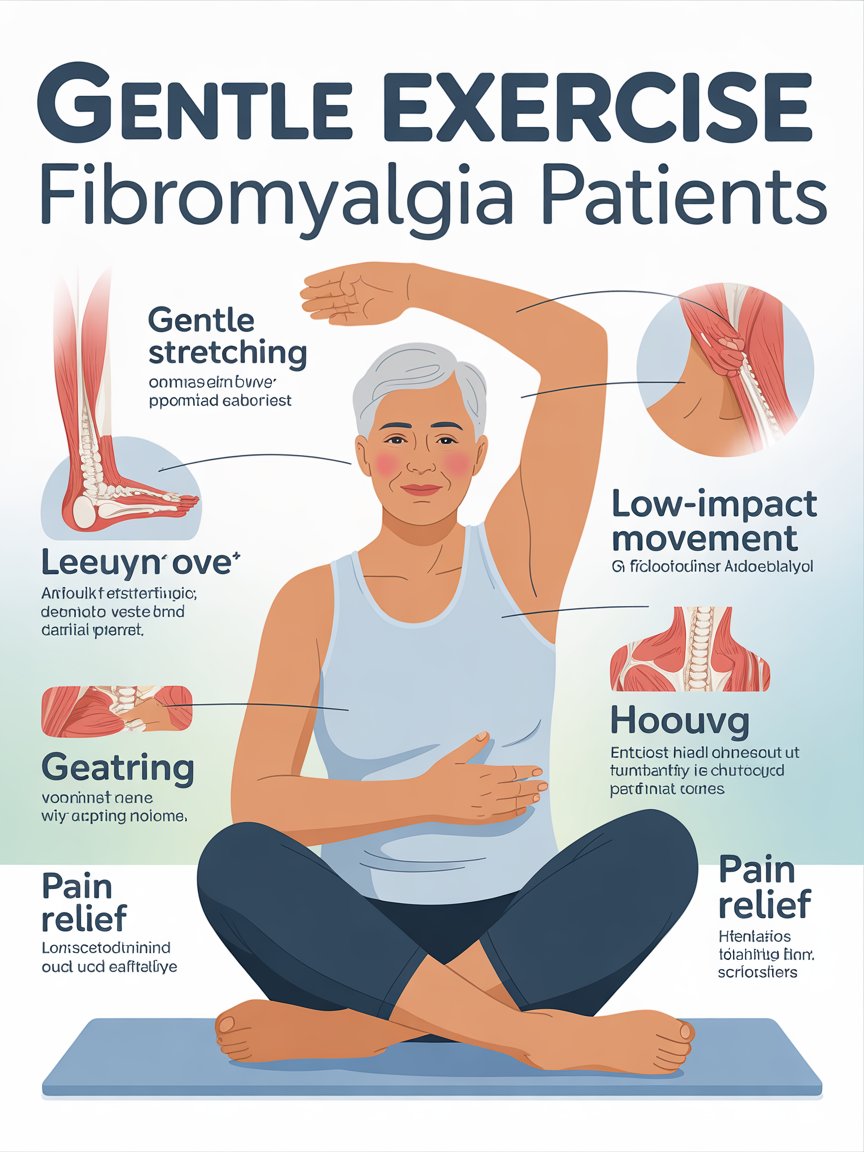
Gentle Exercises for Fibromyalgia Patients
1. Understanding Why Gentle Movement Matters
Living with fibromyalgia often means dealing with chronic pain, stiffness, and fatigue that can make exercise feel overwhelming. However, gentle movement is one of the most effective non-medication ways to manage symptoms. Light exercise helps keep joints flexible, reduces muscle tension, and improves blood circulation. When done correctly, it can ease pain instead of causing flare-ups.
2. How Exercise Helps Reduce Fibromyalgia Pain
Fibromyalgia affects how the brain processes pain signals, making even small discomforts feel intense. Gentle exercises help calm the nervous system and release endorphins, the body’s natural pain relievers. Over time, regular movement can lower pain sensitivity and help patients feel more in control of their symptoms. The key is consistency, not intensity.
3. Starting Slow and Listening to Your Body
One of the biggest mistakes people with fibromyalgia make is pushing too hard too fast. Begin with very short sessions, even five minutes a day, and increase gradually. Pay close attention to how your body responds during and after exercise. If pain increases significantly, reduce the intensity or duration next time.
4. Stretching for Morning Stiffness Relief
Morning stiffness is a common complaint among fibromyalgia patients. Gentle stretching right after waking up can help loosen tight muscles and improve mobility. Simple neck rolls, shoulder shrugs, and slow leg stretches can make getting out of bed easier. Stretching should feel comfortable, never painful.
5. Walking as a Low-Impact Option
Walking is one of the safest and most accessible exercises for fibromyalgia patients. It improves circulation, supports heart health, and boosts mood without placing heavy stress on joints. Short, relaxed walks are better than long, exhausting ones. Walking indoors or outdoors, depending on energy levels, both provide benefits.
6. Water Exercises for Joint-Friendly Movement
Exercising in warm water reduces pressure on painful joints and muscles. Swimming or water aerobics allow the body to move more freely while minimizing discomfort. The warmth of the water also helps relax muscles and reduce stiffness. Many patients find water-based exercises more comfortable than land-based workouts.
7. Gentle Yoga for Flexibility and Calm
Yoga can be helpful when practiced in a gentle, slow-paced style. Poses focused on stretching and relaxation improve flexibility and reduce muscle tension. Breathing techniques used in yoga can also calm the nervous system and lower stress levels. Restorative or beginner yoga classes are best for fibromyalgia patients.
8. Tai Chi for Balance and Pain Relief
Tai Chi is a slow, flowing form of movement that combines gentle exercise with deep breathing. It improves balance, coordination, and muscle control while being easy on the body. Many fibromyalgia patients report reduced pain and better sleep with regular Tai Chi practice. The slow pace makes it suitable for beginners.
9. Light Strength Training for Muscle Support
Weak muscles can increase pain by placing extra strain on joints. Light strength training using resistance bands or small weights can improve muscle support without overloading the body. Focus on controlled, slow movements and low repetitions. Strength training should never cause sharp pain or extreme fatigue.
10. Simple Range-of-Motion Exercises
Range-of-motion exercises help maintain flexibility and prevent stiffness. These movements involve gently moving joints through their natural range, such as rotating wrists or bending knees slowly. They can be done while sitting or lying down on low-energy days. These small movements can make daily activities easier.
11. Breathing Exercises to Reduce Tension
Deep breathing exercises help relax tense muscles and reduce stress-related pain. Slow, controlled breathing sends calming signals to the nervous system. Practicing breathing techniques before or after exercise can prevent overexertion. Relaxed breathing also improves oxygen flow to tired muscles.
12. Creating a Consistent Exercise Routine
Consistency is more important than intensity for fibromyalgia patients. Choose a few gentle exercises and do them regularly rather than pushing through long sessions once in a while. Setting a realistic schedule, such as three to four short sessions per week, can build healthy habits. Routine helps the body adapt gradually to movement.
13. Adjusting Exercise During Flare-Ups
During flare-ups, even gentle exercise may feel difficult. Instead of stopping completely, switch to very light movements like stretching or breathing exercises. Rest when needed, but try to maintain some level of movement to prevent stiffness. Being flexible with your routine helps prevent frustration.
14. Combining Exercise With Other Pain-Relief Strategies
Exercise works best when combined with other fibromyalgia management techniques. Good sleep habits, balanced nutrition, and stress management all support the benefits of gentle movement. Warm showers, heat packs, or relaxation techniques can make exercise sessions more comfortable. A holistic approach leads to better long-term results.
15. Staying Motivated and Patient With Progress
Progress with fibromyalgia is slow and sometimes unpredictable. Celebrate small improvements, such as increased flexibility or slightly better energy levels. Set realistic goals and avoid comparing your progress to others. With patience and consistency, gentle exercise can become a powerful tool for managing fibromyalgia symptoms and improving quality of life.
Leave a Reply