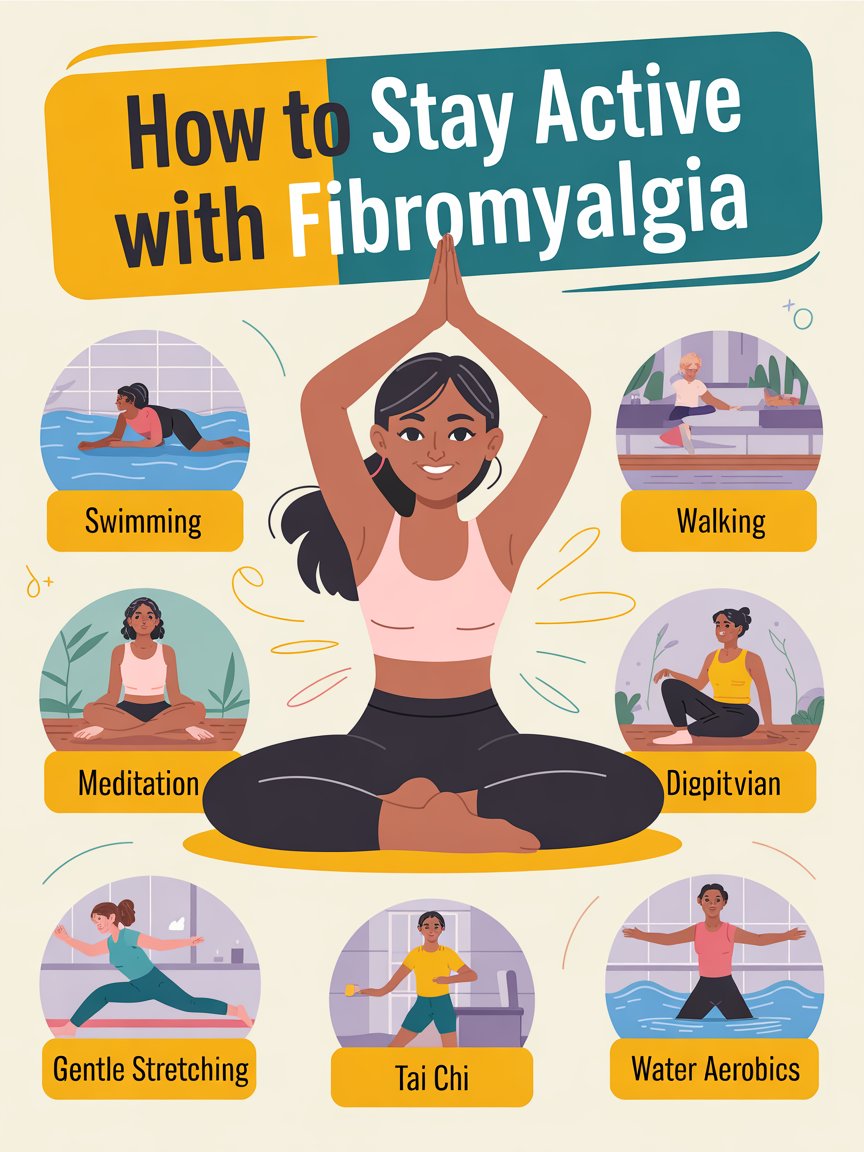
How to Stay Active With Fibromyalgia
1. Understanding Activity and Fibromyalgia
Fibromyalgia is a chronic condition that causes widespread pain, fatigue, and muscle stiffness. Because of these symptoms, staying active can sometimes feel difficult. However, regular gentle movement can help improve flexibility, reduce pain, and support overall well-being.
2. Starting Slowly and Gradually
One of the most important steps in staying active with fibromyalgia is to begin slowly. Starting with short sessions of light activity allows the body to adjust without becoming overwhelmed. Gradually increasing the intensity and duration can help prevent flare-ups.
3. Choosing Low-Impact Activities
Low-impact exercises are usually the best option for people with fibromyalgia. Activities such as walking, swimming, gentle stretching, and yoga are easier on the joints and muscles. These exercises help improve strength and mobility without causing excessive strain.
4. Listening to Your Body
Fibromyalgia symptoms can change from day to day. Paying attention to how the body feels during activity is important. If pain or fatigue becomes too intense, it may be helpful to slow down or take a break.
5. Creating a Consistent Routine
Consistency is key when staying active with fibromyalgia. Establishing a regular routine helps the body adapt to movement. Even small amounts of daily activity can make a positive difference over time.
6. Balancing Activity and Rest
While staying active is beneficial, rest is equally important. Overexertion can lead to fatigue and increased pain. Alternating periods of activity with rest helps maintain energy levels throughout the day.
7. Incorporating Gentle Stretching
Stretching exercises can help reduce muscle stiffness and improve flexibility. Gentle stretching before and after physical activity can prepare muscles for movement and reduce discomfort. Regular stretching also promotes better circulation.
8. Exercising in a Comfortable Environment
The environment where exercise takes place can influence comfort levels. Warm temperatures, supportive surfaces, and calm surroundings can make activity more enjoyable. Many people with fibromyalgia find that warm water exercises are especially soothing.
9. Setting Realistic Goals
Setting small and realistic activity goals can help maintain motivation. Achieving these goals gradually builds confidence and encourages continued movement. Progress may be slow, but consistency leads to improvement.
10. Using Relaxation Techniques
Relaxation techniques such as deep breathing or meditation can help reduce tension before and after exercise. Relaxing the mind and body may help prevent muscle tightness. These practices also support emotional well-being.
11. Staying Hydrated
Proper hydration supports muscle function and overall health. Drinking enough water before and after physical activity can help prevent fatigue and muscle discomfort. Hydration is an important part of maintaining an active lifestyle.
12. Tracking Progress
Keeping a record of activities and symptoms can help individuals understand what works best for their bodies. Tracking progress may reveal patterns that help improve activity routines. This awareness can guide healthier decisions.
13. Seeking Support and Encouragement
Support from friends, family, or support groups can make staying active easier. Encouragement from others can help maintain motivation during challenging days. Shared activities may also make exercise more enjoyable.
14. Working With Healthcare Professionals
Healthcare providers can offer guidance on safe and effective activity plans. Physical therapists or fitness specialists may recommend exercises that support mobility and reduce pain. Professional advice helps ensure that activity levels remain appropriate.
15. Maintaining Long-Term Activity
Staying active with fibromyalgia is an ongoing process that requires patience and consistency. Gentle exercise, balanced rest, and healthy habits can gradually improve strength and endurance. Over time, maintaining regular movement can support better physical health and quality of life.
Leave a Reply