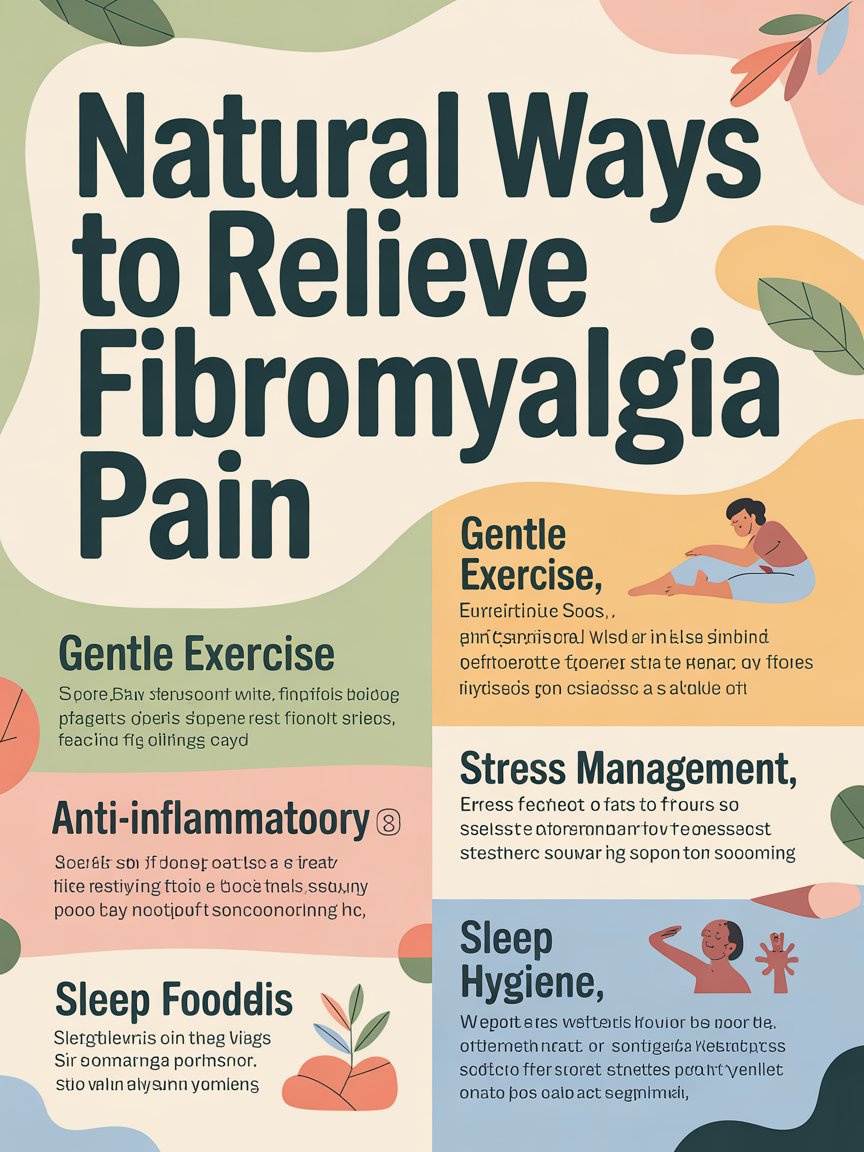
1. Understanding Natural Pain Relief for Fibromyalgia
Living with Fibromyalgia can be challenging due to persistent pain and fatigue. While medical treatments may help, many people also explore natural methods to manage symptoms. Simple lifestyle changes and holistic practices can support the body and reduce discomfort over time.
2. Gentle Exercise and Movement
Regular gentle exercise can help reduce stiffness and improve muscle flexibility. Activities like walking, stretching, or light yoga can strengthen muscles and support overall well-being without putting too much strain on the body.
3. Practicing Relaxation Techniques
Relaxation techniques such as deep breathing, meditation, and mindfulness can calm the nervous system. These practices may help reduce stress and ease pain sensitivity associated with fibromyalgia.
4. Improving Sleep Habits
Quality sleep plays a major role in managing fibromyalgia symptoms. Creating a consistent bedtime routine, limiting screen time before bed, and maintaining a comfortable sleep environment can improve rest and reduce fatigue.
5. Using Heat Therapy
Heat therapy can relax tight muscles and improve circulation. Warm baths, heating pads, or warm showers may help soothe aching muscles and reduce stiffness.
6. Trying Gentle Stretching
Stretching exercises help maintain flexibility and reduce muscle tension. Slow, controlled stretches can improve mobility and help relieve discomfort in the neck, shoulders, and back.
7. Managing Stress Effectively
Stress can trigger fibromyalgia flare-ups. Learning stress-management techniques such as journaling, breathing exercises, or spending time in nature can help reduce symptom intensity.
8. Maintaining a Balanced Diet
Eating a nutritious diet can support overall health and energy levels. Whole foods such as fruits, vegetables, lean proteins, and whole grains may help the body function better and reduce fatigue.
9. Staying Hydrated
Drinking enough water helps support muscle function and overall body balance. Proper hydration may help reduce headaches, fatigue, and muscle discomfort.
10. Practicing Gentle Yoga
Yoga combines movement, stretching, and breathing exercises. Many people with fibromyalgia find that gentle yoga improves flexibility and helps relax both the body and mind.
11. Massage Therapy
Massage therapy can help relieve muscle tension and improve blood circulation. Gentle massage techniques may reduce pain and help the body relax.
12. Maintaining a Consistent Routine
Creating a balanced daily routine with time for activity, rest, and relaxation can help manage fibromyalgia symptoms. Consistency allows the body to adapt and maintain stability.
13. Spending Time Outdoors
Fresh air and sunlight can improve mood and reduce stress levels. Light outdoor activities such as walking in nature may provide both physical and emotional benefits.
14. Listening to Your Body
People with fibromyalgia often benefit from pacing their activities. Taking breaks when needed and avoiding overexertion can help prevent flare-ups and maintain energy levels.
15. Building a Holistic Lifestyle
Managing Fibromyalgia naturally often involves combining several healthy habits. Gentle movement, stress management, good sleep, and balanced nutrition together can create a supportive lifestyle that helps reduce pain and improve overall quality of life.
Leave a Reply