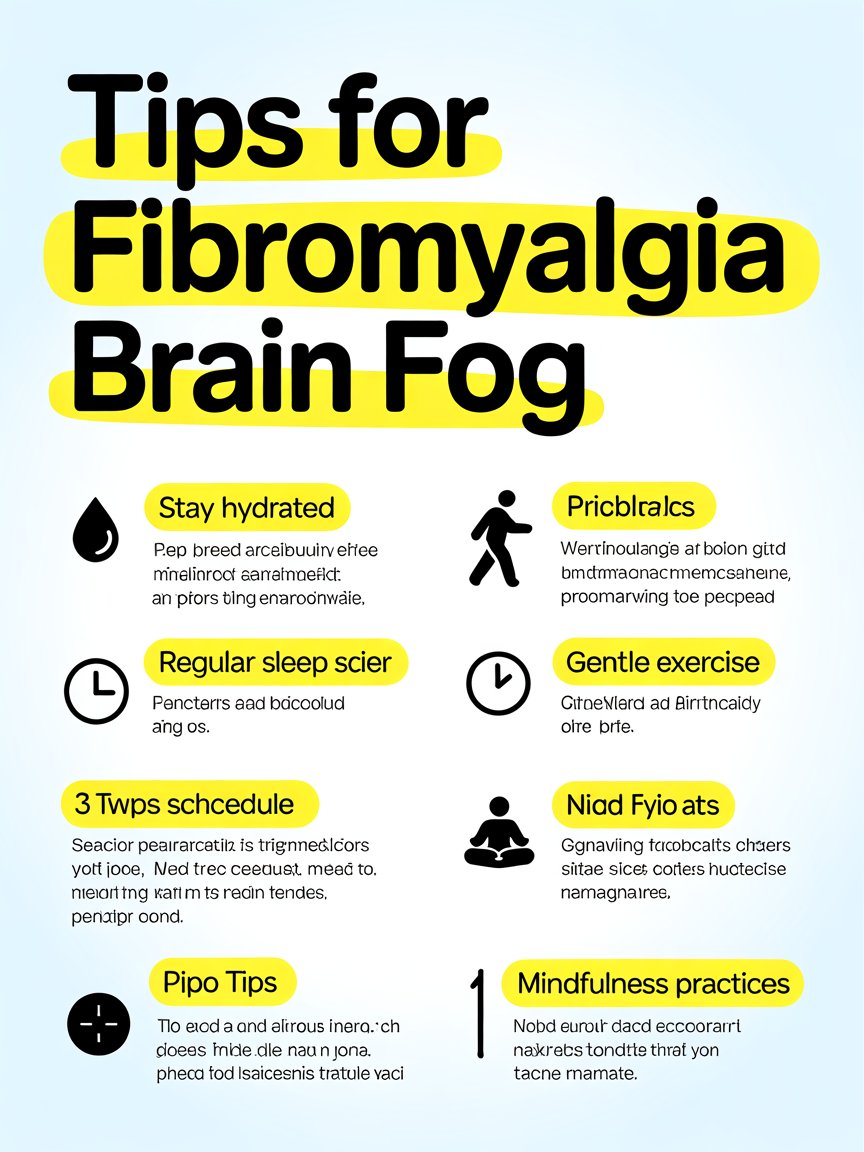
Tips for Fibromyalgia Brain Fog
1. Understanding Fibromyalgia Brain Fog
Fibromyalgia is not only associated with widespread pain and fatigue but also with cognitive difficulties often called “fibro fog” or brain fog. This condition can make it harder to concentrate, remember information, or think clearly.
Many people with fibromyalgia experience moments where they struggle to recall words, stay focused, or complete mental tasks. While these symptoms can be frustrating, there are strategies that may help improve mental clarity.
2. What Causes Brain Fog in Fibromyalgia
Brain fog in fibromyalgia is believed to be linked to how the brain processes pain and fatigue. Poor sleep, stress, and constant pain signals can overwhelm the nervous system.
When the brain is constantly managing pain and fatigue, it may have fewer resources available for memory and concentration.
3. Improve Sleep Quality
Sleep plays a major role in cognitive function. Many people with fibromyalgia experience sleep disturbances that prevent the body and brain from fully resting.
Creating a consistent sleep routine, limiting screen time before bed, and maintaining a comfortable sleep environment can support better rest and clearer thinking.
4. Manage Stress Levels
Stress can worsen brain fog and make concentration more difficult. High stress levels increase mental fatigue and may intensify fibromyalgia symptoms.
Practicing relaxation techniques such as meditation, breathing exercises, or gentle stretching can help calm the mind and improve focus.
5. Break Tasks Into Smaller Steps
Large tasks can feel overwhelming when dealing with brain fog. Breaking activities into smaller, manageable steps can make them easier to complete.
Completing one step at a time helps reduce mental overload and improves productivity.
6. Use Notes and Reminders
Memory challenges are common with fibromyalgia. Writing things down can help reduce frustration and prevent forgetting important details.
Using notebooks, planners, or reminder apps can help organize daily responsibilities and keep track of tasks.
7. Maintain a Regular Routine
Consistency can help the brain function more efficiently. A predictable daily routine reduces mental effort because the brain becomes familiar with regular patterns.
Regular sleep, meals, and activity schedules can support improved mental clarity.
8. Stay Physically Active
Gentle physical activity can boost circulation and support brain health. Activities such as walking, stretching, or yoga may improve mood and mental alertness.
Even short periods of movement during the day can help reduce fatigue and support cognitive function.
9. Eat a Balanced Diet
Nutrition plays an important role in brain health. A diet rich in fruits, vegetables, whole grains, and healthy fats can support cognitive performance.
Staying hydrated is also important, as dehydration can contribute to fatigue and difficulty concentrating.
10. Limit Multitasking
Trying to do several things at once can worsen brain fog. Multitasking forces the brain to divide attention, which may reduce focus and increase mistakes.
Focusing on one task at a time can help improve accuracy and mental clarity.
11. Practice Mental Exercises
Mental stimulation can help keep the brain active. Activities like puzzles, reading, memory games, or learning new skills can strengthen cognitive function.
Regular mental challenges may help maintain focus and improve memory over time.
12. Take Regular Breaks
Fatigue can quickly worsen brain fog. Taking short breaks during work or daily tasks allows the brain to rest and recharge.
Even a few minutes of relaxation can help restore focus and energy.
13. Reduce Sensory Overload
Bright lights, loud noises, and busy environments can make concentration harder for people with fibromyalgia.
Creating a calm and quiet environment can support better mental focus and reduce cognitive fatigue.
14. Track Cognitive Patterns
Keeping track of when brain fog occurs can help identify triggers. Some people notice that their cognitive symptoms worsen during periods of stress, poor sleep, or physical exhaustion.
Understanding these patterns allows individuals to adjust their routines and reduce symptom flare-ups.
15. Managing Brain Fog With Patience
Brain fog can be one of the most frustrating aspects of fibromyalgia, but it is manageable with the right strategies. By improving sleep, reducing stress, and organizing daily tasks, many people can reduce cognitive difficulties.
With patience and consistent self-care, individuals with fibromyalgia can find ways to stay productive and maintain mental clarity in their daily lives.
Leave a Reply