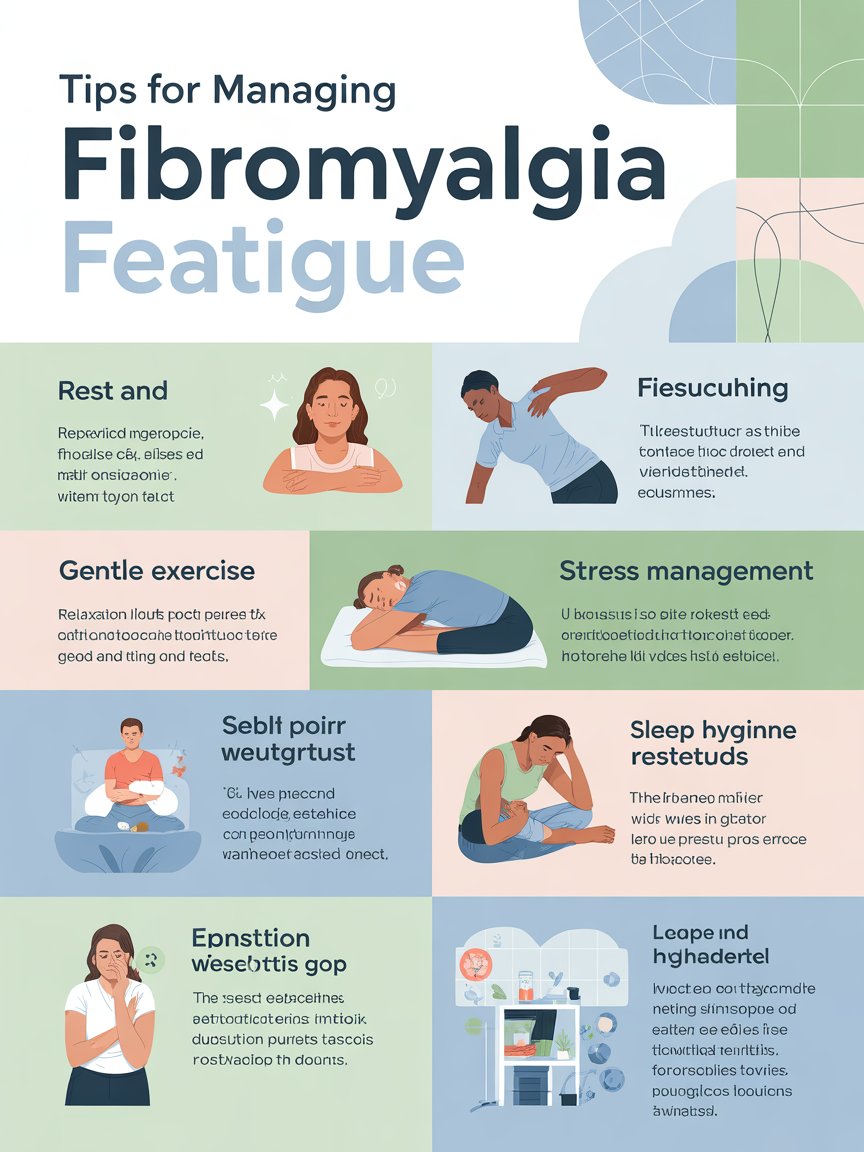
Tips for Managing Fibromyalgia Fatigue
1. Understanding Fibromyalgia Fatigue
Fibromyalgia is not only about widespread pain—it also brings deep, persistent fatigue. This exhaustion often feels overwhelming and does not improve with regular rest, making daily tasks challenging.
2. Why Fatigue Feels So Intense
More Than Normal Tiredness
Fibromyalgia fatigue is different from everyday tiredness. It can feel like your body is weighed down, your muscles are weak, and your mind is foggy, even after a full night in bed.
3. Prioritize Quality Sleep
Create a Restful Routine
Since poor sleep worsens fatigue, focus on improving sleep hygiene. Go to bed and wake up at consistent times, limit screen use before bed, and create a quiet, dark sleeping environment.
4. Pace Your Activities
Avoid Energy Crashes
Instead of pushing through tasks, break them into smaller steps. Take short breaks between activities to prevent overexertion that can trigger next-day exhaustion.
5. Follow the “Energy Envelope” Rule
Work Within Your Limits
Try to stay within your daily energy limits rather than exceeding them. Learning your body’s signals helps prevent severe fatigue flares.
6. Incorporate Gentle Movement
Light Exercise Boosts Energy
Although it may seem counterintuitive, gentle activities like walking, stretching, or yoga can improve circulation and reduce fatigue over time when done consistently.
7. Eat for Steady Energy
Balanced Nutrition Matters
Choose balanced meals with protein, healthy fats, and complex carbohydrates. Avoid excessive sugar, which can cause energy spikes followed by crashes.
8. Stay Hydrated
Water Supports Energy Levels
Dehydration can worsen fatigue and headaches. Drinking enough water throughout the day supports overall body function and stamina.
9. Manage Stress Effectively
Protect Your Nervous System
Stress can intensify both pain and exhaustion. Practice relaxation techniques such as deep breathing, meditation, or quiet breaks during the day.
10. Reduce Mental Overload
Simplify Where Possible
Brain fog often accompanies fatigue. Use planners, reminders, and to-do lists to stay organized and reduce mental strain.
11. Take Short, Strategic Naps
Rest Without Overdoing It
If needed, keep naps brief—around 20–30 minutes—to refresh your body without interfering with nighttime sleep.
12. Check for Nutrient Deficiencies
Rule Out Underlying Causes
Low levels of vitamin D, iron, or B vitamins can worsen fatigue. Consult a healthcare provider for testing if exhaustion feels extreme or persistent.
13. Create a Supportive Routine
Structure Reduces Stress
Establishing a predictable daily routine helps conserve energy. Consistency in meals, activity, and sleep can stabilize fatigue patterns.
14. Listen to Your Body Without Guilt
Rest Is Not Laziness
Allow yourself to rest when needed. Managing fibromyalgia fatigue requires self-compassion and understanding that recovery time is essential.
15. Small Steps Lead to Sustainable Energy
Progress Over Perfection
Managing fibromyalgia fatigue is about gradual improvement, not instant results. By combining pacing, proper rest, balanced nutrition, and stress management, you can build a lifestyle that supports steadier energy over time.
Leave a Reply